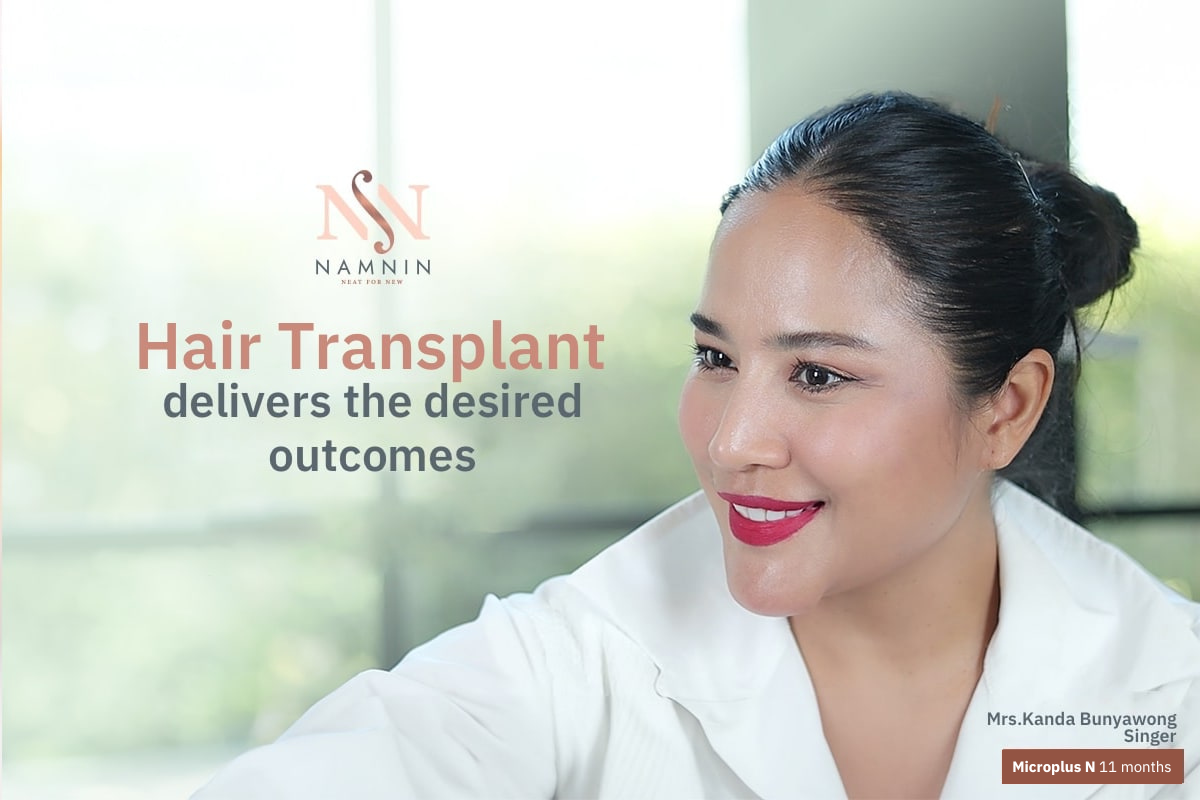
Khun Ying Thitikarn, a singer and actress known for her outstanding performances in Sin Lai So on One 31, Oppa Lam Sing on Channel 7HD, and many other television dramas, has always placed great importance on maintaining her appearance. Among all aspects of her image, her hair has played a significant role in giving her confidence for every character she portrays.
“In this drama, I had the chance to wear beautiful costumes and hairstyles that really showcased my face. I played a Mor Lam singer, which felt close to home because I’m also a performer. Before filming, we always had costume and hairstyle fittings to find the look that best suited both the character and her personality. In the end, it had to be a hairstyle that still felt like me. I usually wore my hair pulled back, and it was easy to see that my hair looked thick and full.”
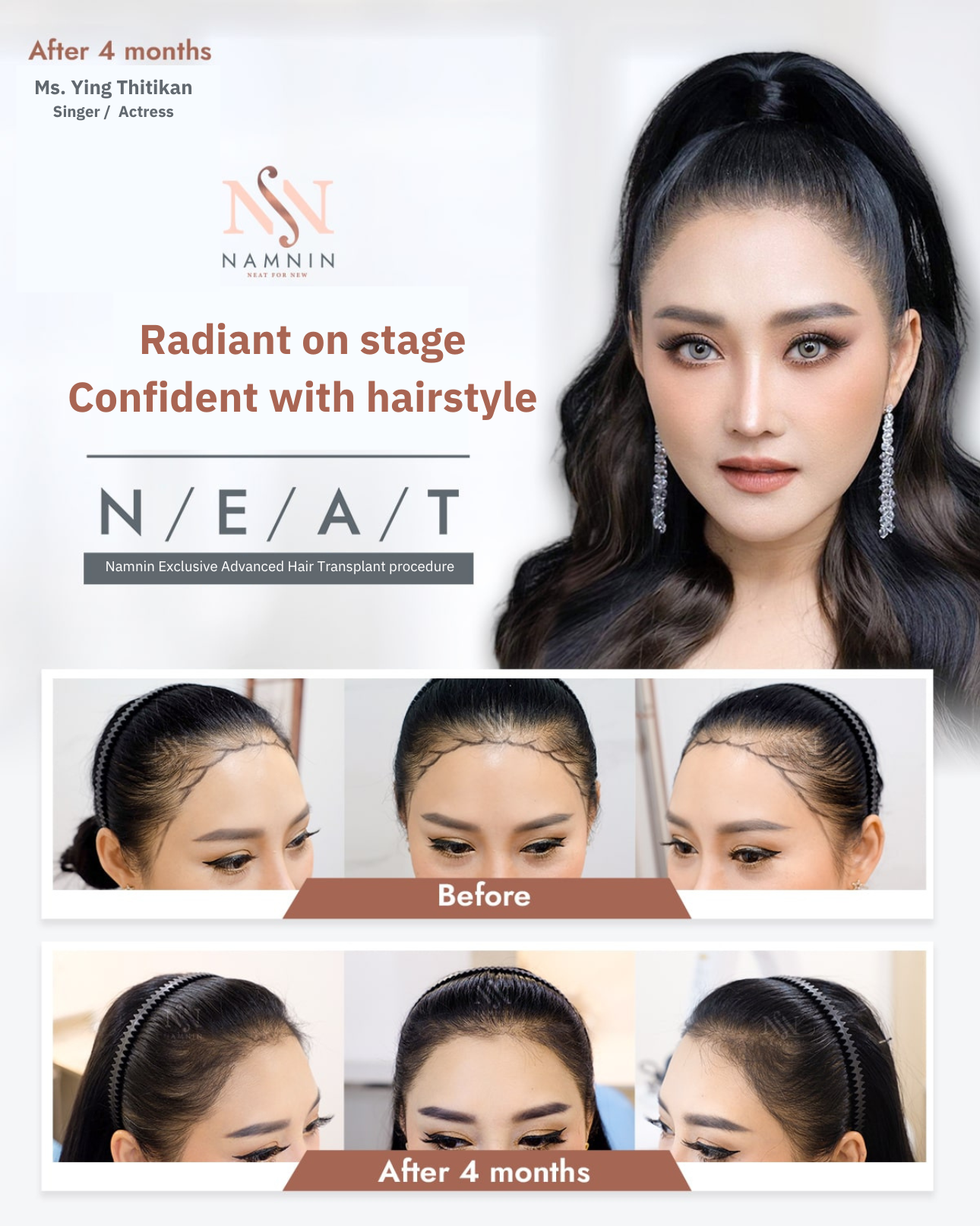
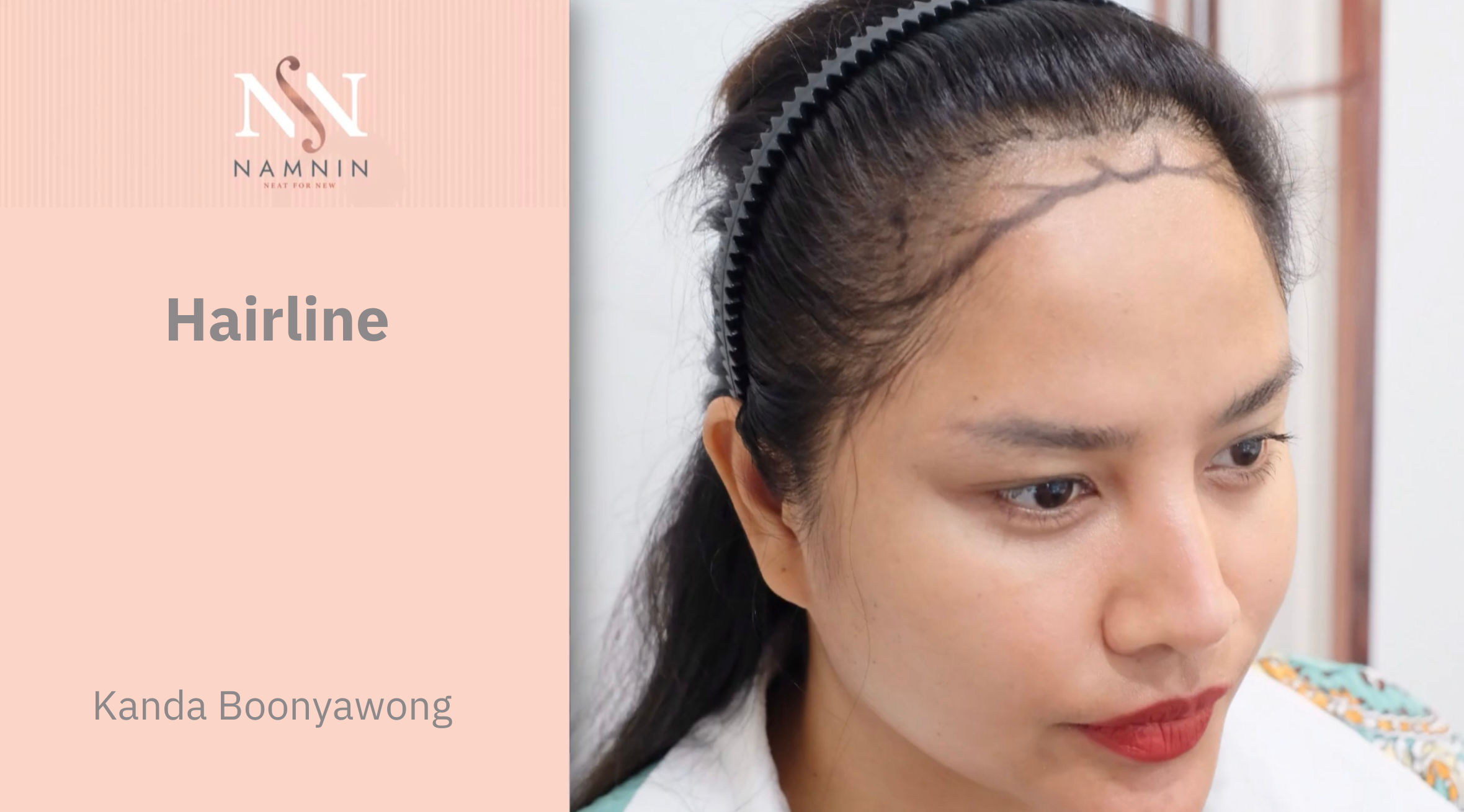
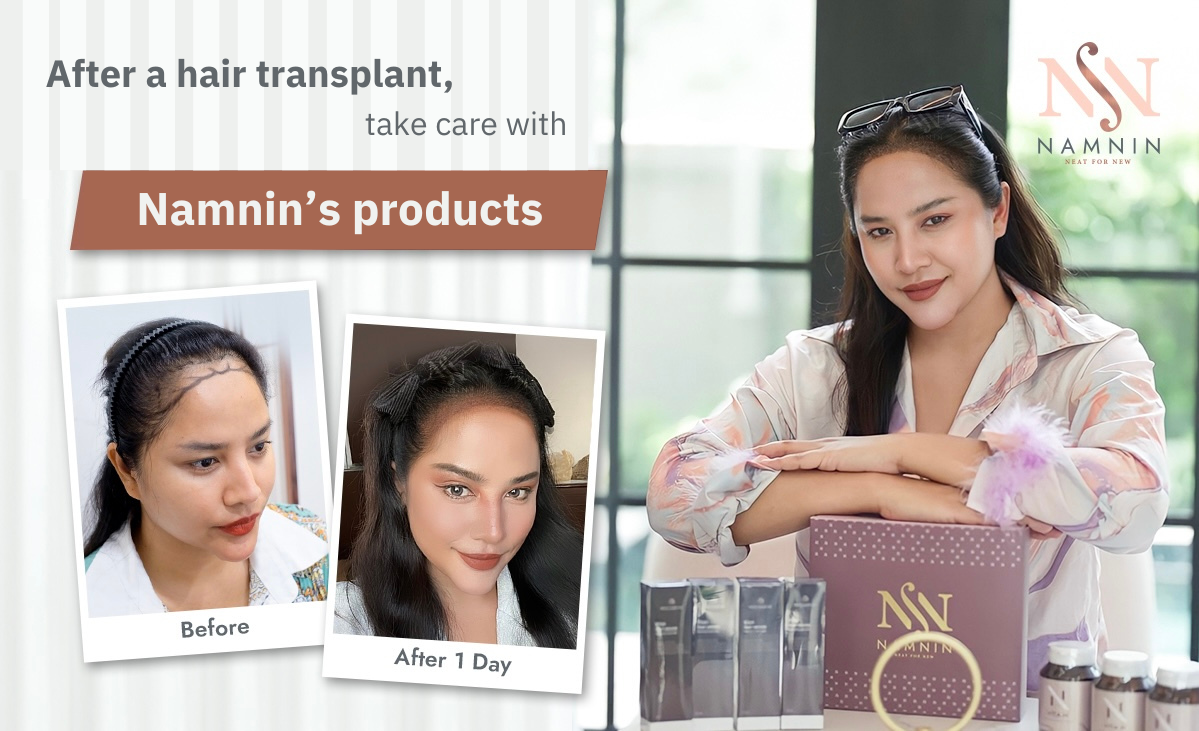
Behind that beautiful hairstyle, however, Khun Ying had been struggling with hair thinning, especially around her hairline. Years of wearing her hair tightly tied back had gradually caused noticeable thinning, while new hair seemed to grow back much more slowly.
“I naturally had a lot of baby hair, and my forehead was actually quite narrow. But once I started doing my own makeup and hairstyling for work, I needed a hairstyle that I could manage myself. Tying my hair back became the easiest solution. At first, it looked great, but after nearly ten years of doing it regularly, I noticed my hairline becoming thinner and receding, especially in the areas where I used to have plenty of baby hair. The thinning became very obvious, new hair grew less frequently, and it took much longer to grow back. That was when I realized my hair had truly become thinner.”
As the thinning became more noticeable, Khun Ying tried numerous solutions. She invested in hair care products, avoided tying her hair back whenever she was off work, and used Hair Shadow to conceal the thinning areas. Despite her efforts, none of these approaches produced the results she had hoped for.
“Before deciding on a hair transplant, besides using Hair Shadow, I searched online for shampoos and serums that people recommended, claiming they could strengthen hair or promote growth. I tried many of them, but honestly, I didn't see much improvement.”
At the same time, she also carried misconceptions about hair transplantation.
“Some people around me had undergone hair transplants, and to me, it looked frightening. The information I heard made me afraid to do it. One person I knew had severe facial swelling for months and had to wear head bandages. With my work, I simply couldn't spend one or two weeks like that.”
Everything changed after attending the wedding of Lulu, one of her close friends in the entertainment industry. Beyond seeing Lulu looking radiant on her special day, Khun Ying was impressed by how exceptionally beautiful and confident she looked. It was also the first time she met Dr. Nin.
After that day, she began researching hair transplantation more seriously before deciding on the approach that suited her best.
“I looked at many reviews, especially from Lala and Lulu. Seeing the before and after results made such a big difference. I started thinking, ‘If I had a hair transplant, maybe it would be good for me too.’”
She continued,
“It took me a long time to make the decision. I carefully considered everything. Seeing people I love and trust go through the procedure and genuinely feel happy afterward gave me confidence. They could also give me honest advice. That was when I finally decided, ‘Today is the day I'm going to have my hair transplant with the doctor.’ And it truly turned out exactly as I had hoped.”
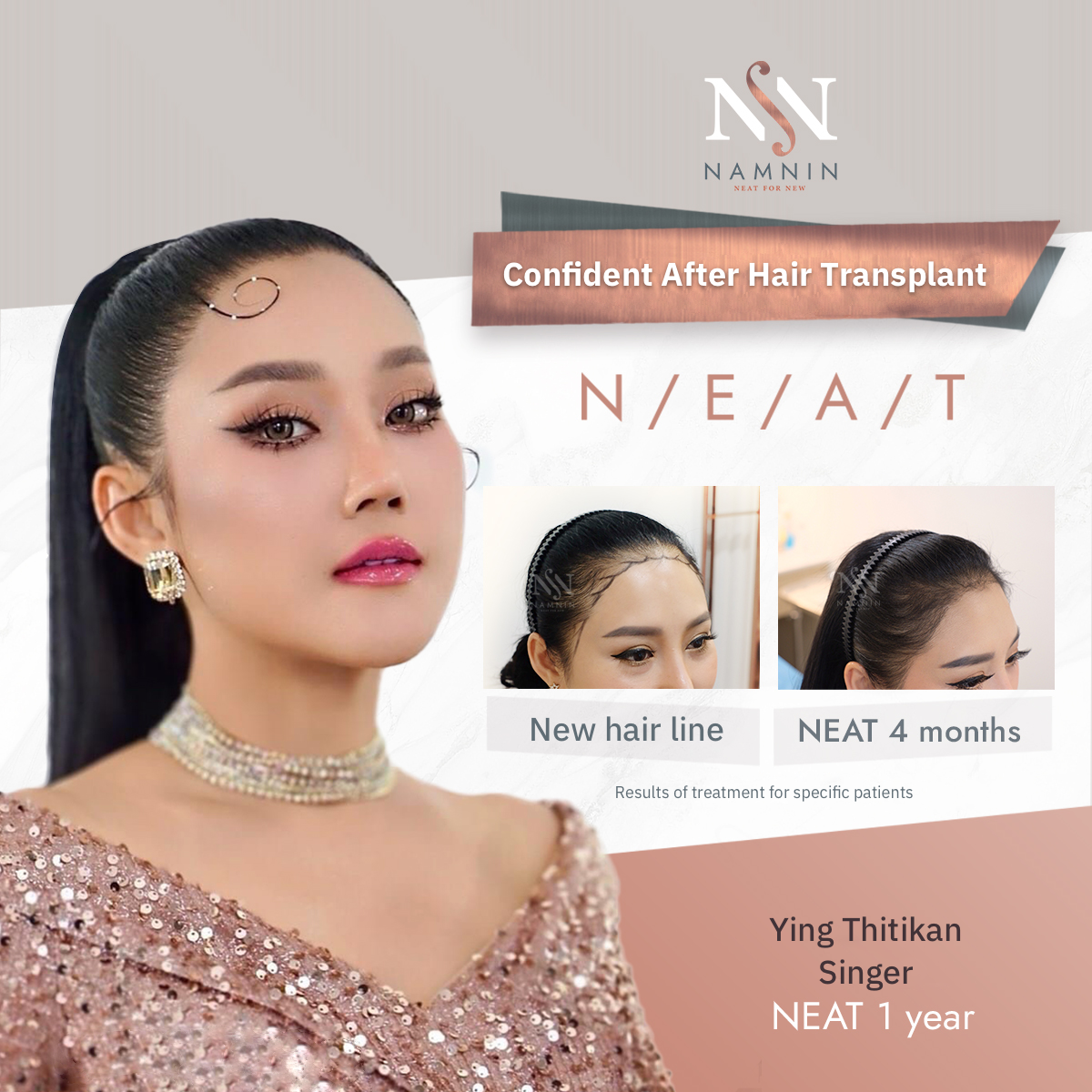
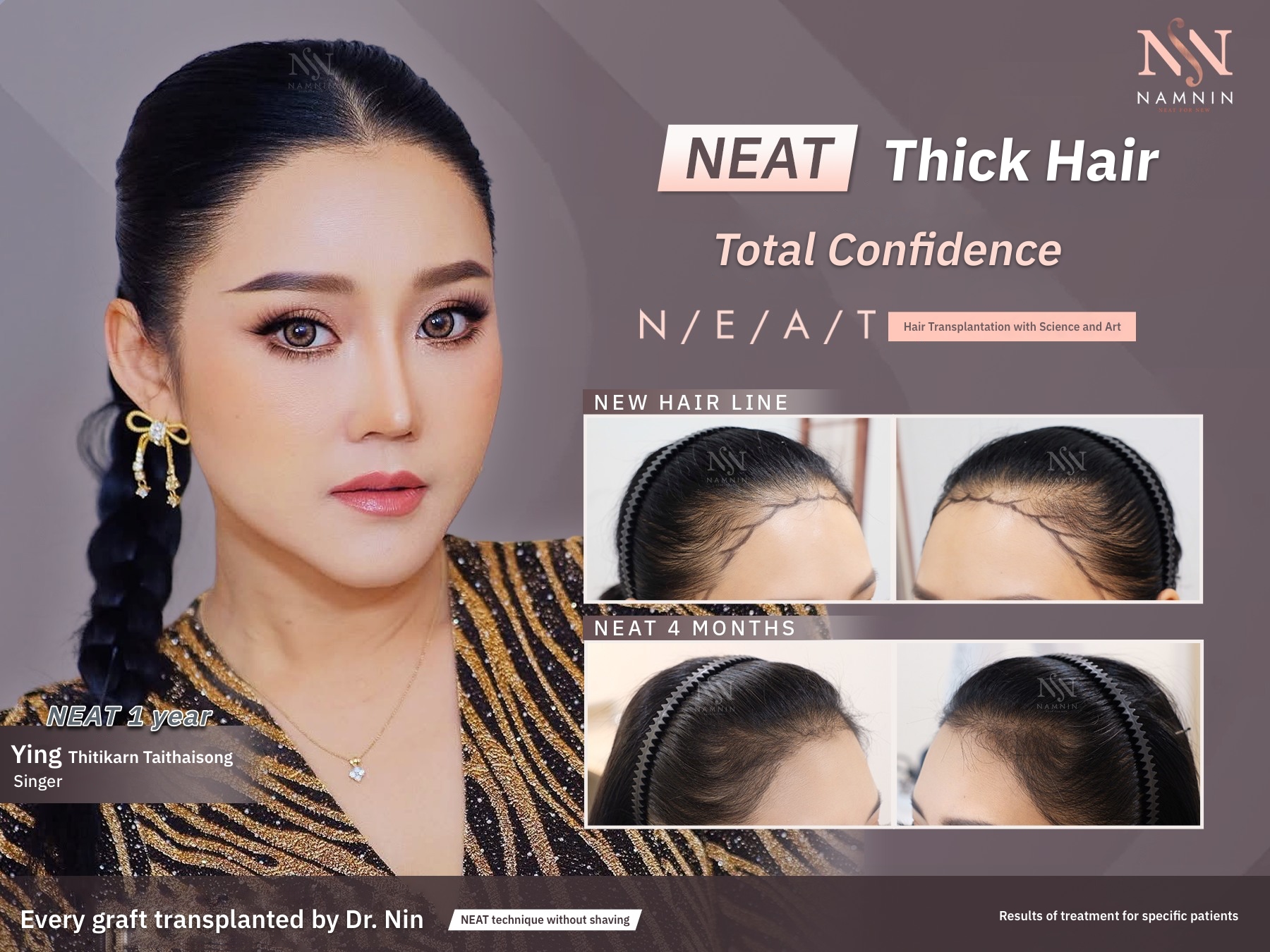
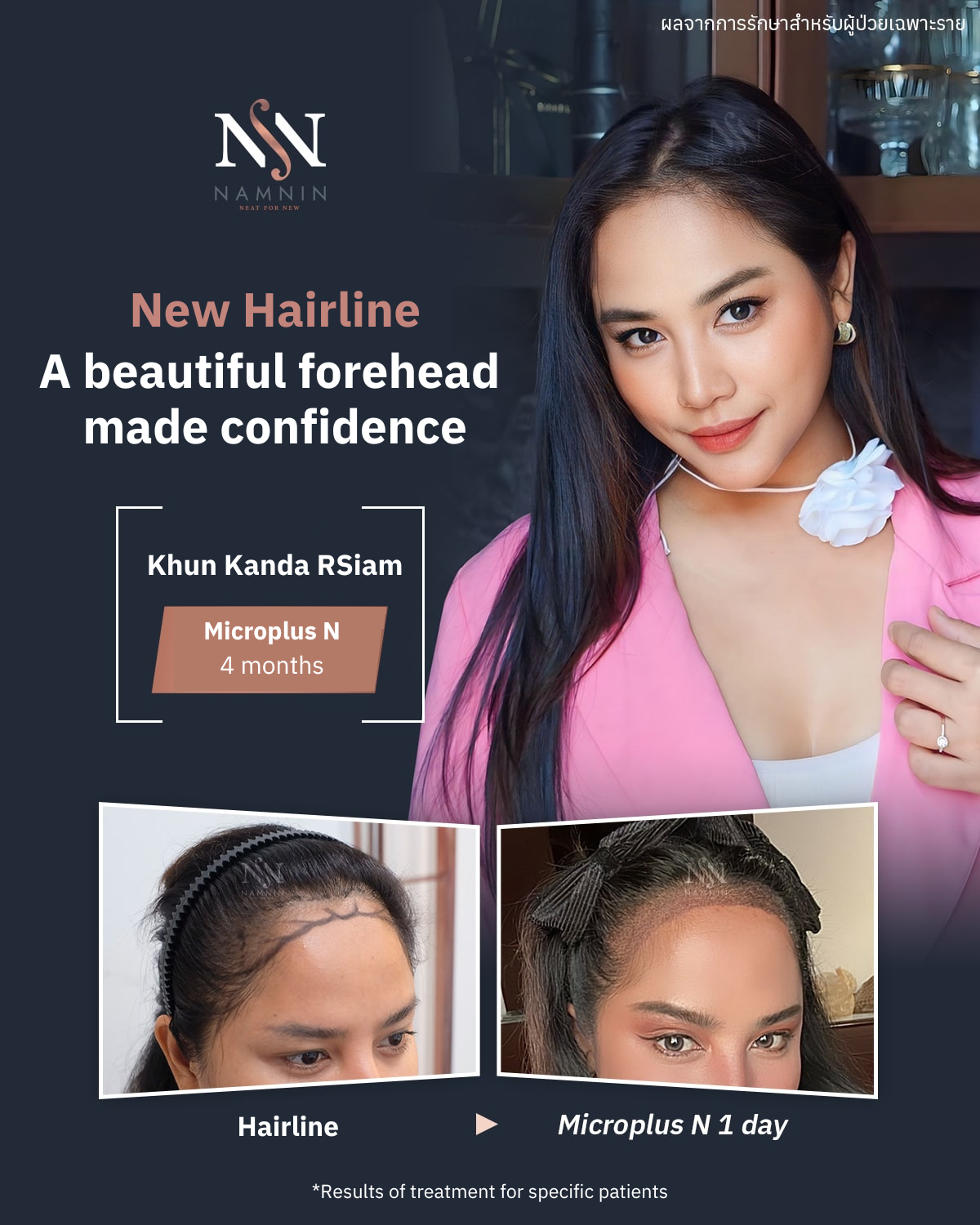
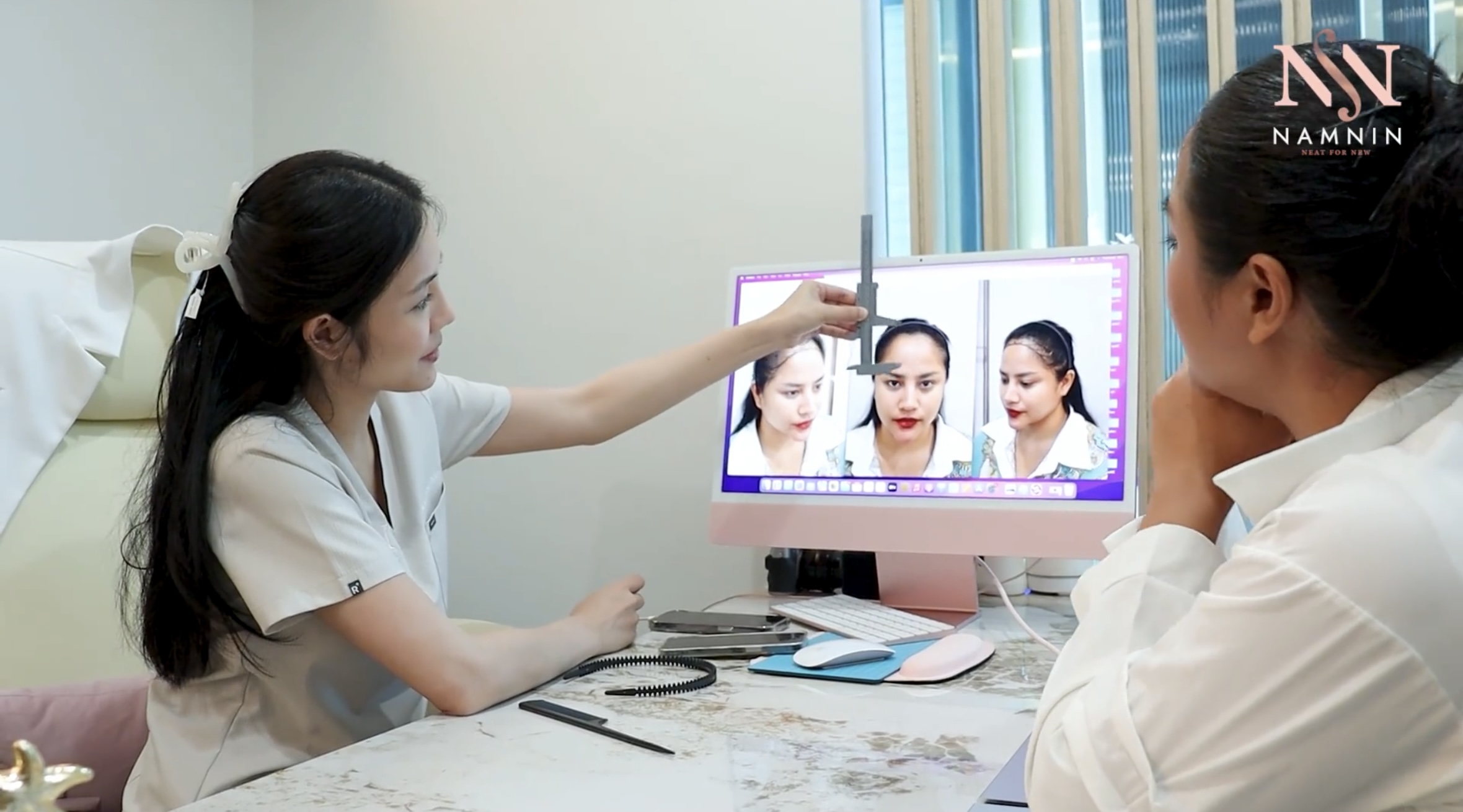
With the NEAT Technique, one of the most important steps is designing the facial frame. For Khun Ying, Dr. Nin preserved her original facial proportions because her forehead was already well balanced. The main concern was the deep recession and thinning along both sides of the hairline caused by years of traction. Simply restoring hair along her original hairline was enough to recreate natural fullness.
Instead of relying on makeup to disguise thinning areas, she now enjoys the confidence of having real hair that naturally frames her face.
“Honestly, I didn't have a specific hairline design in mind. I completely trusted the doctor's experience. I knew the doctor would create something that suited each individual's face, so I simply said, ‘I'll leave it up to you.’ And the doctor designed everything for me.”
Looking back on the day of her procedure two years ago, Khun Ying remembers how different the experience was from what she had imagined.
“I didn't feel any pain at all. I was so relaxed. During the procedure, I was even using my phone. It wasn't stressful in the slightest. I was fully awake the entire time. If I had work two or three days later, I could have gone without any problem. It never felt like the procedure interfered with my life.”
She added,
“It may take quite a long time, but to me it was absolutely worth it. I wasn't in pain, and the doctor explained every step throughout the procedure, letting me know exactly what was being done and where more grafts were being placed. That really helped me feel as comfortable as possible.”
Khun Ying's procedure involved approximately 1,800 grafts and lasted about 10 hours. When asked whether spending that much time on the procedure was difficult, she smiled and said,
“Feeling tired is completely normal, but I chose to focus on the future instead. I imagined the day my hair would become thick and full, when my hairline would beautifully frame my face and I would never have to use Hair Shadow again or worry about it running down my face when I sweat. Thinking about that made me forget all about the fatigue. I was already imagining how beautiful I would feel.”
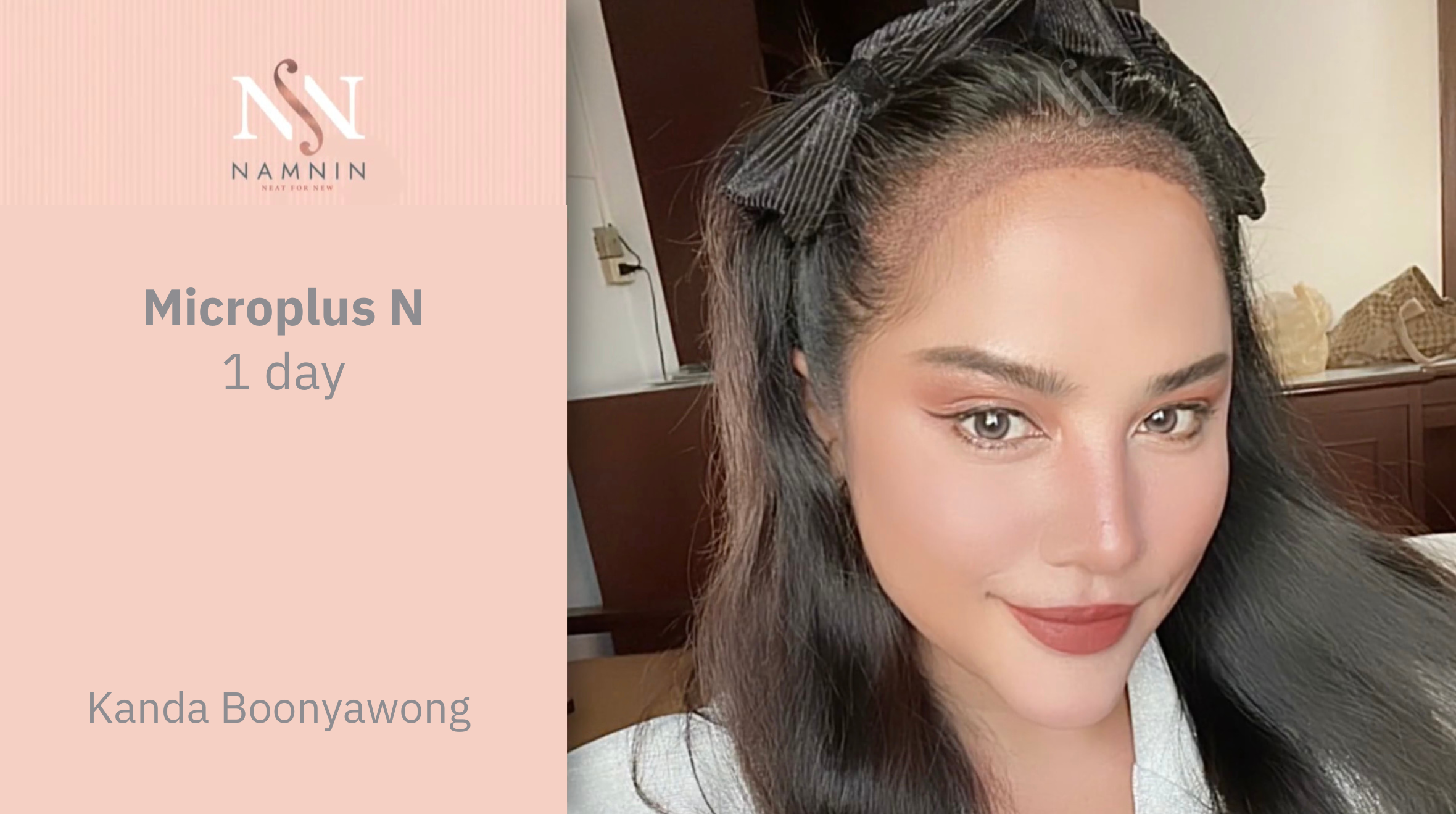
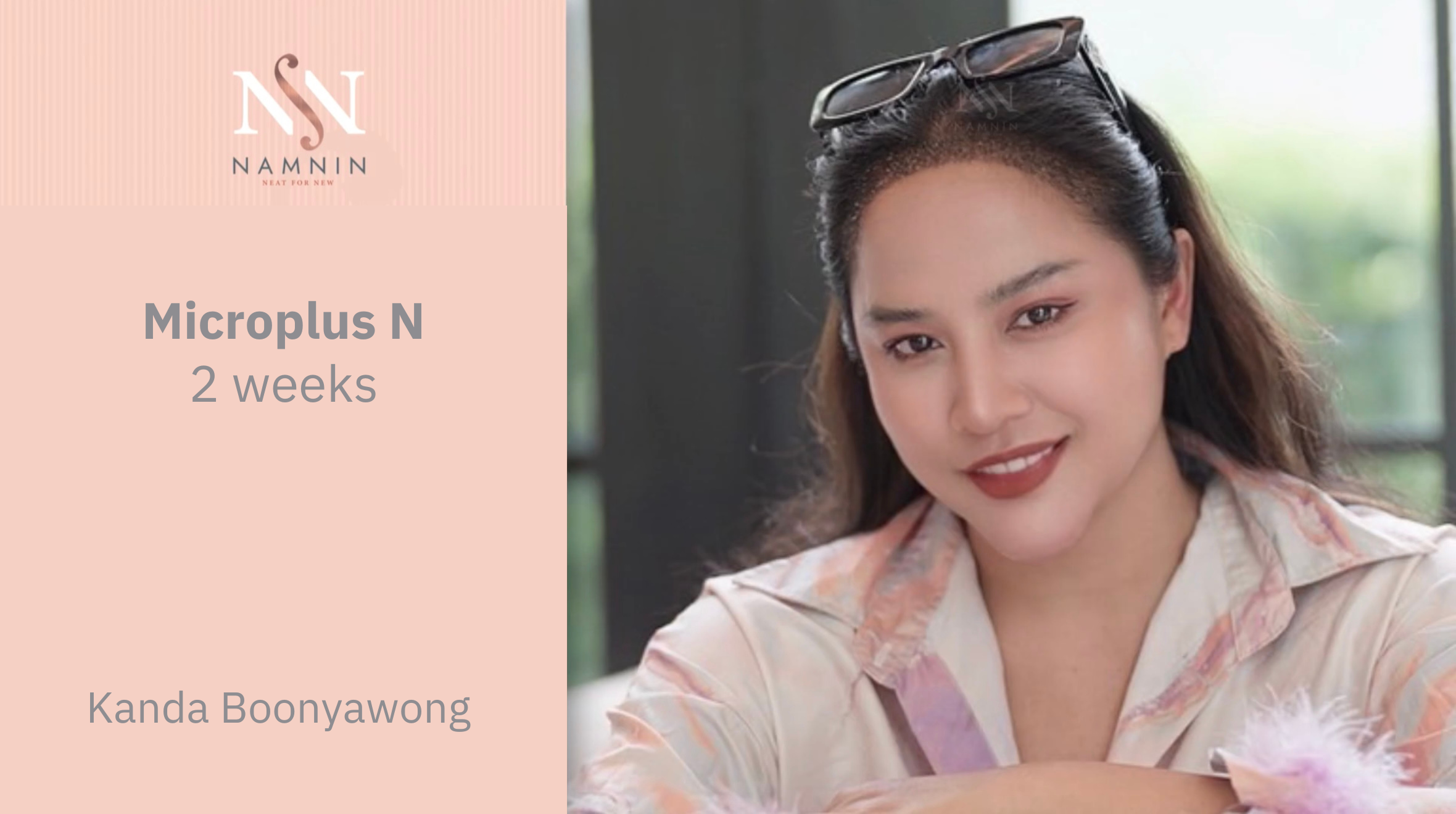
The most noticeable change came immediately after the transplant. She found herself relying far less on makeup because the areas she once concealed with Hair Shadow were gradually being filled with new hair.
“The doctor told me there would be a shedding phase after the transplant. Honestly, I could probably count the hairs that fell out. I'm not exaggerating. There was very little shedding. I looked in the mirror every day, and everything looked the same. Eventually, the transplanted hair grew exactly as expected.”
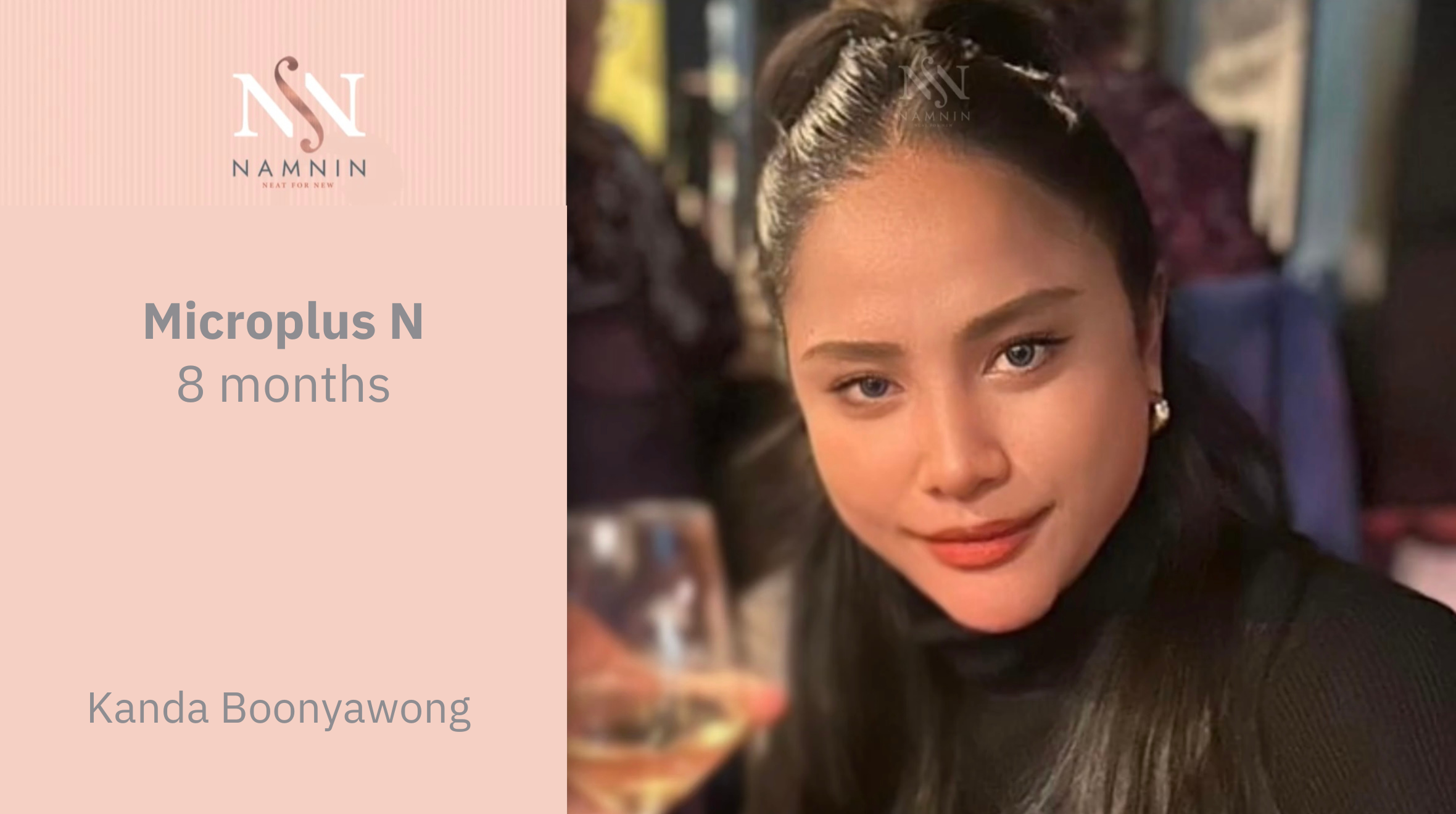
Now, two years later, Khun Ying enjoys not only a fuller hairline but also something she appreciates even more—the direction in which the transplanted hair grows.
As a singer and actress, she frequently changes hairstyles for different roles and performances, making natural hair movement essential.
“What impressed me most wasn't just how the doctor explained every step. It was how the new hair actually grew. The direction of the hair matched my original hair perfectly. That, to me, truly reflects the doctor's technique.”
Dr. Nin explained the philosophy behind the NEAT Technique:
“The goal of hair transplantation is not simply to make hair grow. Achieving growth is only one part of success. Equally important is the appearance after transplantation. The direction, angle, and growth pattern should closely resemble the patient's original hair so they can return to everyday life with everything blending naturally. People shouldn't look at them and wonder whether they've had a hair transplant.”
This philosophy has remained the foundation of every procedure performed by Dr. Nin.
When asked how she feels about choosing Dr. Nin for her hair transplant, Khun Ying answered without hesitation,
“It was absolutely the right decision. If I had continued to hesitate, my hairline would have kept receding, my hair would have become even thinner, and I would have needed more grafts and a longer procedure. I'm grateful that I addressed the problem while it was still manageable. I'm really happy I chose to fix it in time.”
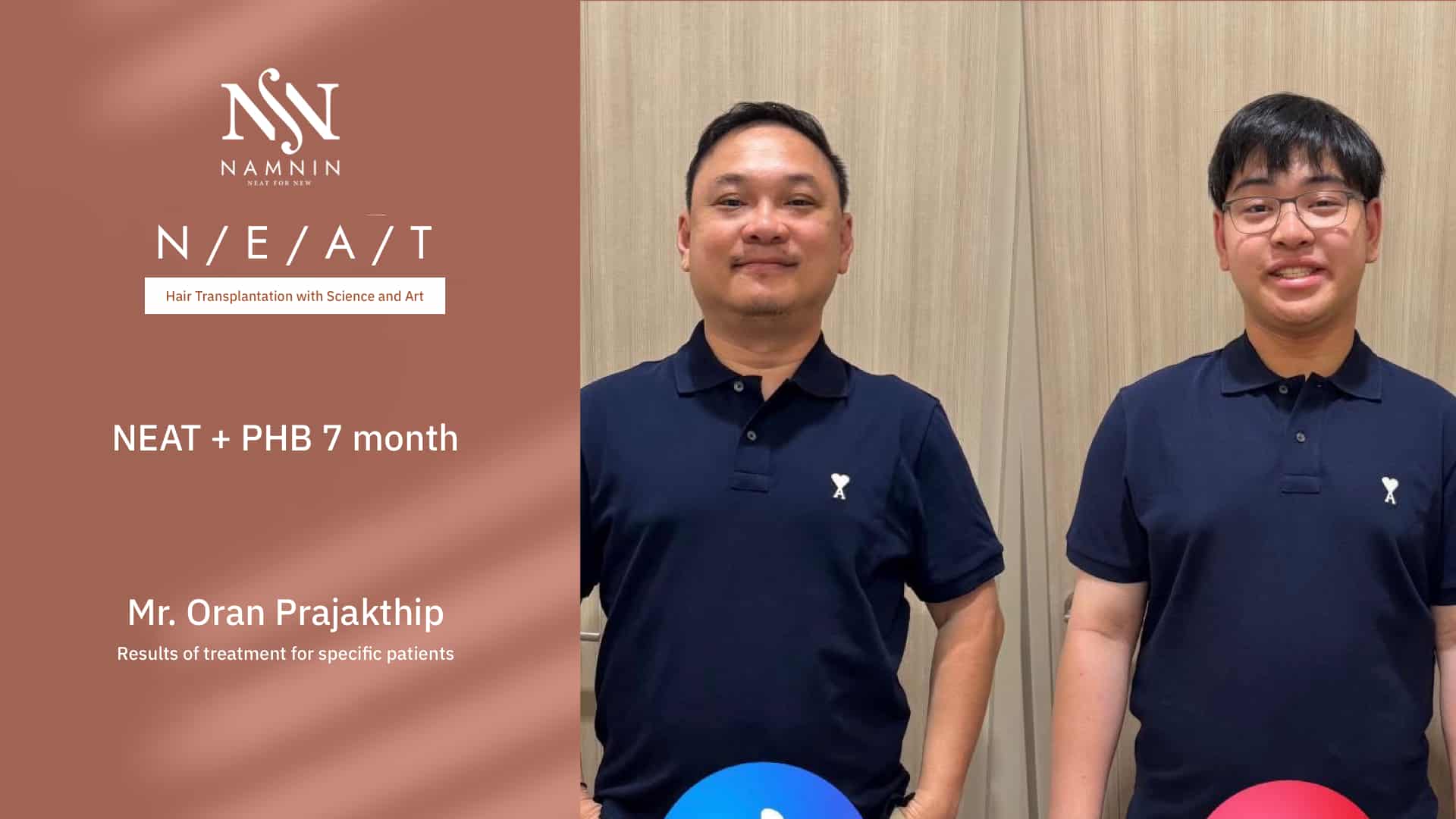
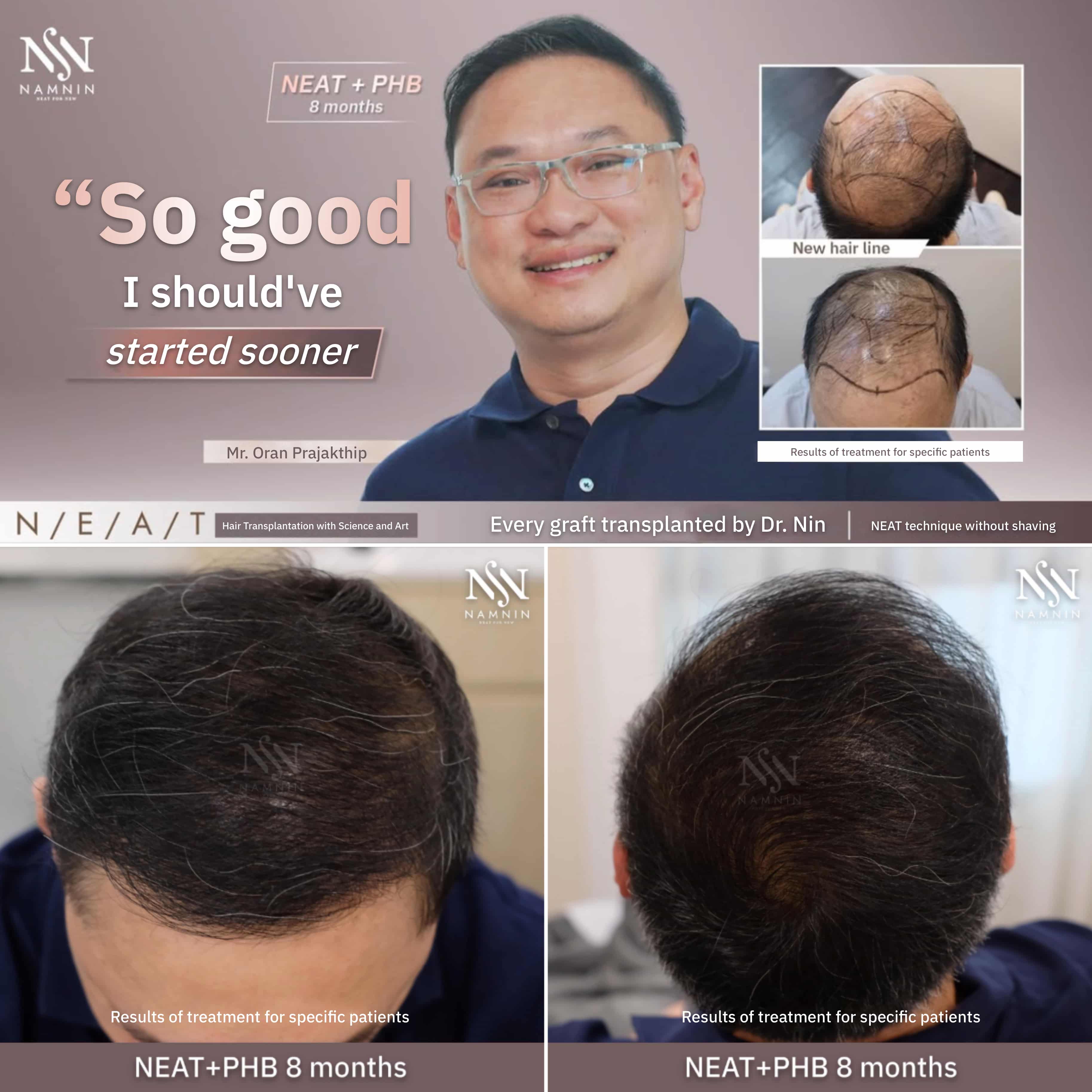
After experiencing the results herself, Khun Ying has also recommended Dr. Nin to friends and colleagues in the entertainment industry. One of them was Khun Tom Rainbow, who had struggled with thinning hair at the crown for many years. Following Khun Ying's recommendation, he also underwent a hair transplant using the NEAT Technique and has continued receiving follow-up care with Dr. Nin over the past two years.
Because of her career in the entertainment industry, Khun Ying's hair is exposed to straightening, curling, coloring, and chemical styling almost every day. Combined with her personal health challenges, including frequent illness, insufficient rest, and possibly inadequate protein intake, she eventually began experiencing diffuse hair loss across the entire scalp.
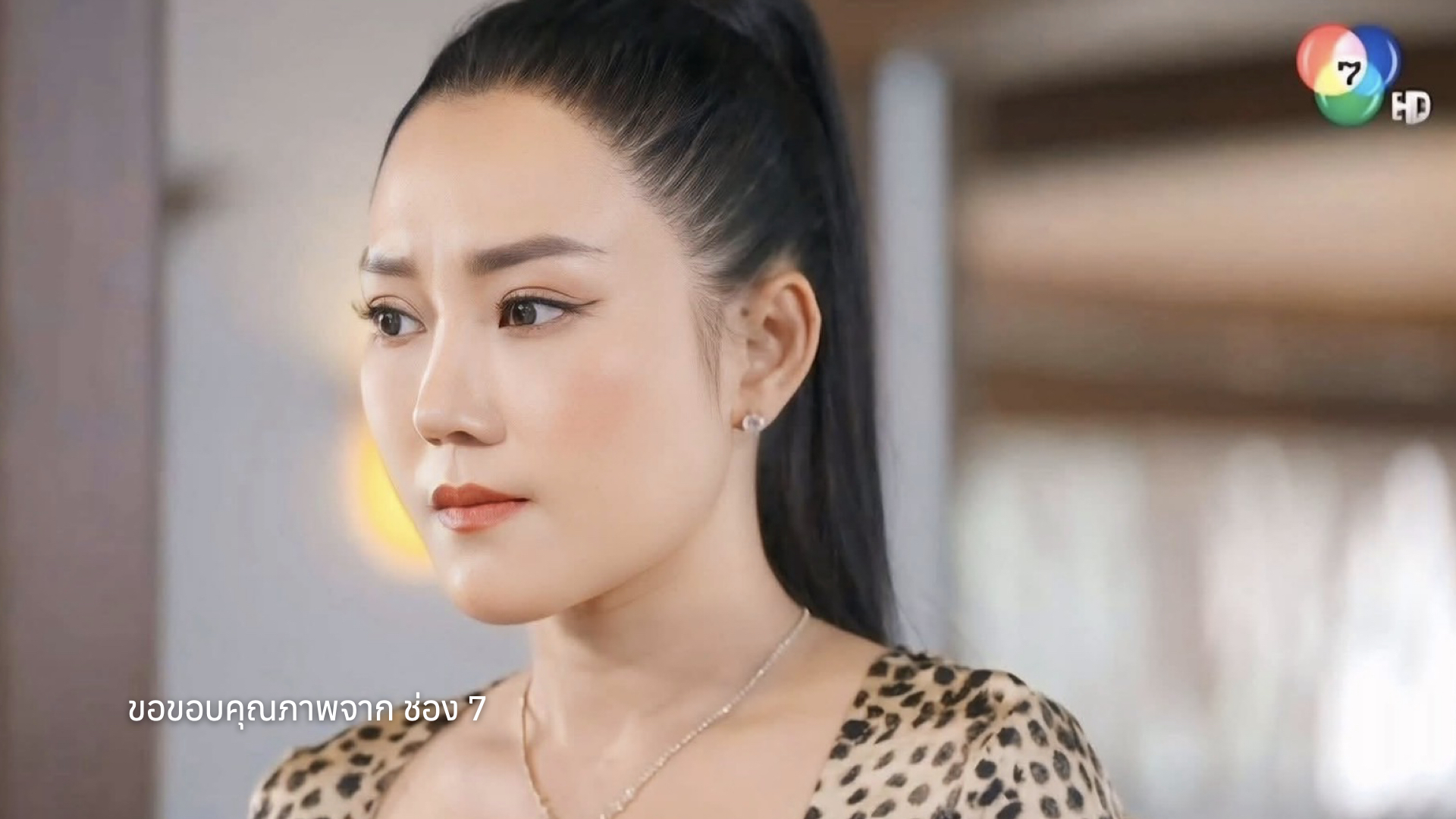
“When I first started getting sick, it became chronic. Even getting caught in the rain for a little while would make me ill. It would take me more than three months to recover, and this kept happening throughout the past two years. I also wasn't getting enough rest and probably wasn't consuming enough protein because I follow a vegetarian diet. I don't eat vegetarian all year, but when I do, it's usually for extended periods and I mainly eat eggs. That may have contributed to my hair problems. My workload may also have been a factor because as soon as one drama finished, I would move on to singing performances, followed immediately by another drama. It was one project after another.”
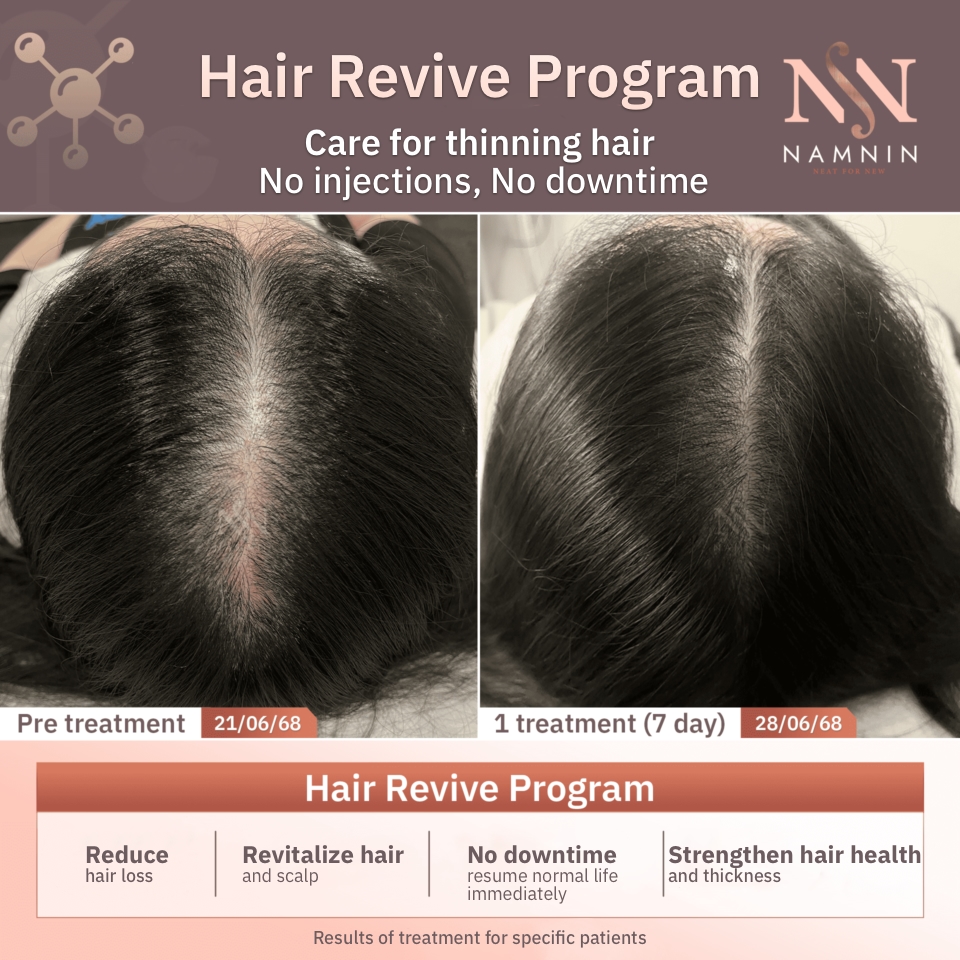
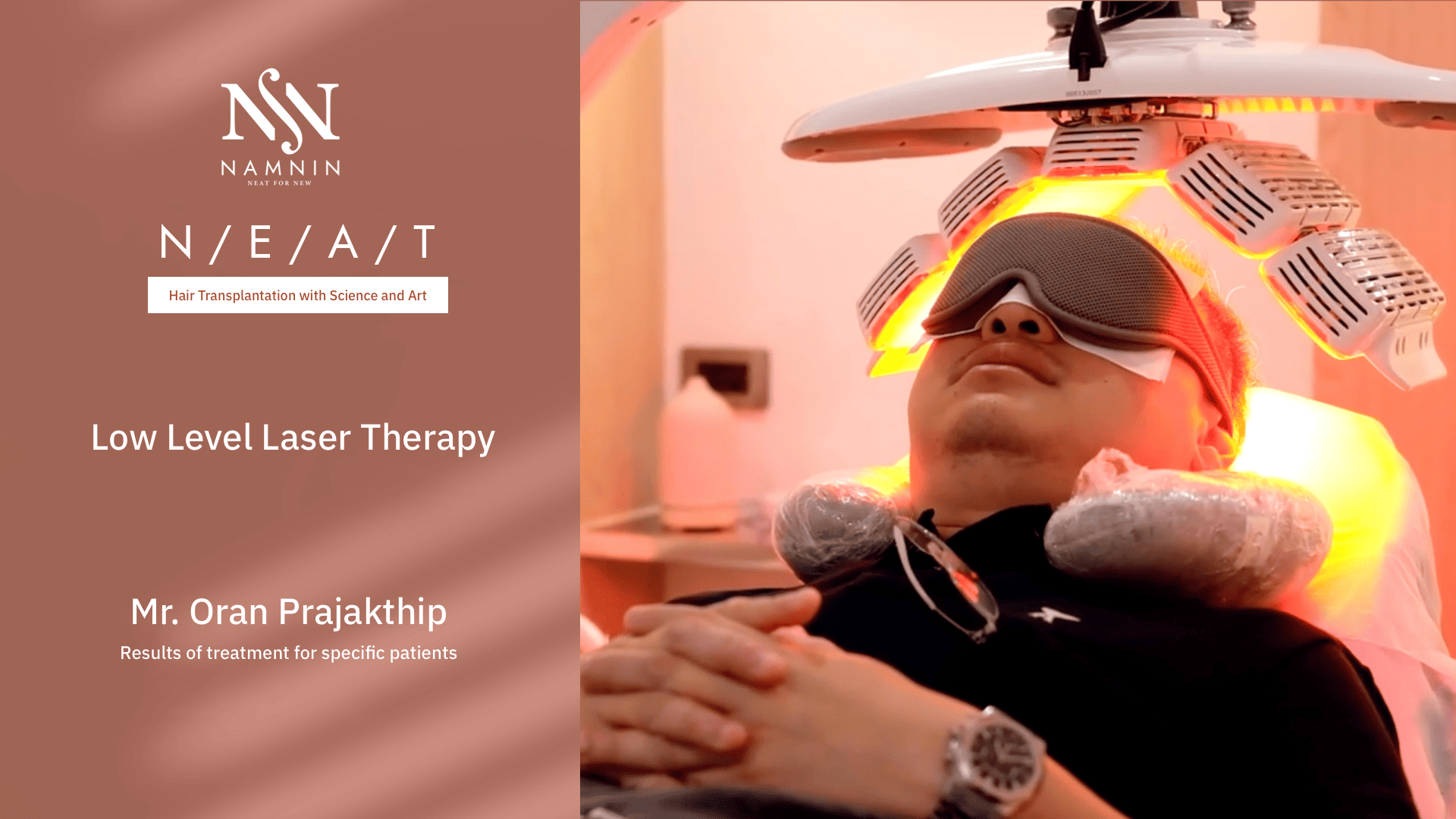
After assessing the causes of Khun Ying's recent hair loss and thinning, Dr. Nin recommended the Hair Revive Program, which is suitable for both women and men experiencing hair loss and thinning from a variety of causes, including genetics, chemical sensitivity, side effects from illness or surgery, stress, and nutritional deficiencies. It is also appropriate for individuals who have undergone a hair transplant at least four months earlier. The program helps restore weakened hair follicles, reduce scalp inflammation, minimize hair shedding, increase hair shaft thickness, and strengthen overall hair health from within.
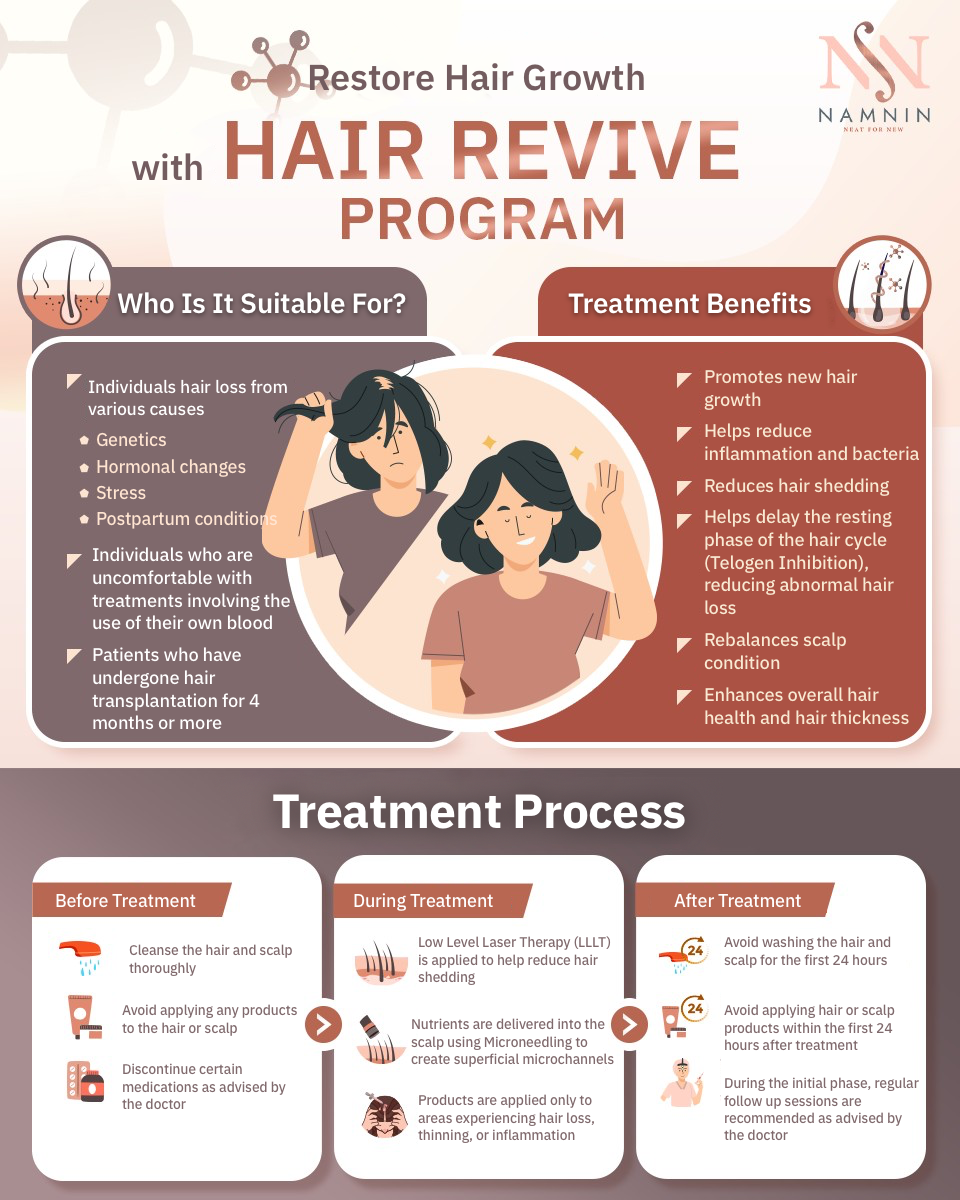
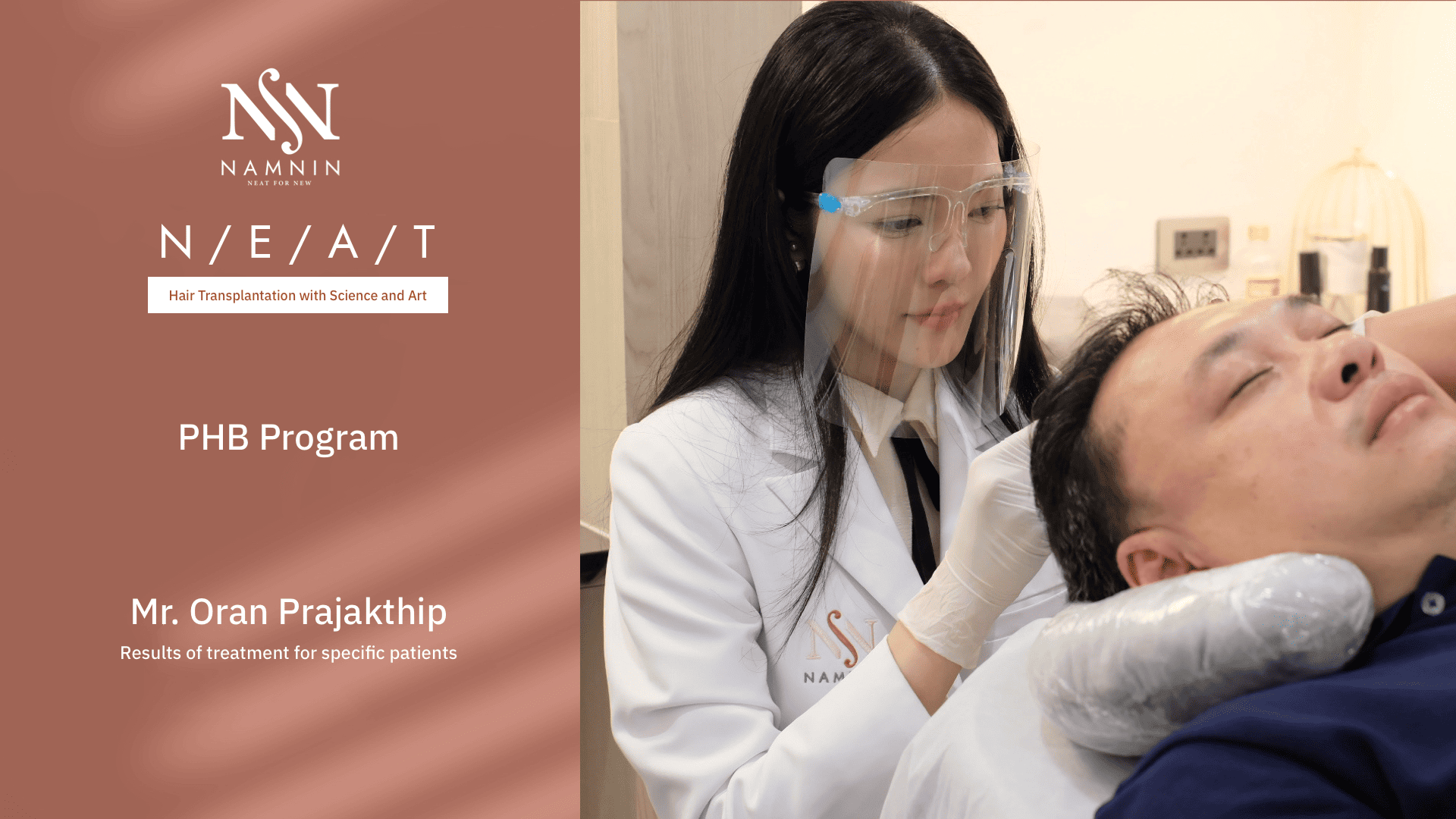
Each Hair Revive Program session takes approximately 45 to 60 minutes. Patients can resume their normal daily activities immediately afterward. The treatment is convenient, with noticeable results, and features the use of natural plant derived ingredients. A microneedle is used to create superficial microchannels in the scalp, followed by the application of mushroom derived chitosan extract, allowing the nourishing ingredients to penetrate deeper into the skin. Every step of the procedure is performed under the care of Dr. Nin.
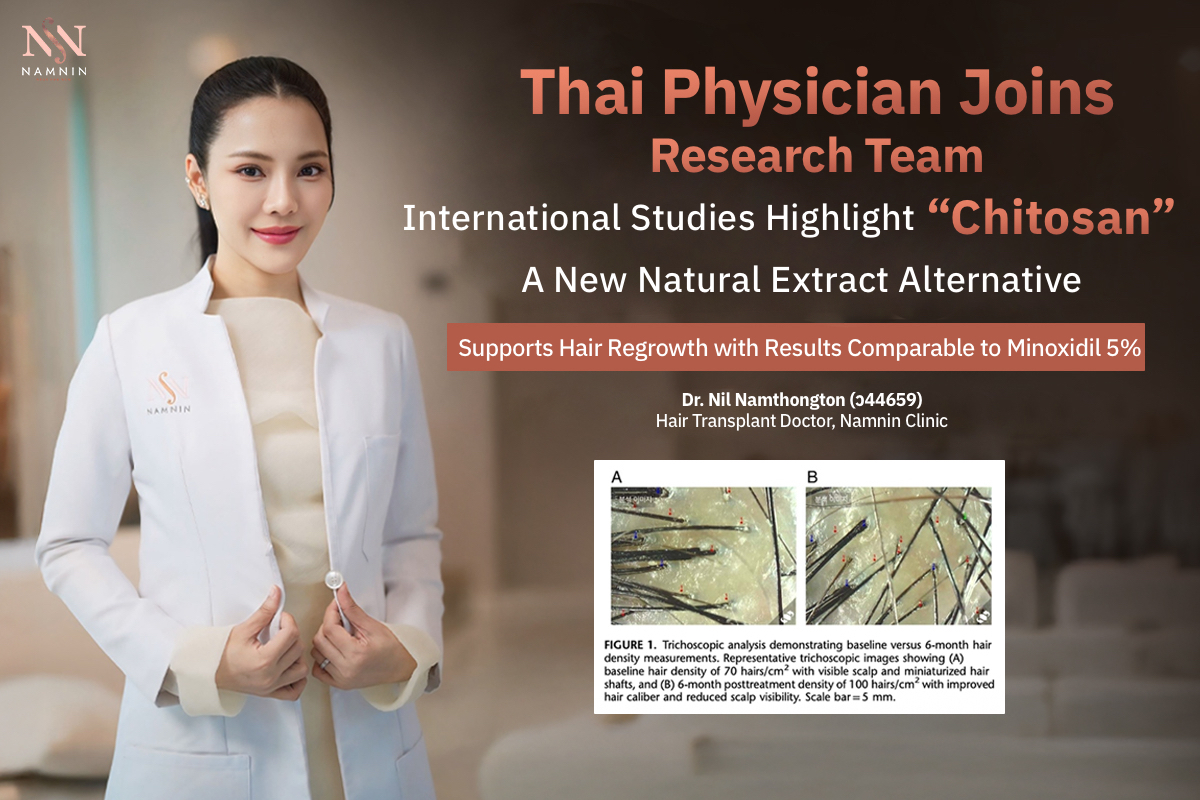
The mushroom derived chitosan used in the program is the result of international collaborative research conducted by Dr. Nin together with leading physicians from South Korea and Indonesia. Their objective was to identify a natural plant derived extract capable of treating hair loss and thinning without causing adverse effects.
Their research, titled "Comparative Efficacy of Topical Chitosan and Minoxidil in Hair Loss: A Controlled Study with Microneedling," was published in The Journal of Craniofacial Surgery, a leading peer reviewed journal in craniofacial surgery dedicated to advancing new treatments and surgical techniques for patients worldwide. The study demonstrated that chitosan possesses hair growth promoting properties and has the potential to become a new therapeutic alternative alongside conventional medications currently used for hair loss. Dr. Nin has further developed this research into the natural extract now used in the Hair Revive Program.
Today, Khun Ying's hair has regained its thickness, fullness, and density. More than a physical transformation, it reflects the care and attention she has given to herself. For women, self care is not a luxury. it is a way of recognizing your own worth and giving yourself the care you truly deserve.