Tag : NEAT
6 Checklists for Choosing the Right Hair Transplant Clinic
If you are considering whether to undergo a hair transplant or wondering which clinic to choose, we understand that this can be a confusing and somewhat overwhelming first step. You are faced with an enormous amount of information and advice online, as well as countless hair transplant clinics to choose from.

More importantly, a hair transplant is a procedure that most people may only undergo once or twice in their lifetime. This means that, for most people, it is their first time making such an important decision, without having any firsthand experience to guide them. Making the wrong choice could mean having limited opportunities for another procedure or a second transplant in the future. This is a significant decision that anyone who cares about their hair must carefully consider.

To help ease your concerns, Namnin Clinic presents these 6 Checklists as a Guideline to help you understand where to begin your research, what information to consider, and how to answer the questions that will ultimately lead you to the hair transplant clinic that best meets your needs. This way, you can make an informed decision without getting lost in an overwhelming amount of information.

☑ How Well Do You Understand Hair Transplantation?
Start with a simple question: Do you already understand hair transplantation well enough? This will help you evaluate the various factors that influence the quality of a hair transplant, as well as whether the associated costs are reasonable.

  • What types of hair transplant procedures are available?
Hair transplant technology has advanced considerably, leading to the development of new techniques that better address the needs of different patients. You have probably come across technical terms such as FUE, FUT, or DHI, which refer to different hair transplant techniques commonly used today. Understanding what these terms mean and identifying which technique is suitable for you can help narrow down your options considerably.

  • Who will perform the hair transplant?
This is an equally important question because hair transplantation is a procedure that may involve different medical professionals, including physicians specializing in hair restoration, multidisciplinary medical teams, or medical assistants. You can weigh the advantages and strengths of each approach and decide early on who you would prefer to perform your hair transplant.

  • What does post transplant care involve?
Many people tend to overlook this aspect, even though post transplant follow-up care is just as important as the hair transplant procedure itself. Newly transplanted hair requires close monitoring and care throughout an entire year to ensure that the grafts survive and grow firmly and healthily. You will certainly want a clinic that provides continuous follow-up, answers your questions and concerns, and offers hair care recommendations to give you greater peace of mind.

☑ How Transparent Is Each Clinic When Providing Consultations?
Once you have answered the questions in the first Checklist, the next step is to explore the service approach of each clinic. Every clinic has its own style of providing care. You can ask each clinic for detailed information to make comparisons and decisions more easily.

  • What does the entire hair transplant process involve?
This includes everything from your first visit, when you discuss your concerns and receive a consultation, through the hair transplant procedure itself and the post transplant follow-up care, which we have already emphasized as being important.

  • What are the costs of the hair transplant?
Find out what services are included in the quoted price, what is excluded, and whether there are any additional expenses you may need to pay.

  • Do you have any further questions or concerns?
Feel free to ask the clinics you are interested in for more information at this stage.

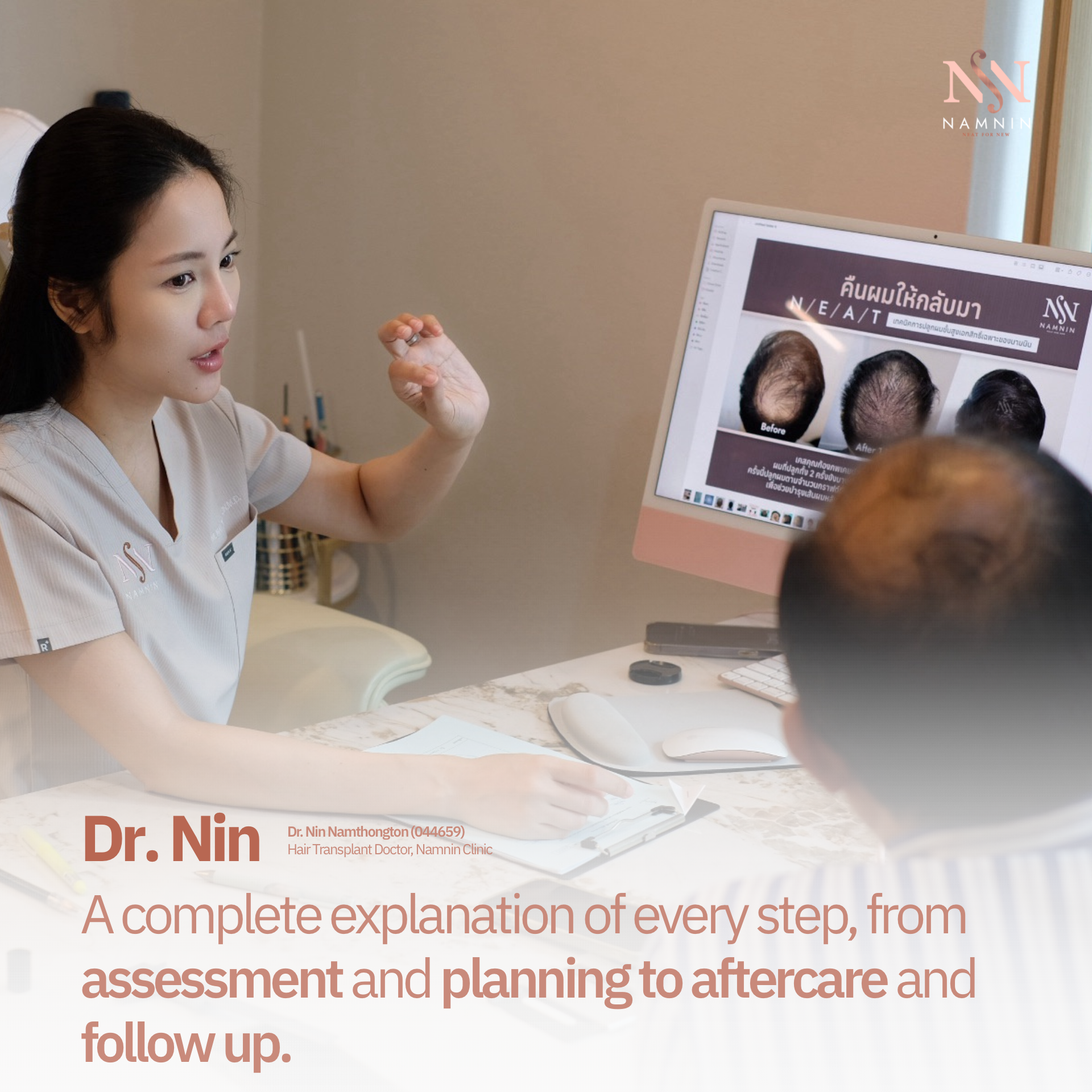
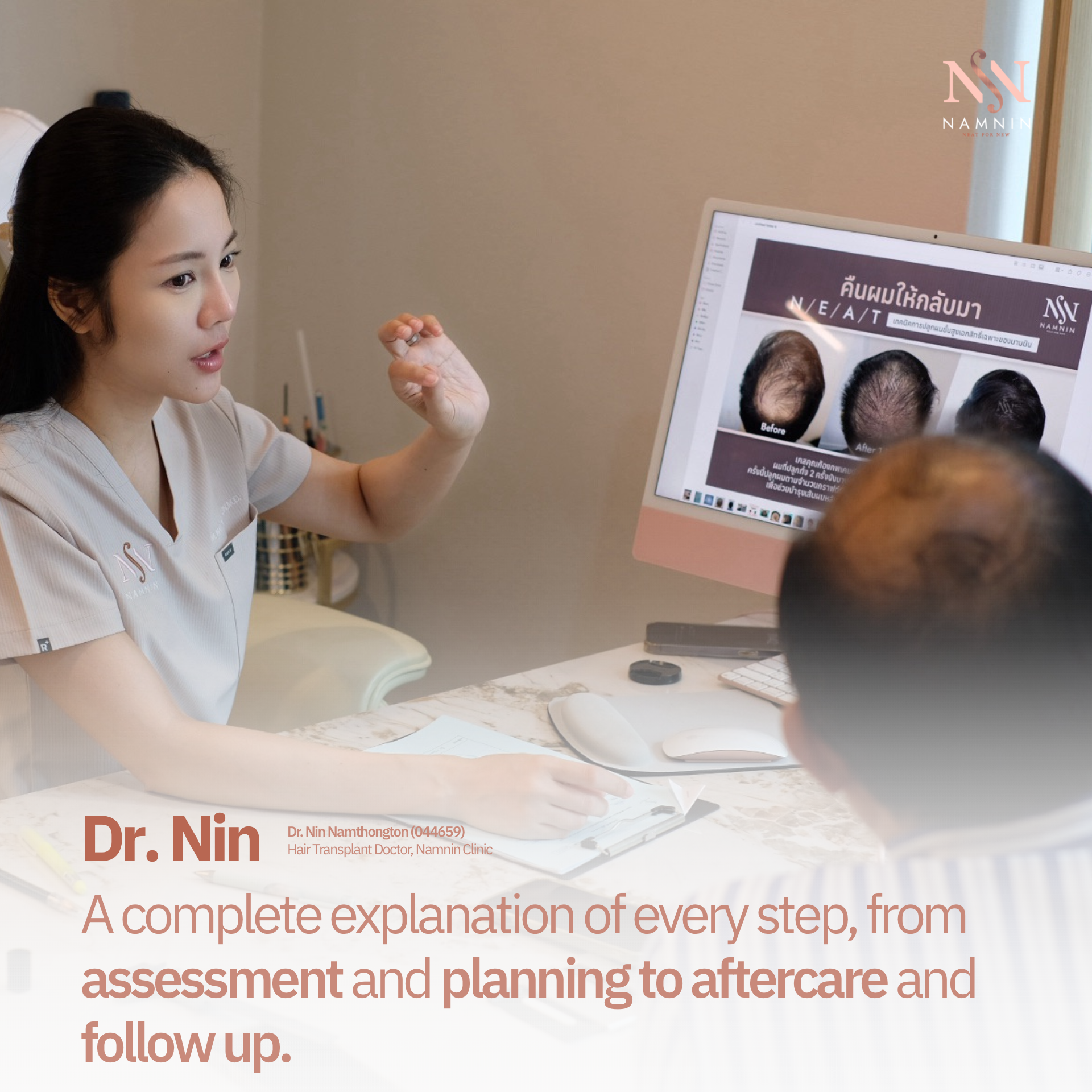
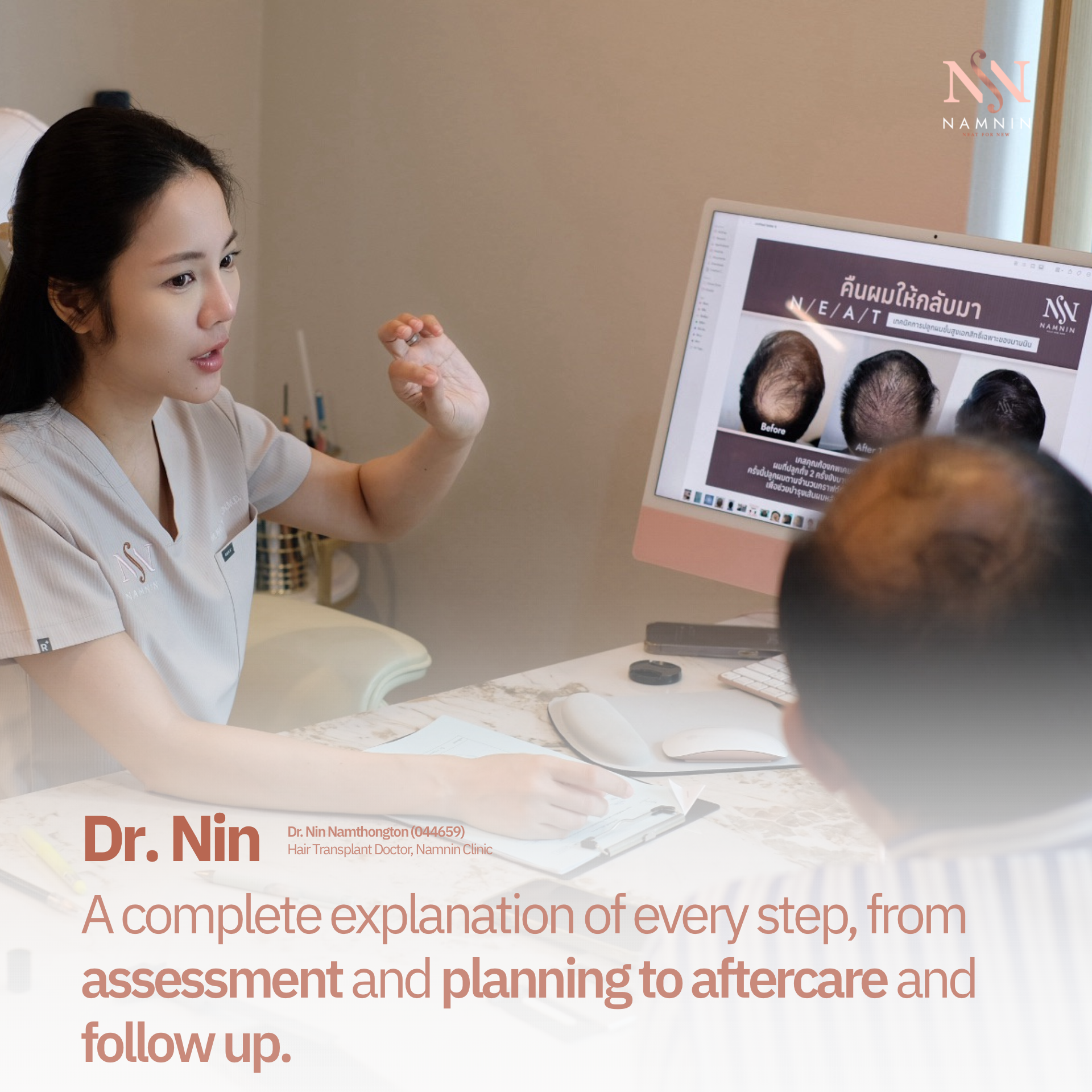
At Namnin Clinic, our process begins with a physician discussing the patient's concerns and expectations, followed by an analysis of the hair and scalp and an assessment of the number of grafts required for transplantation. The physician then explains the procedure in simple, easy to understand terms, including what to expect, which hair transplant technique will be used, who will perform the procedure, how to prepare, and how follow-up care will be provided throughout the first year.

Having a clear understanding of these steps can significantly reduce patients' concerns and help them feel more confident about their decision.

☑ Who Will Be Responsible for Performing the Hair Transplant?
If we classify hair transplant procedures based on who performs them, there are currently three main approaches:
1. The physician personally performs every graft implantation, accounting for 100% of the procedure.
2. The physician and a multidisciplinary medical team work together to perform the procedure.
3. A multidisciplinary medical team performs the procedure under the supervision of a physician.
There is no definitive way to conclude that one approach is better than another or that a particular method is the best. The right answer is simply the approach that is most suitable for the individual patient's needs and expectations.

☑ What Hair Transplant Technique and Instruments Are Used?
Take this opportunity to explore the details of hair transplant techniques a little further. Once you have identified the technique that suits you, remember that there may still be smaller details that differ depending on the attention to detail and experience of physicians at each clinic. The choice of instruments can also influence the effectiveness of the procedure.

Here are some examples of the details that patients at Namnin Clinic will receive a thorough explanation of from the very beginning.

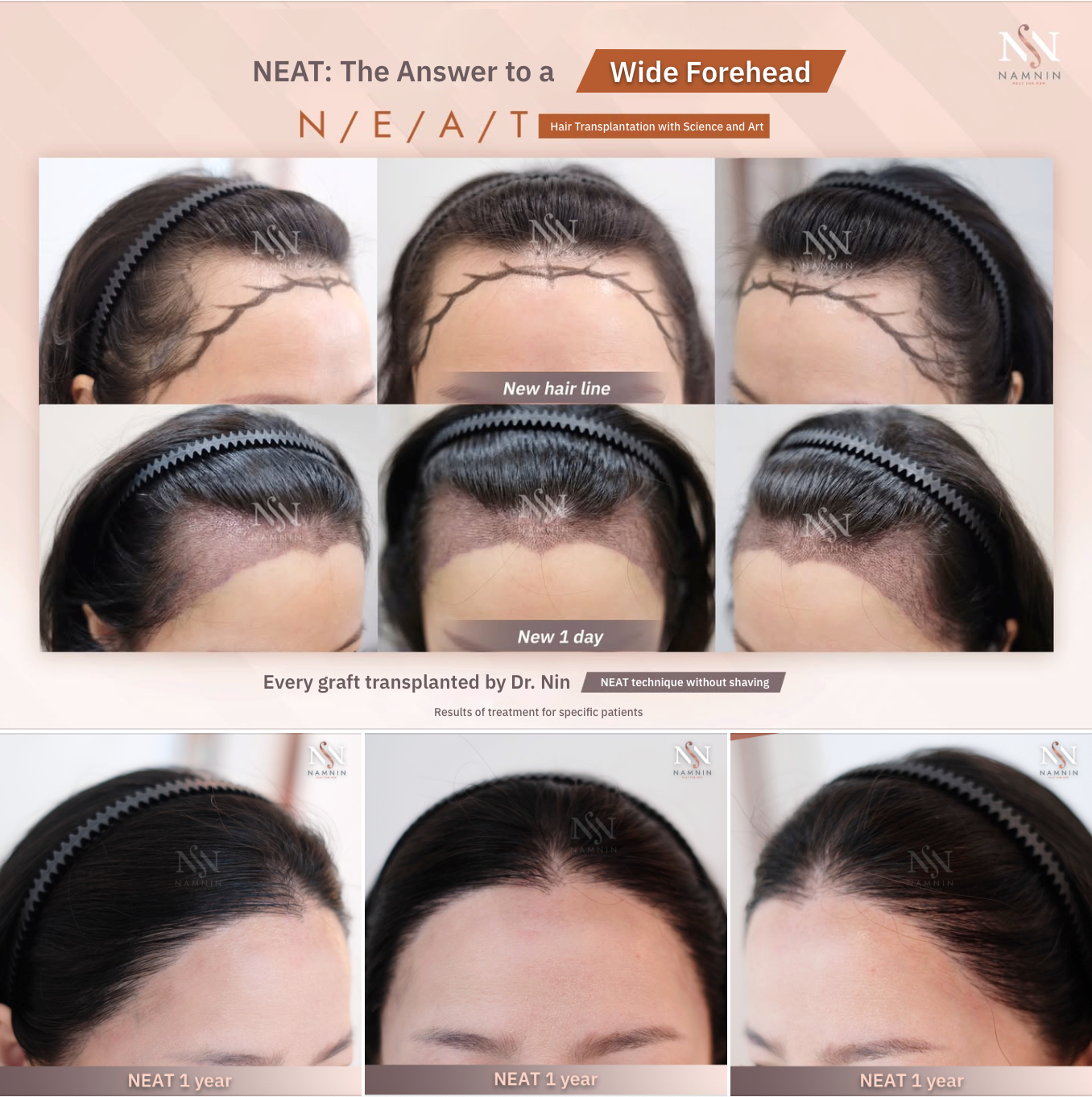
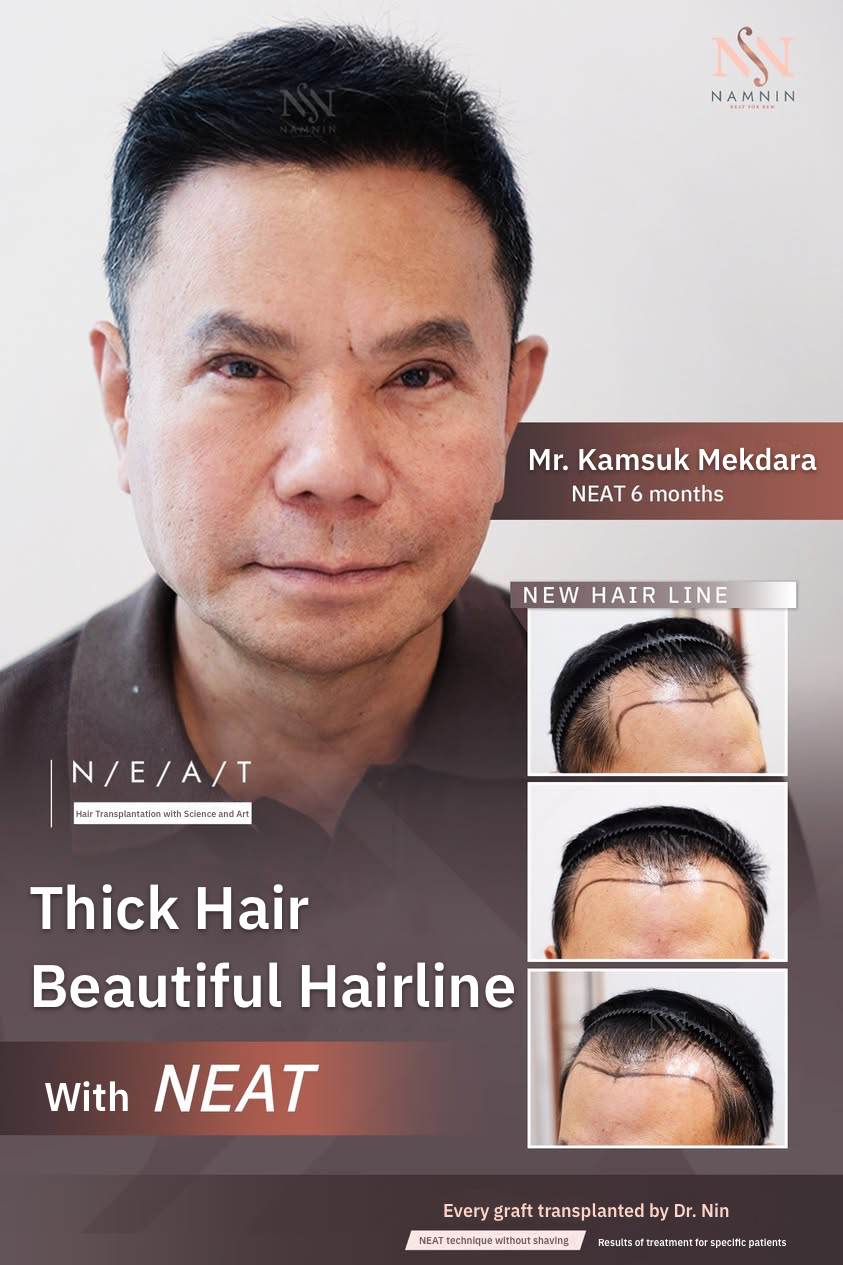
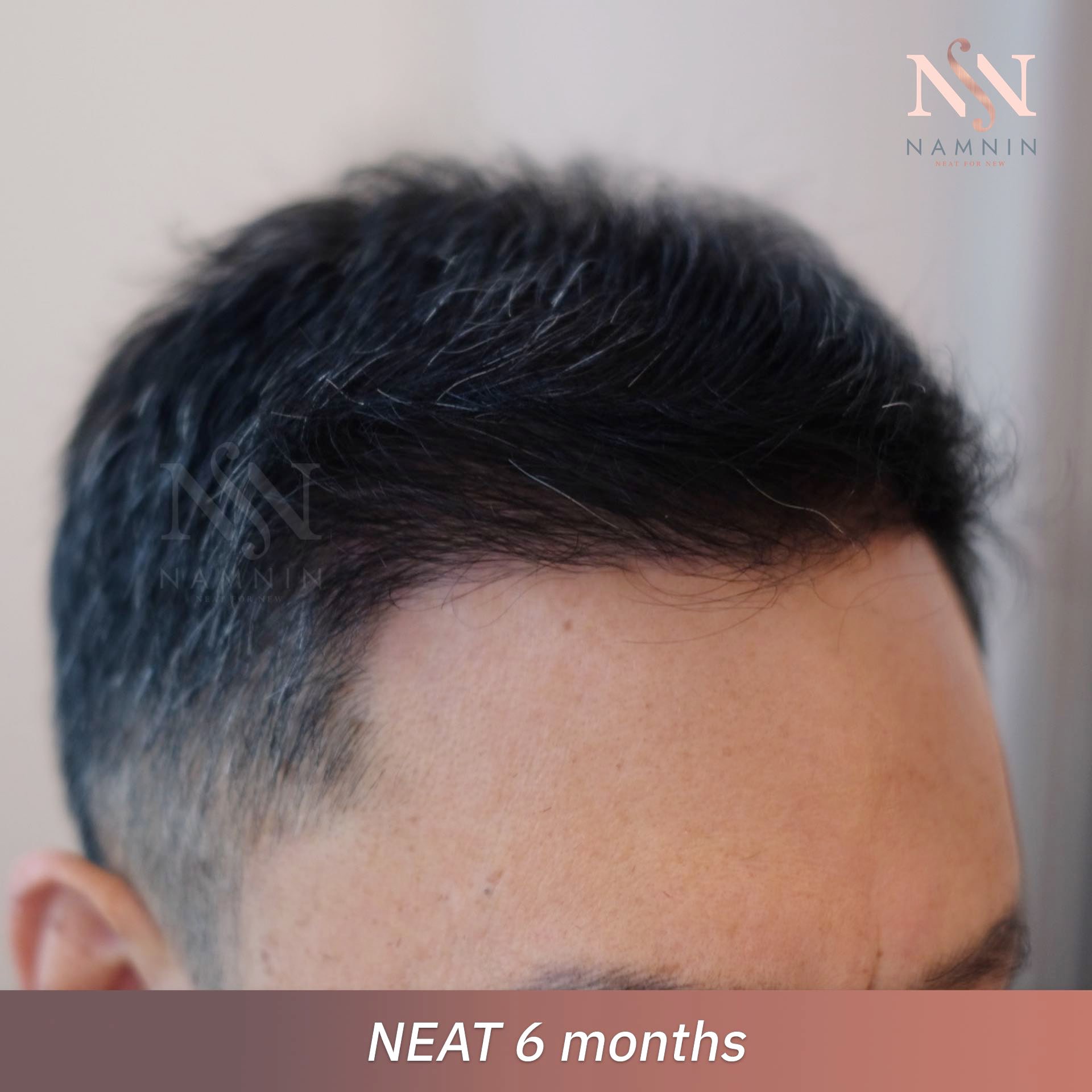
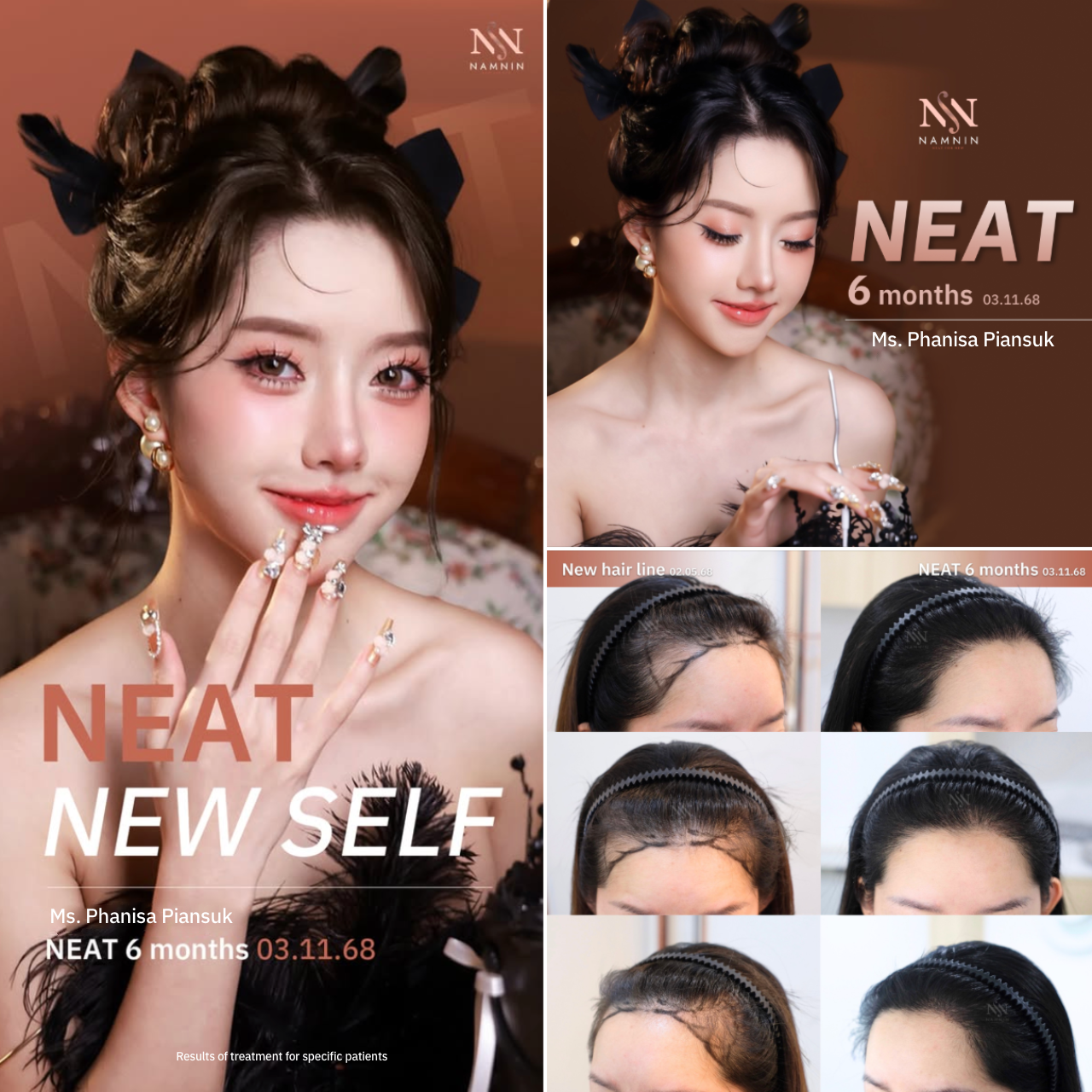
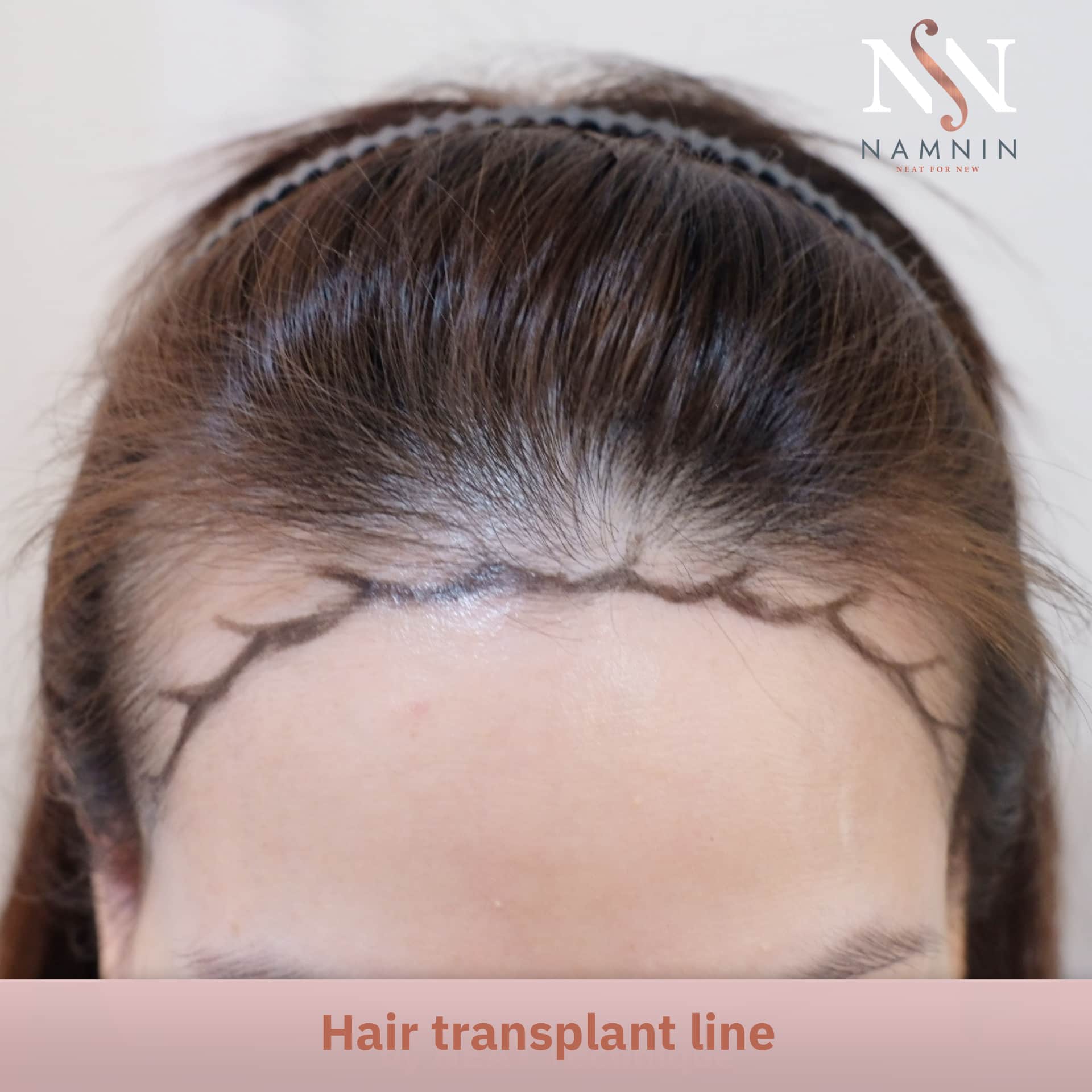
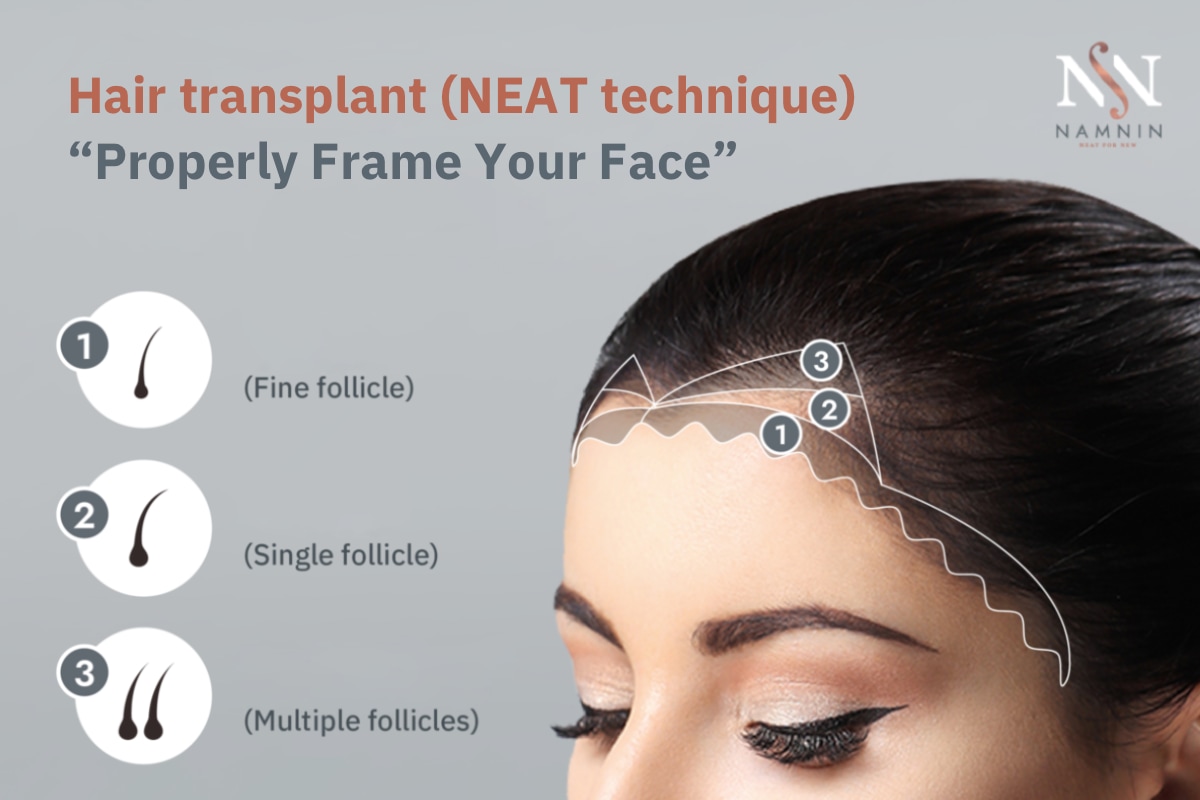
One of the important steps for patients undergoing a forehead hairline transplant is designing a new Hairline. The physician uses the Golden Ratio, or the golden proportion of facial features, to create balanced facial proportions and potentially enhance the overall appearance, giving the face a more defined or refined look.


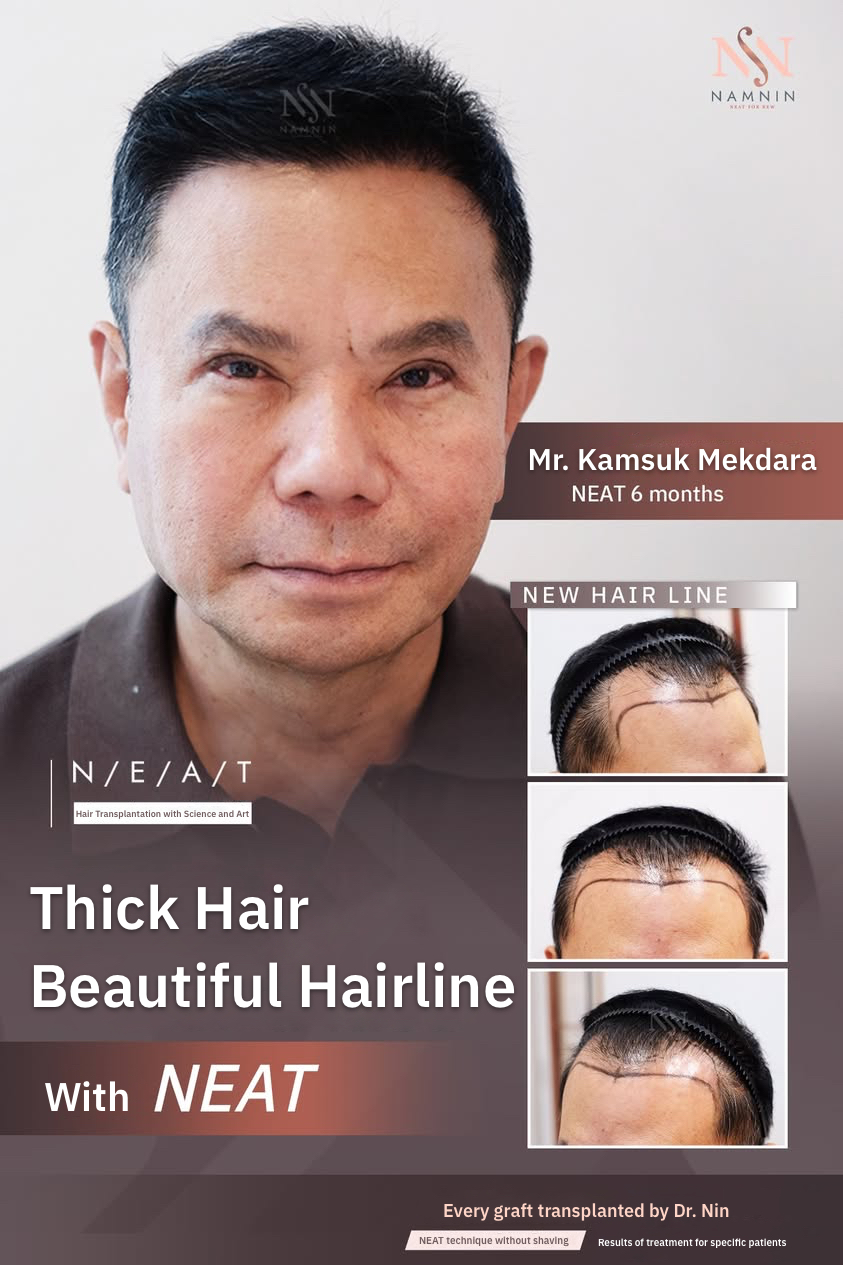
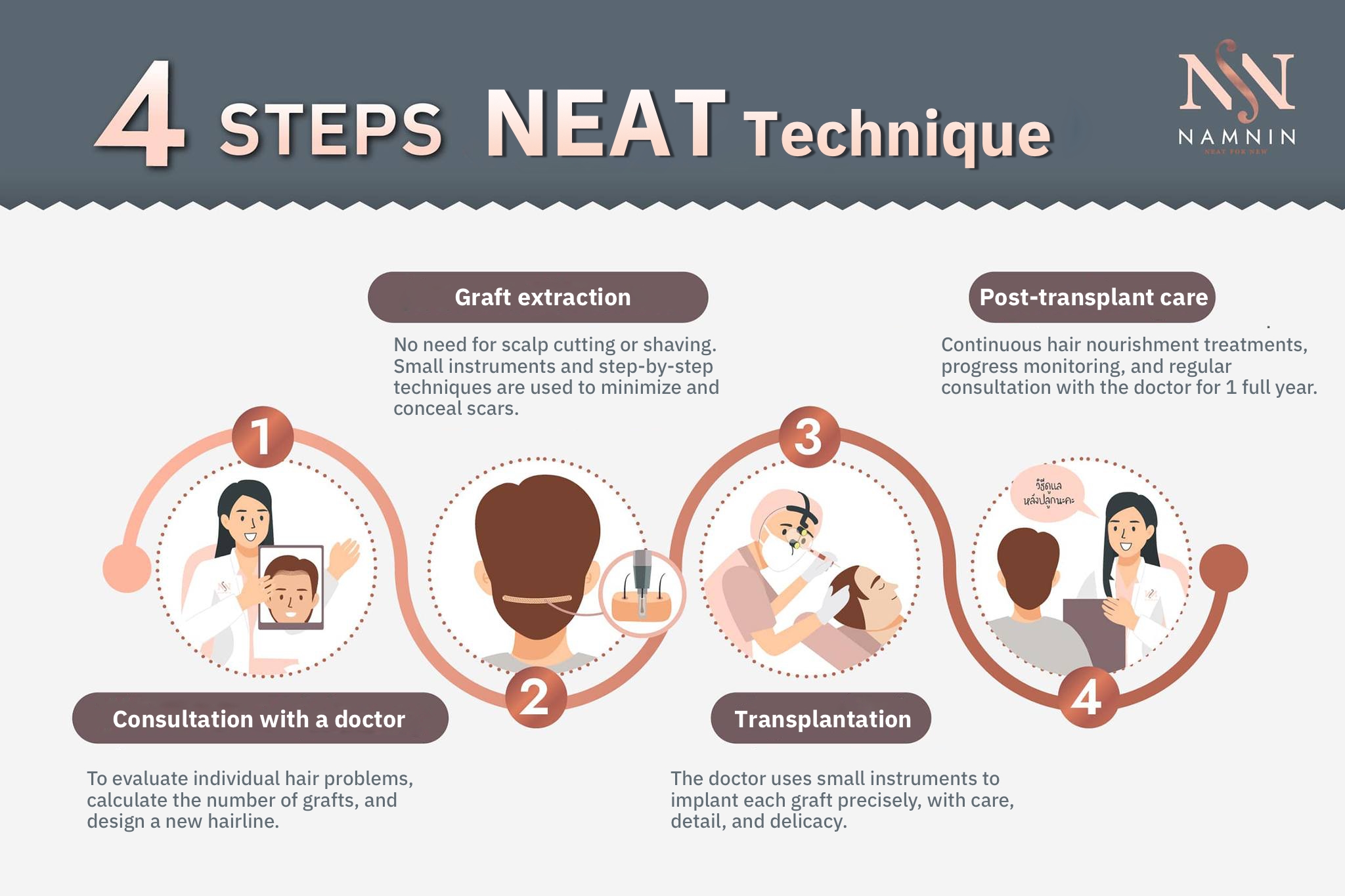
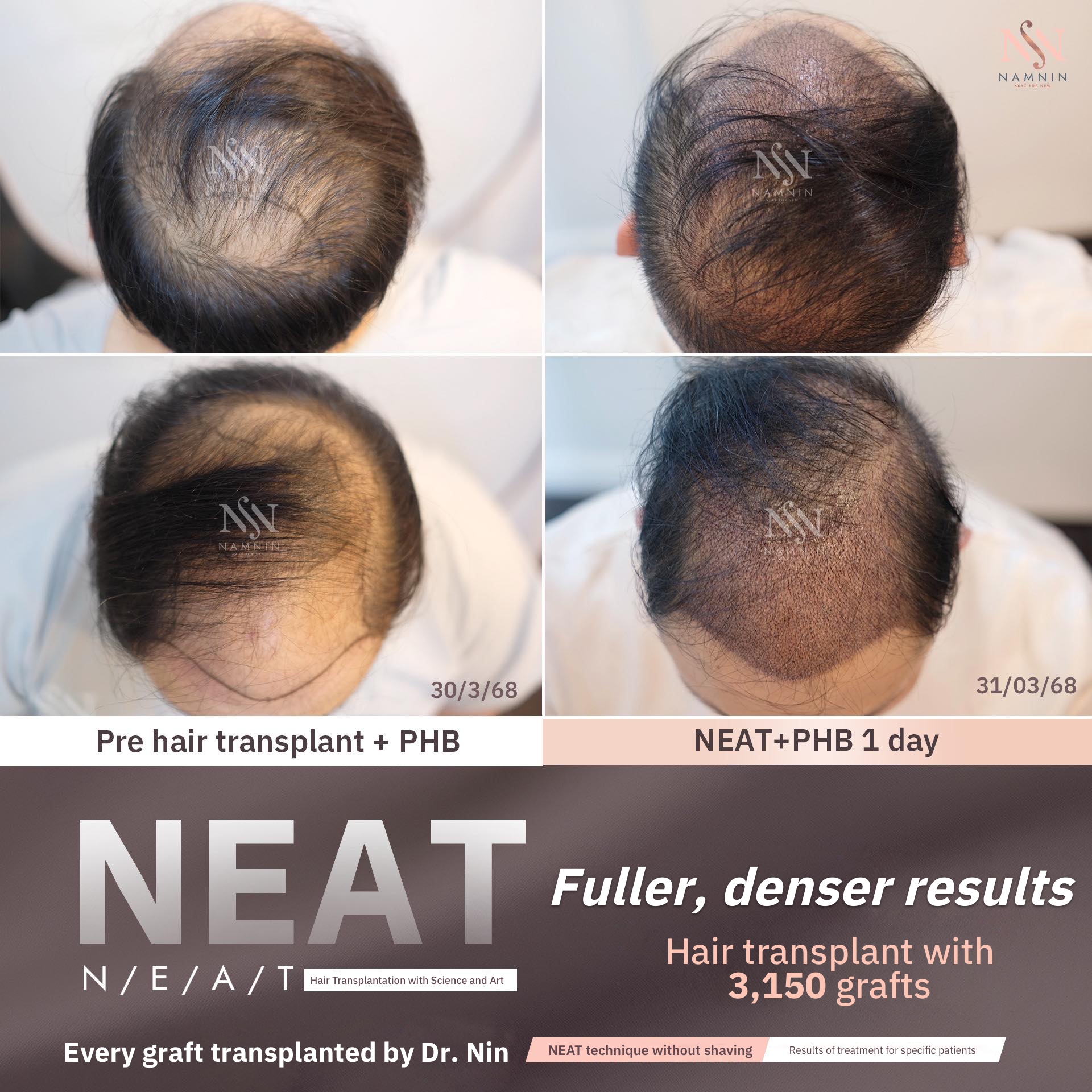
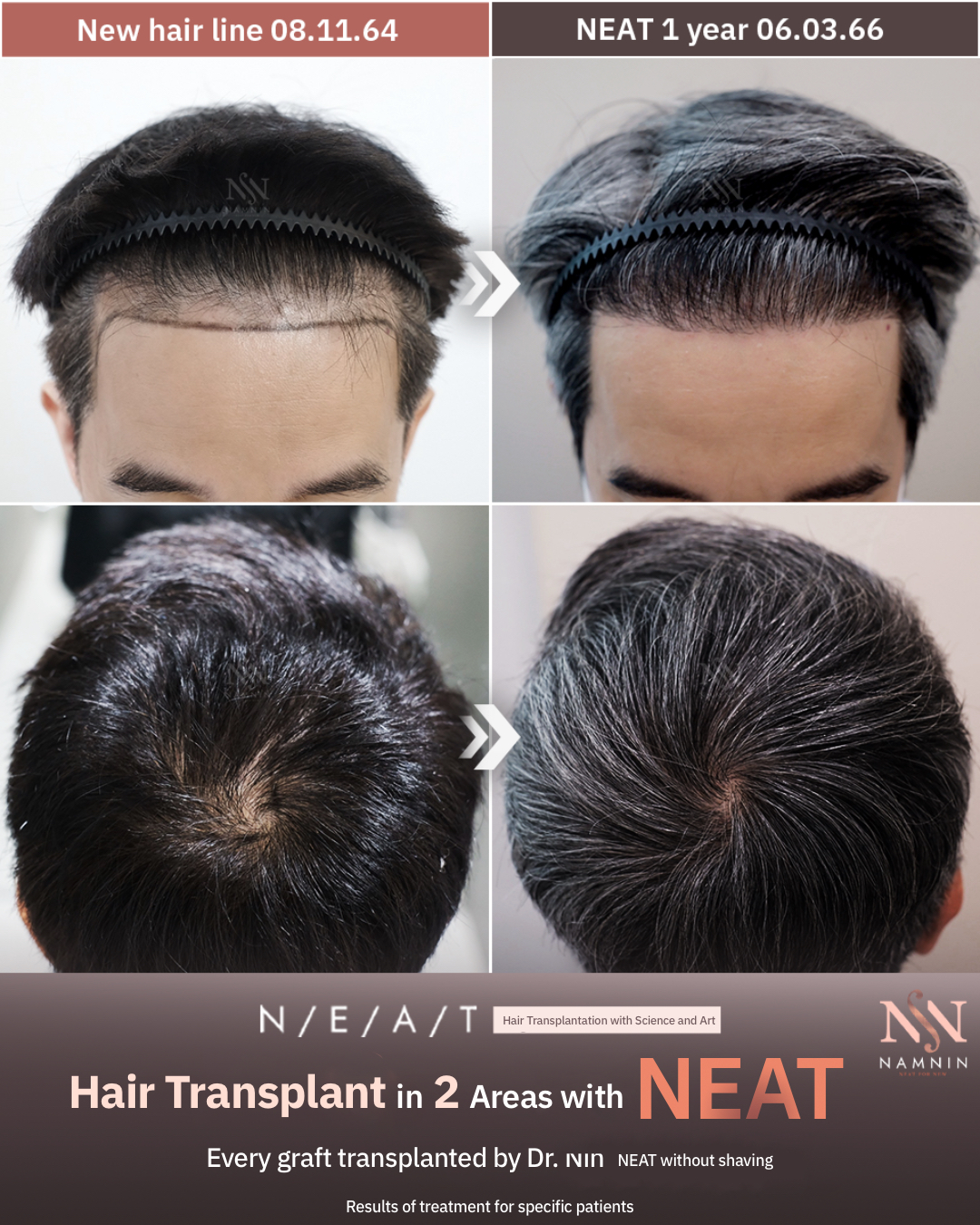
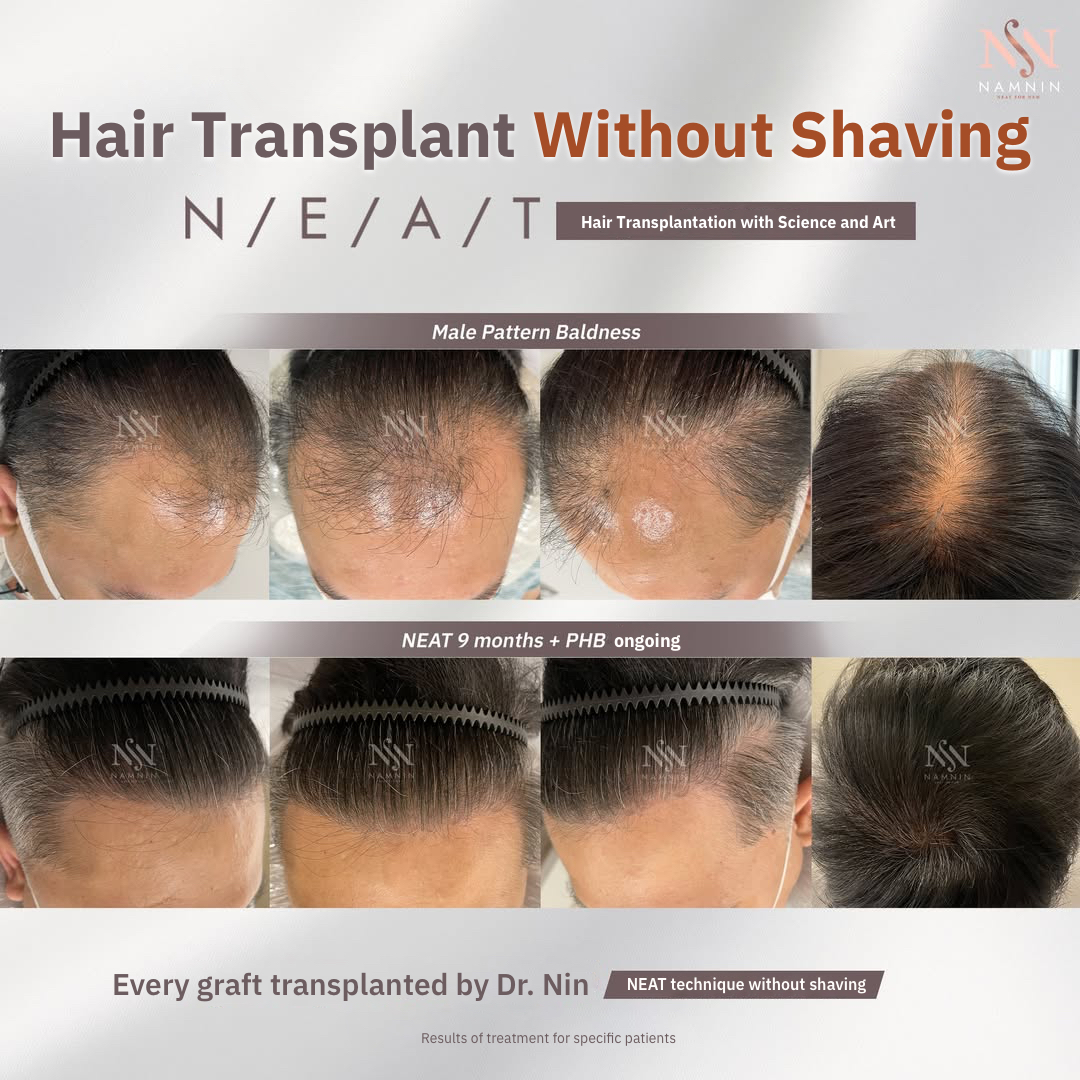
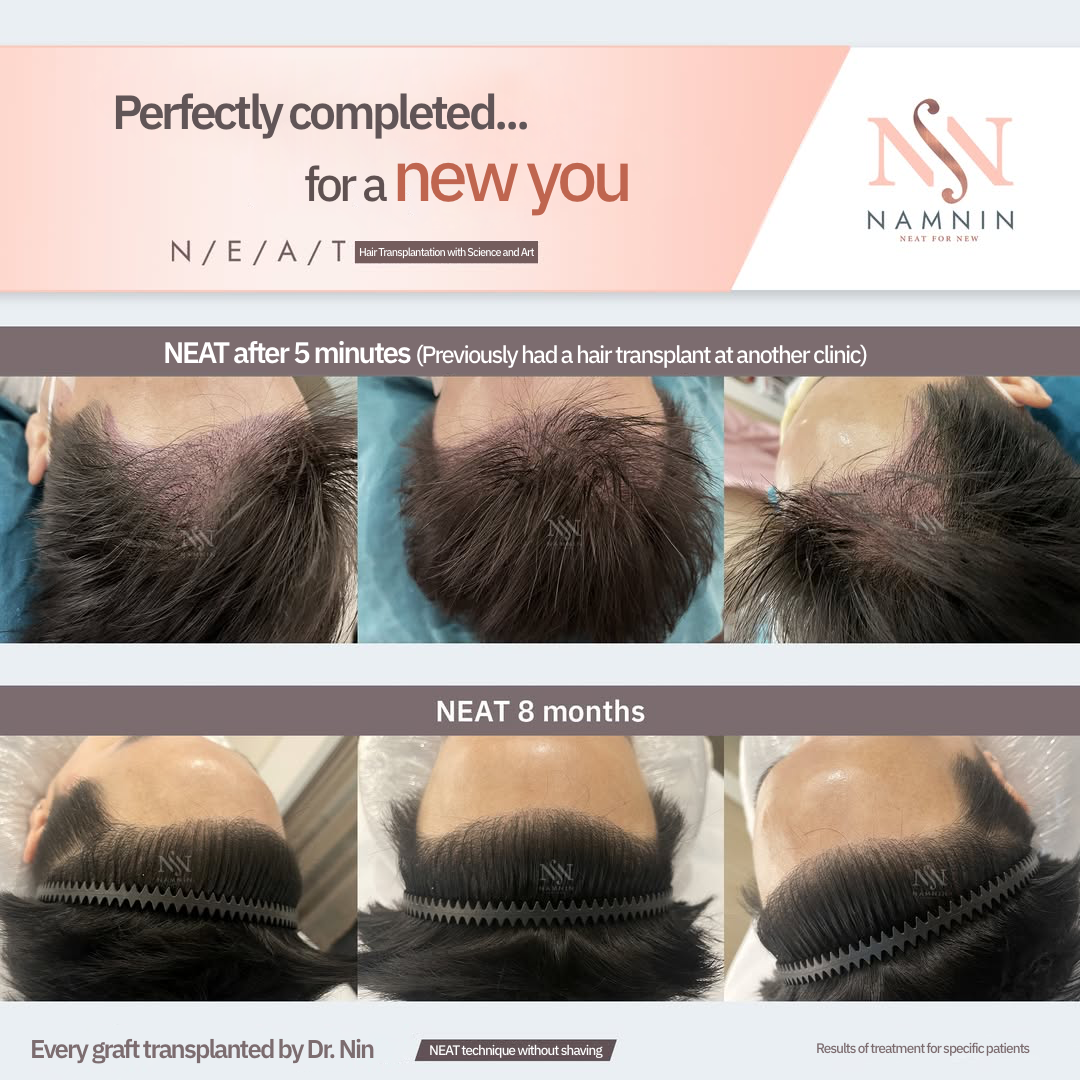
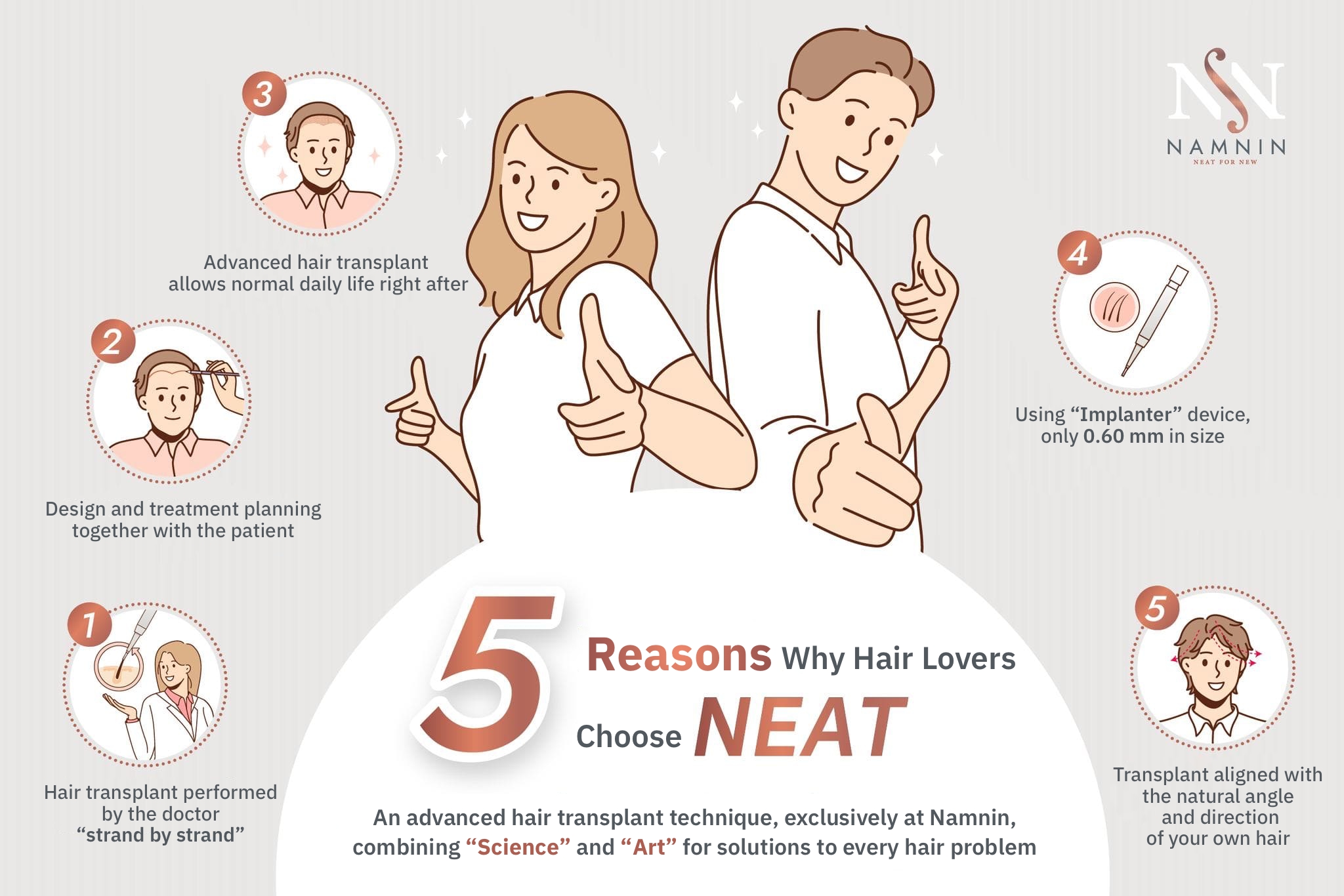
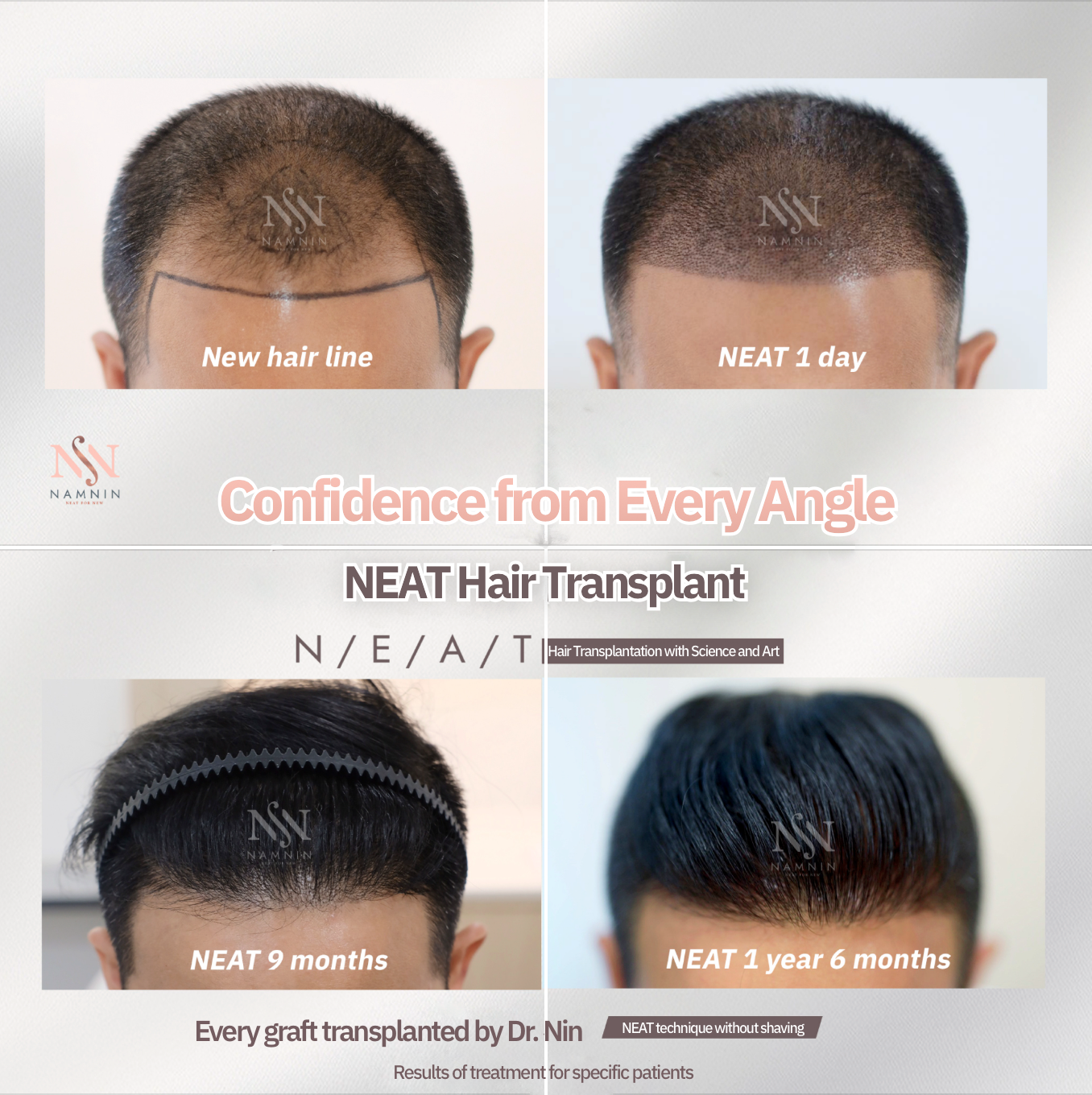
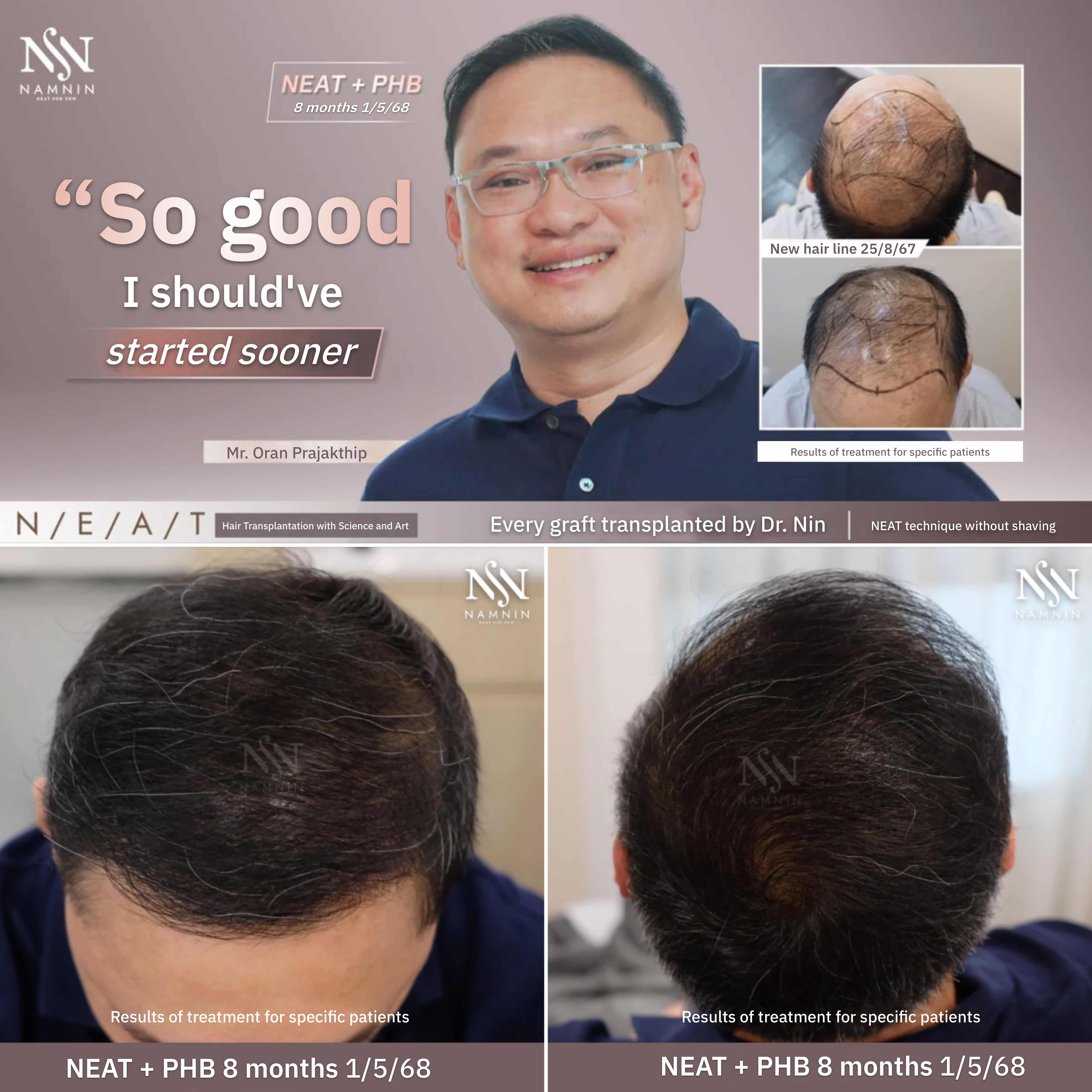
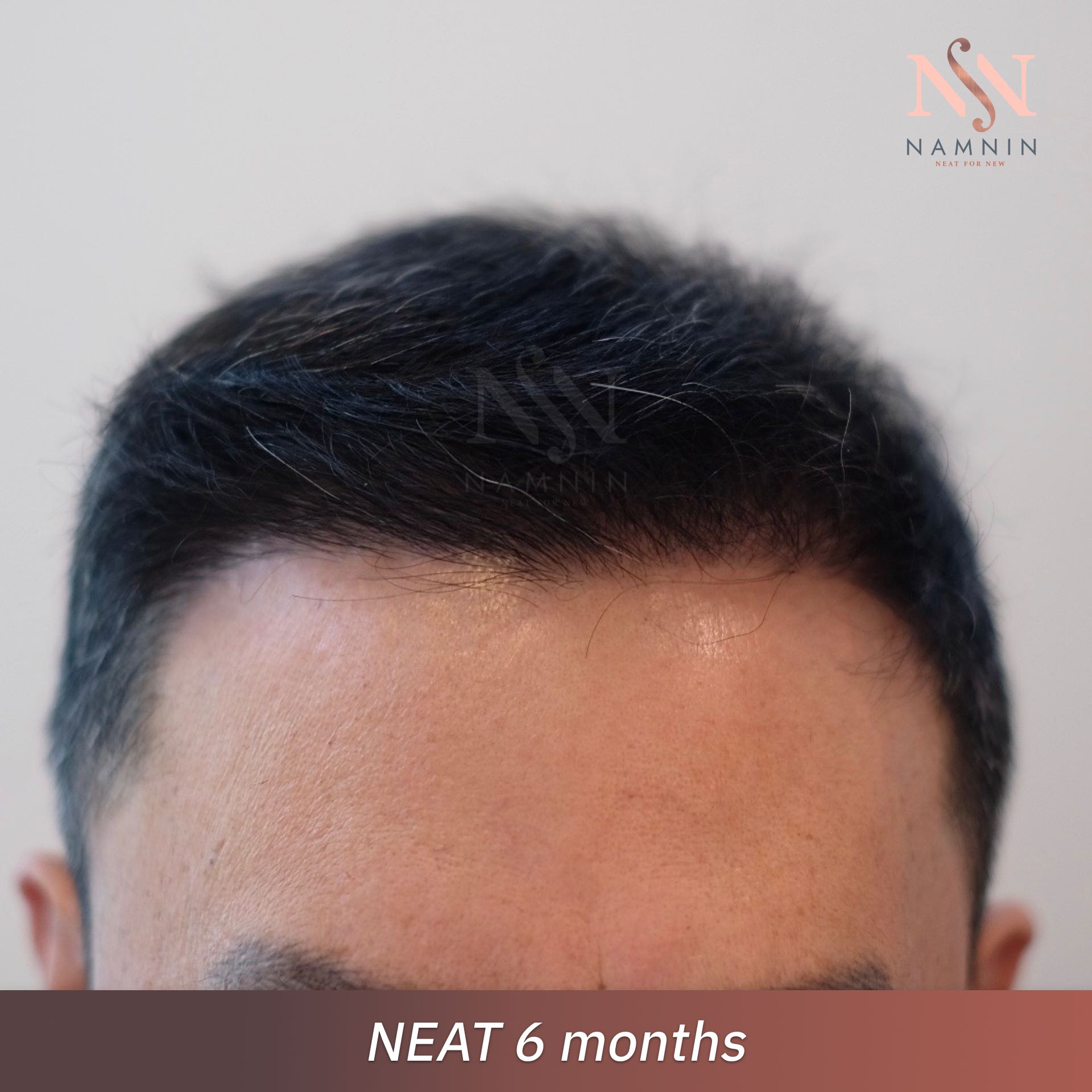
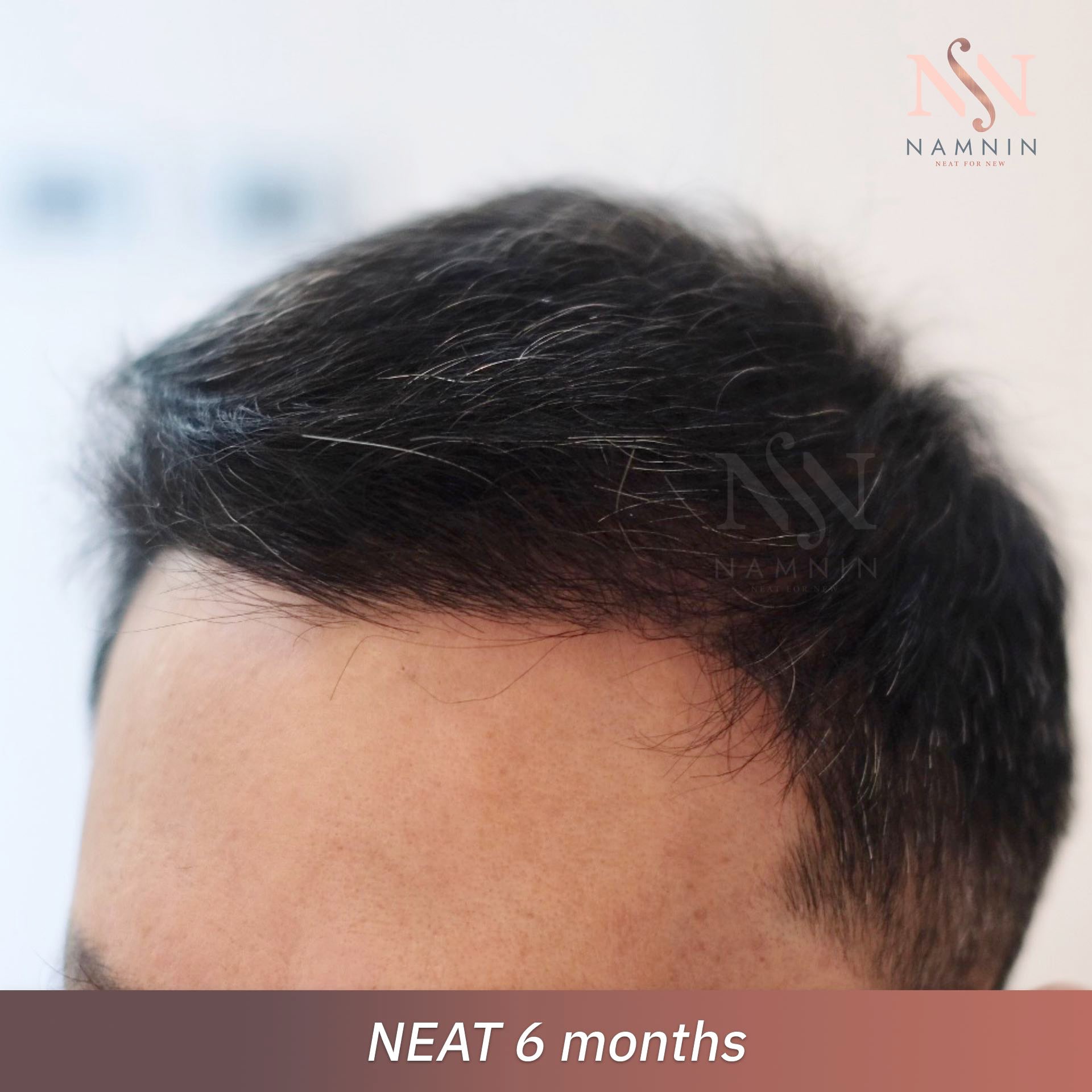
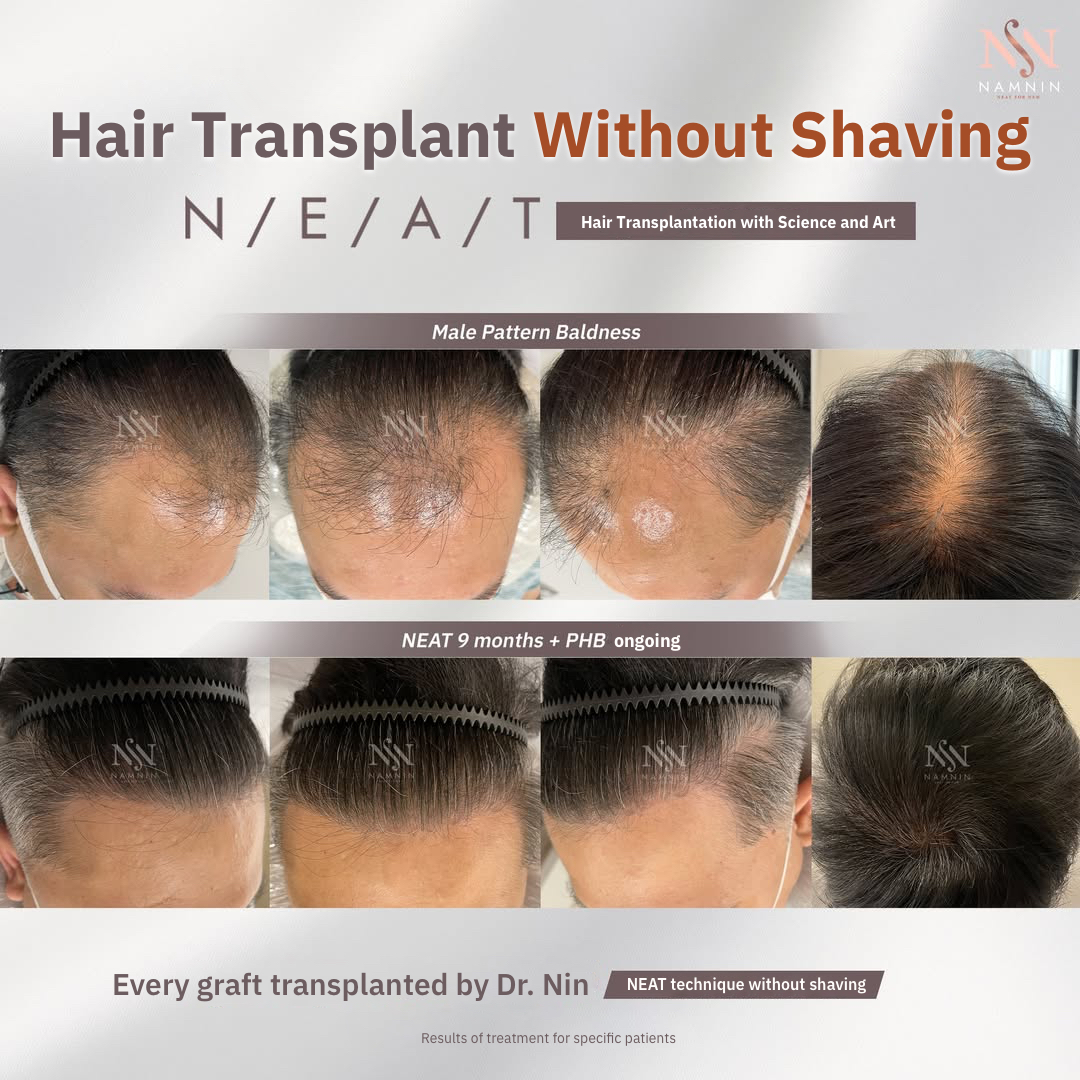
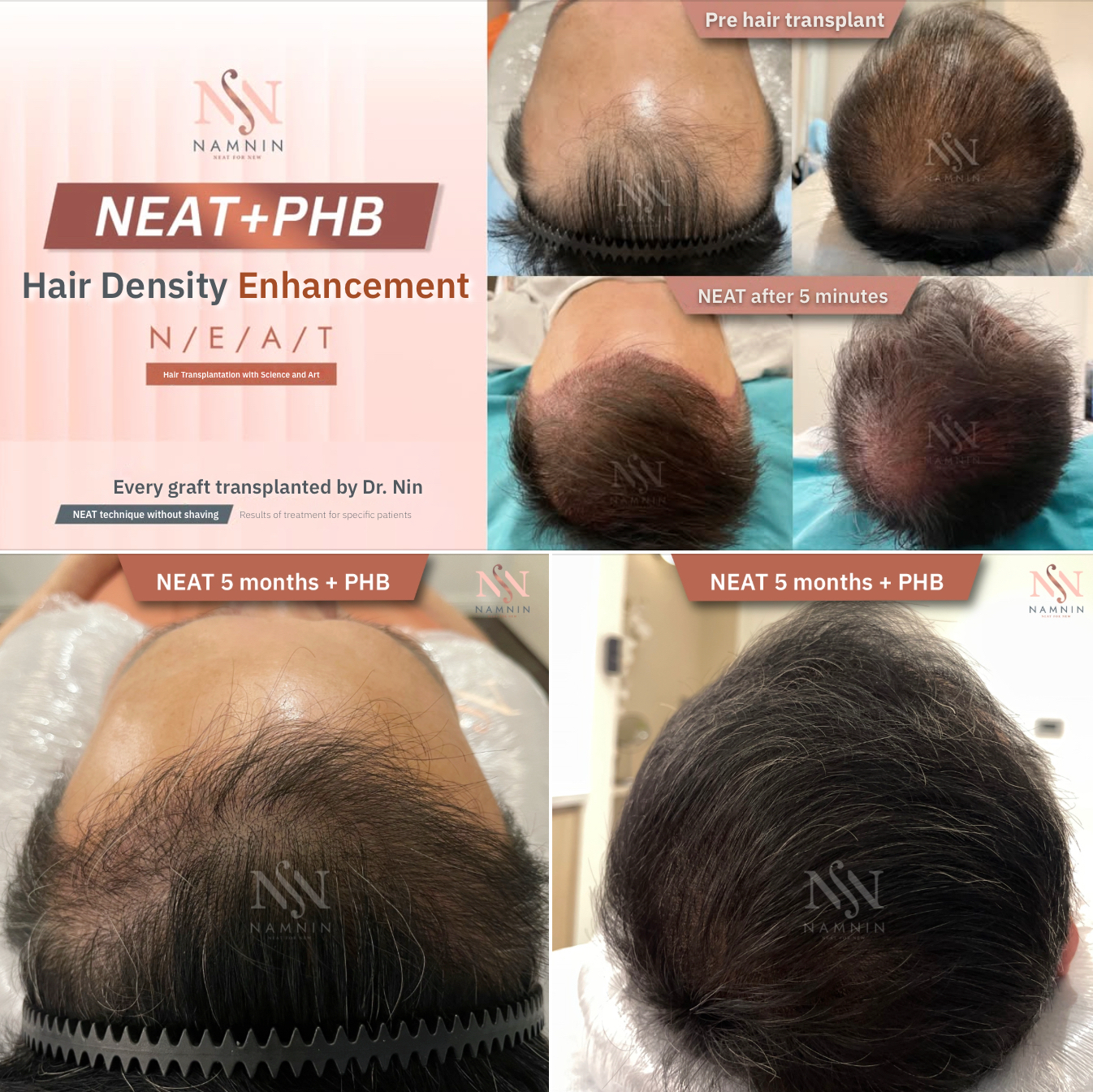
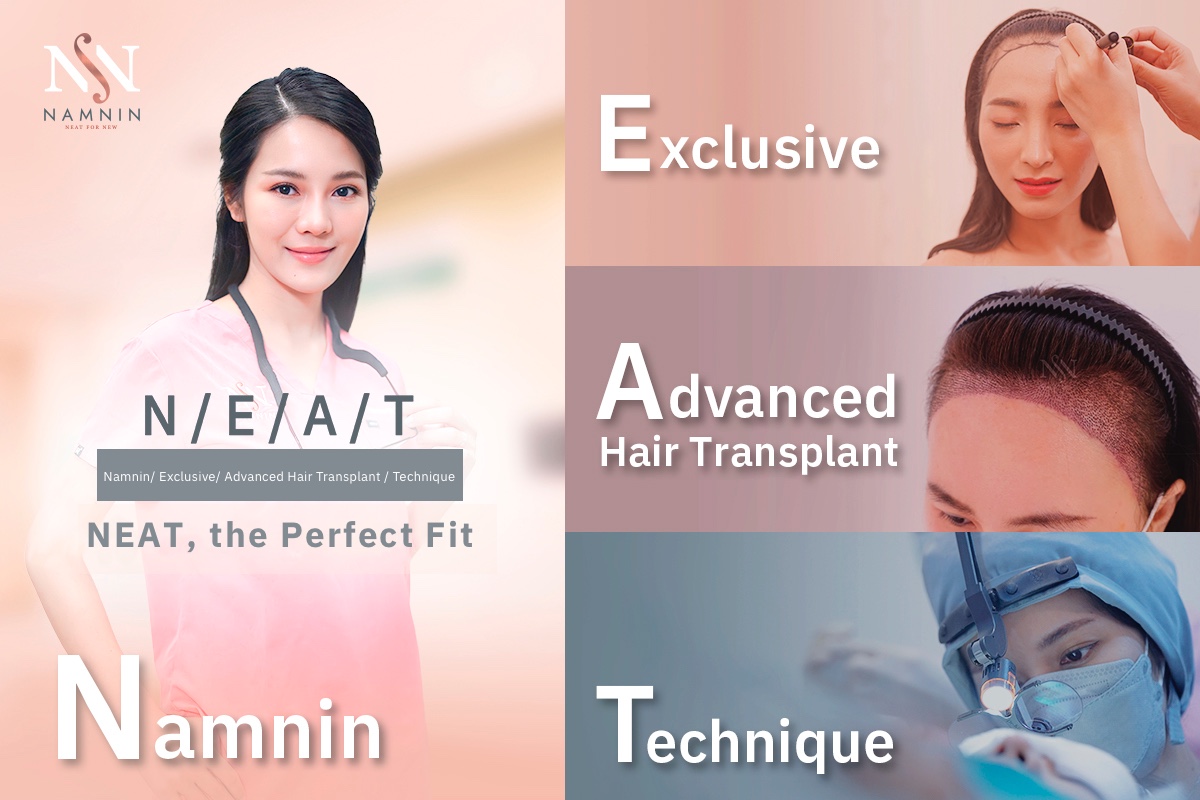
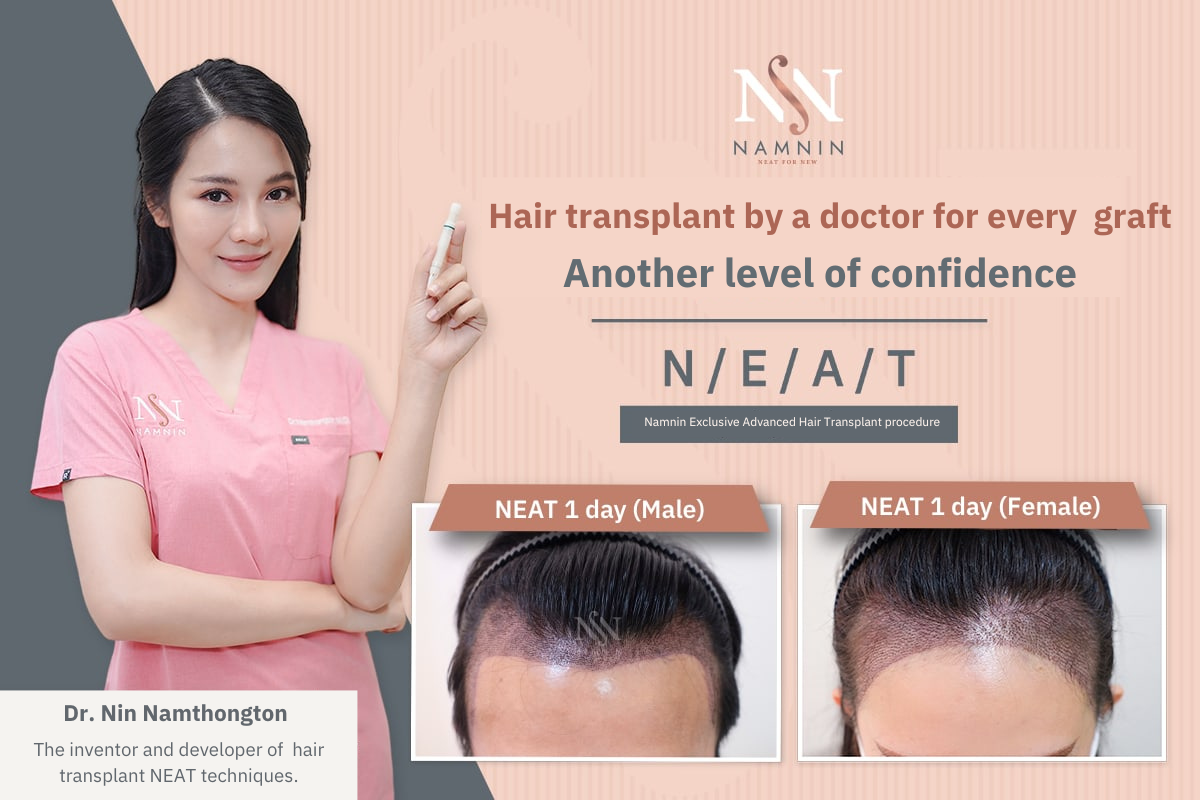
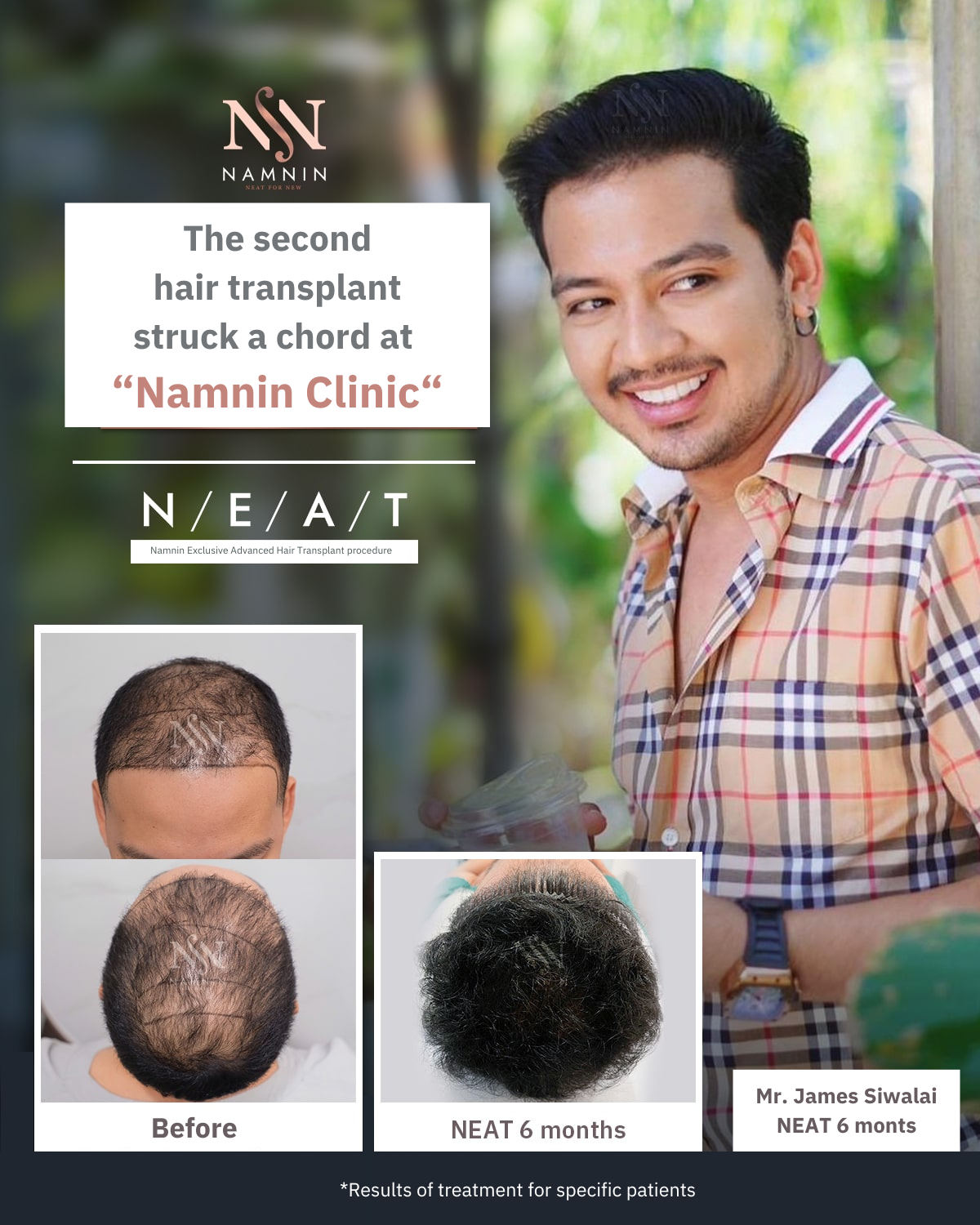
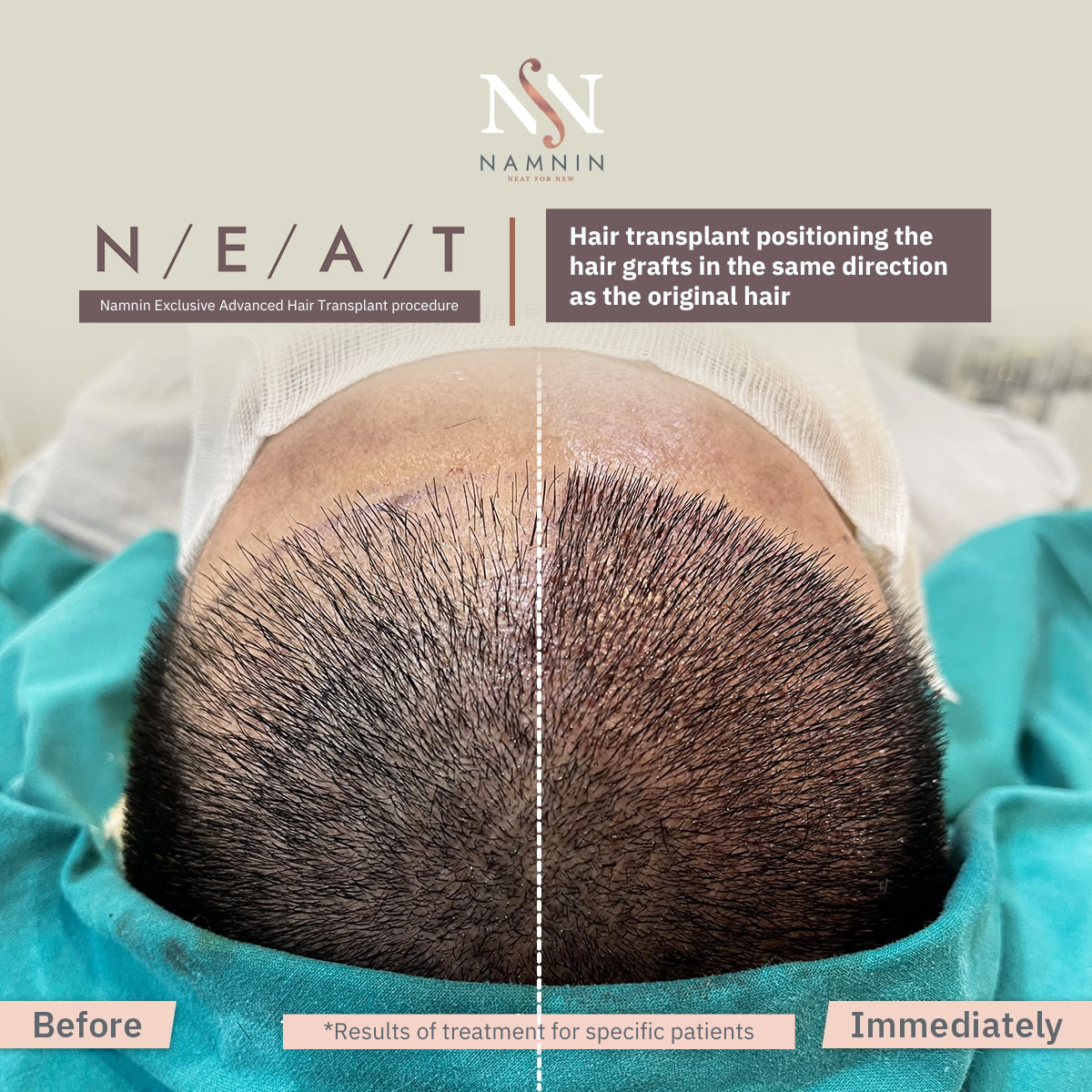
At Namnin Clinic, you will also learn about our hair transplant program called “NEAT.” Developed by Namnin's physician as an advancement of the FUE technique, NEAT offers several noteworthy features:

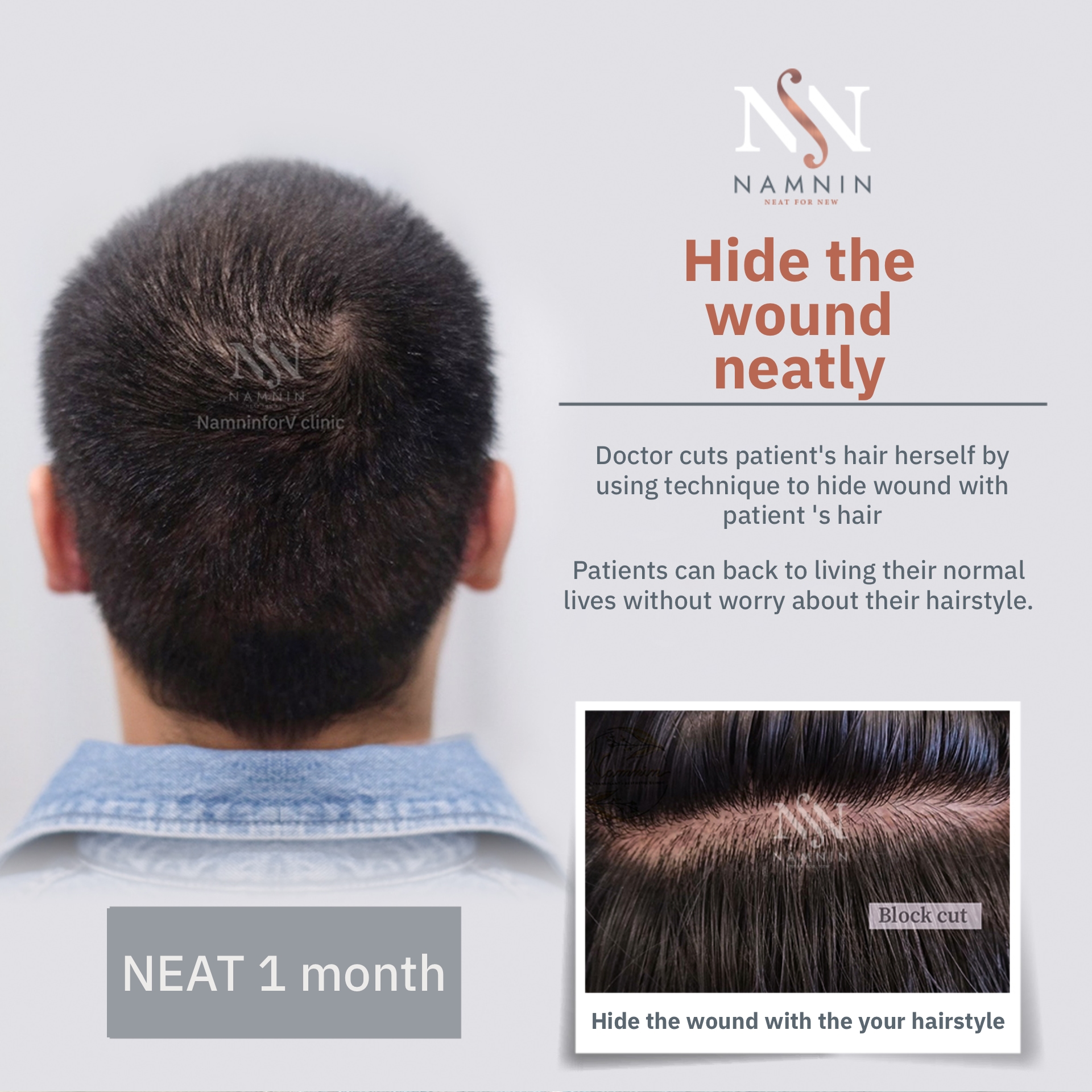
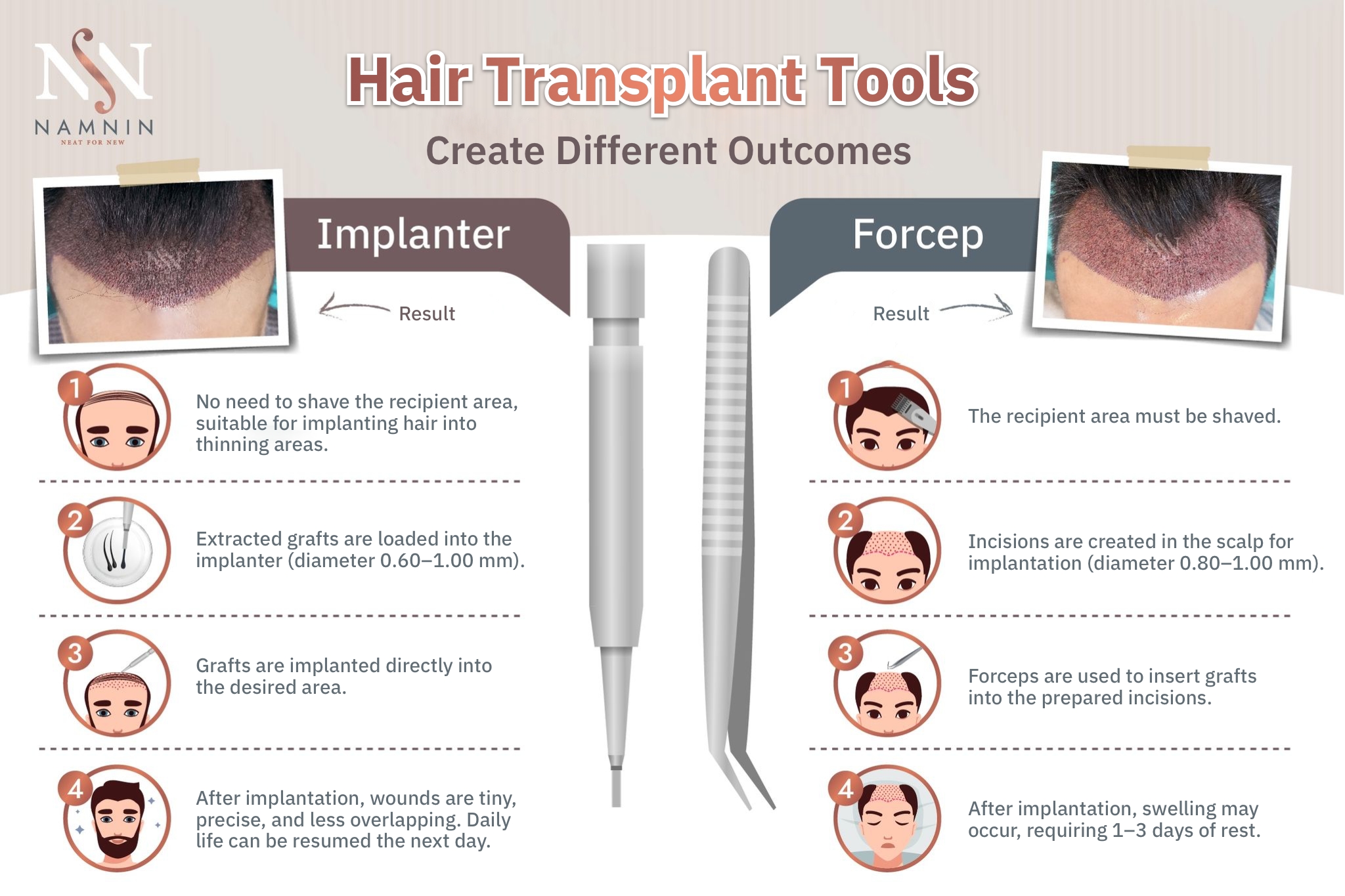
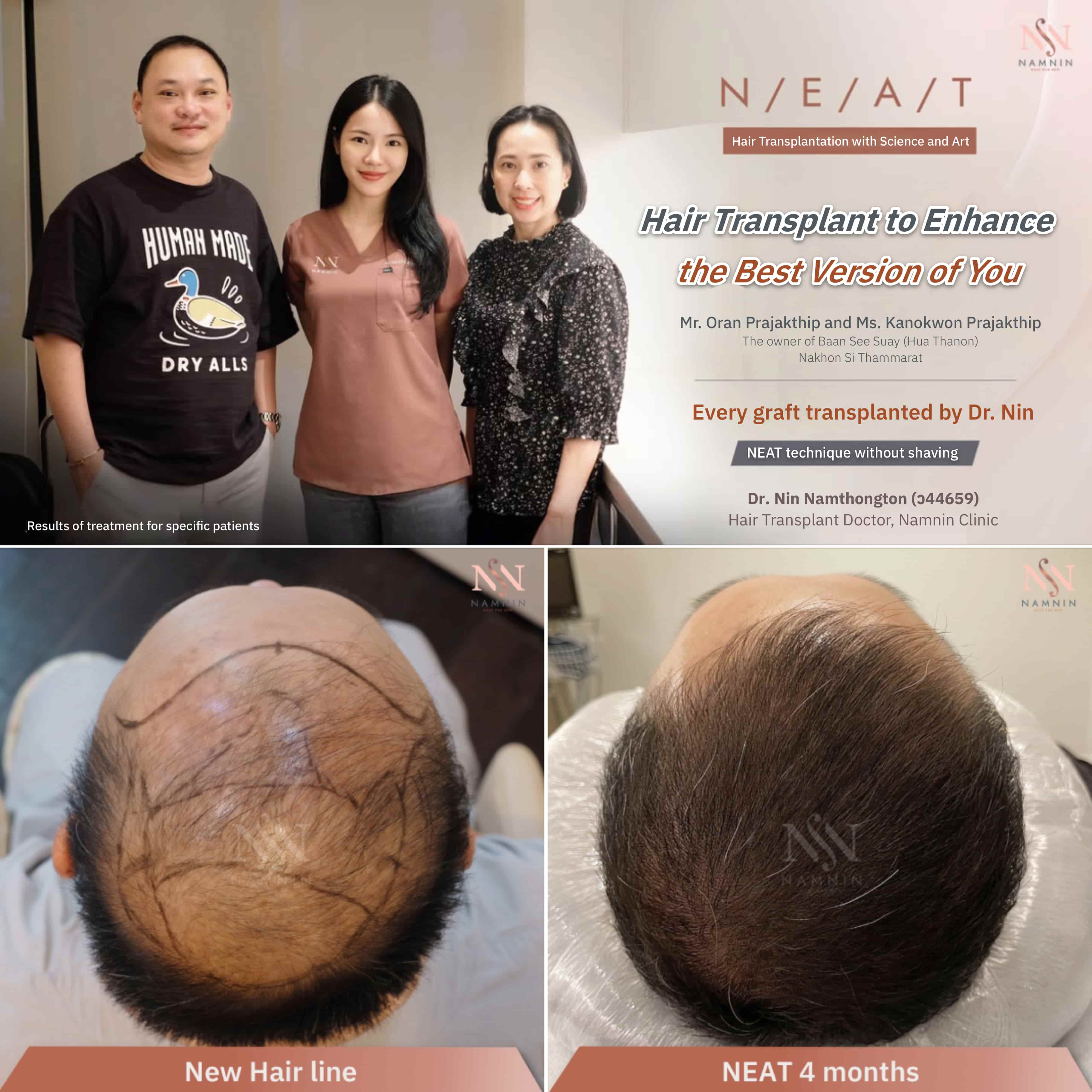
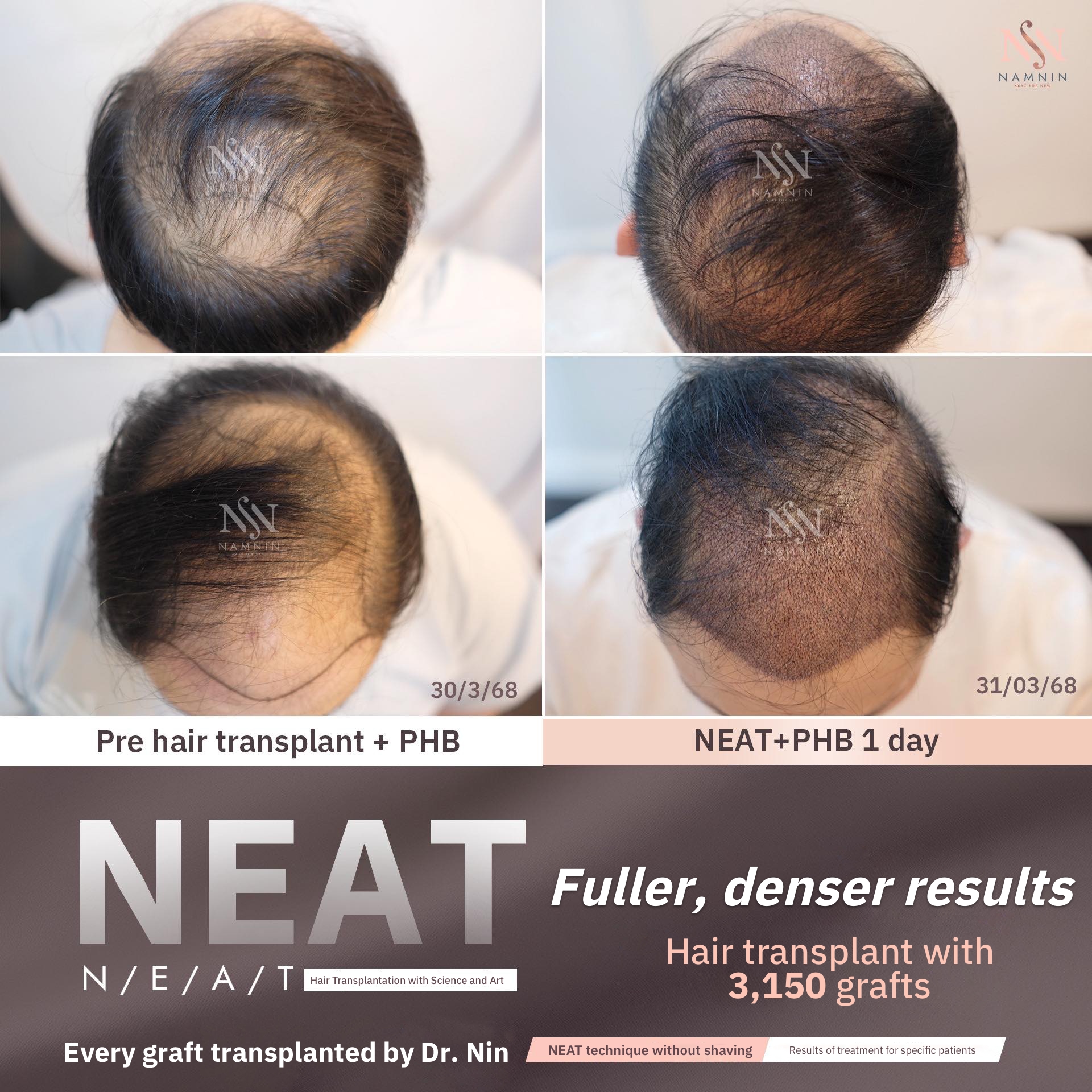
1. There is no need to shave the hair at the back of the scalp. After the procedure, patients can continue styling their hair as usual without worrying about visible extraction marks, as the physician uses an extraction approach designed to conceal the marks within the existing hairstyle.
2. The physician personally performs every graft implantation, allowing precise control over the direction and angle of each newly implanted graft to align with the existing hair. The physician also selects suitable hair characteristics for the hairline to achieve a natural appearance, while implanting new hair seamlessly among the existing strands.
3. The physician uses a specially selected Implanter, an imported hair implantation instrument with an exceptionally small size of just 0.06 millimeters.
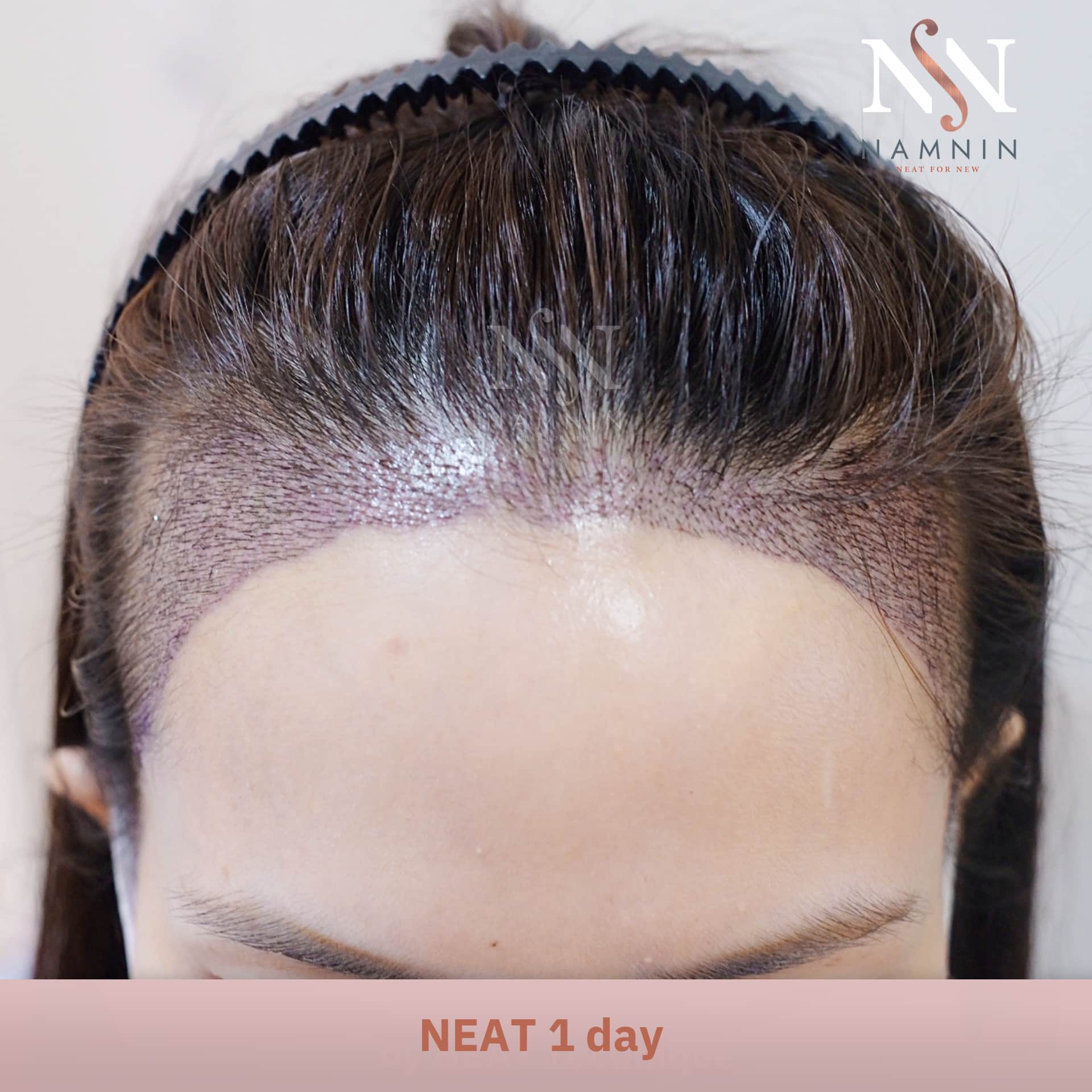
4. Patients do not need to shave the recipient area where the new hair will be implanted. This is often the area where others can most easily notice that someone has recently undergone a hair transplant. As a result, patients do not have to worry about significant changes in their appearance or feel uncomfortable when others ask whether they have had a hair transplant.
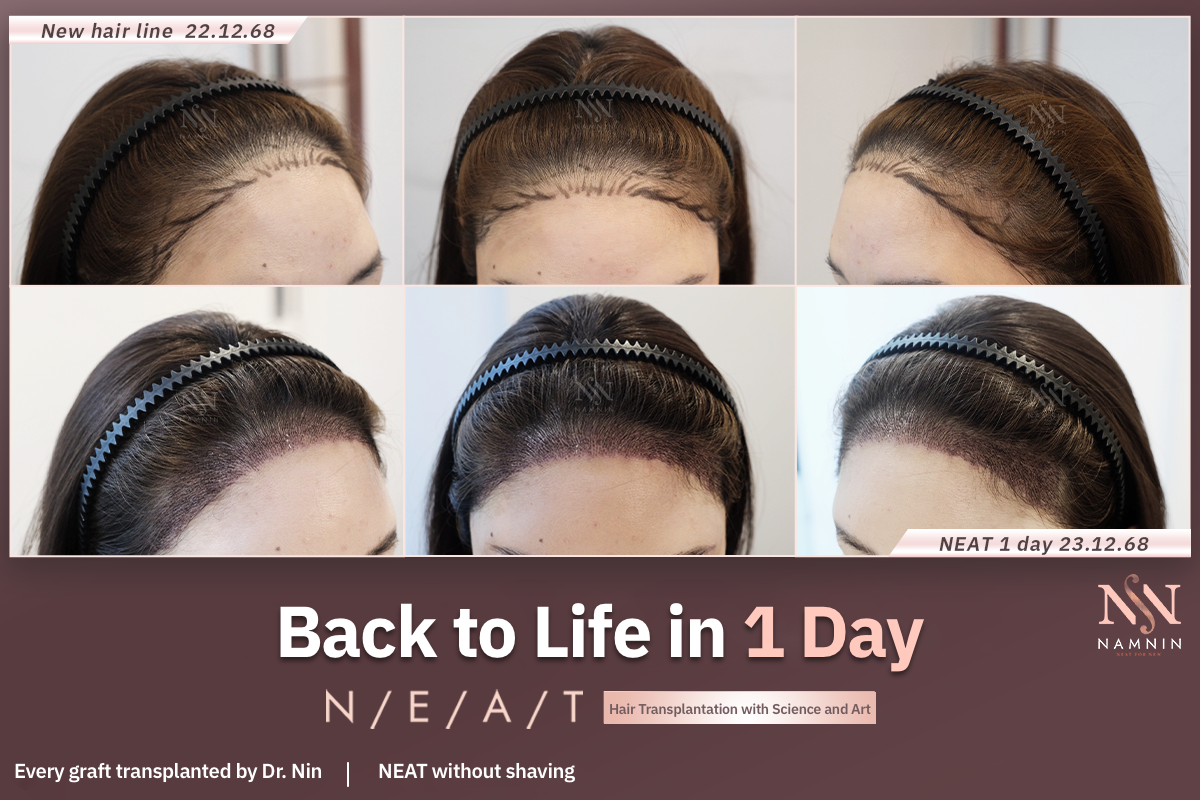
5. Immediately after the procedure, facial swelling is generally minimal or almost nonexistent. A head bandage is not required, allowing patients to return to their normal daily activities almost immediately.
6. For greater convenience after the procedure, the clinic provides a set of hair cleansing and care products, together with detailed instructions on post transplant care. This is particularly important during the first two weeks, when newly transplanted hair requires extra attention and careful handling.


☑ How Good Is the Post Transplant Care?
As mentioned earlier, post transplant care is essential and should never be overlooked. Whether newly transplanted hair survives or falls out depends partly on the care it receives during this period. Without continuous follow-up or appropriate hair care recommendations, there is a risk that the final results may not meet expectations.


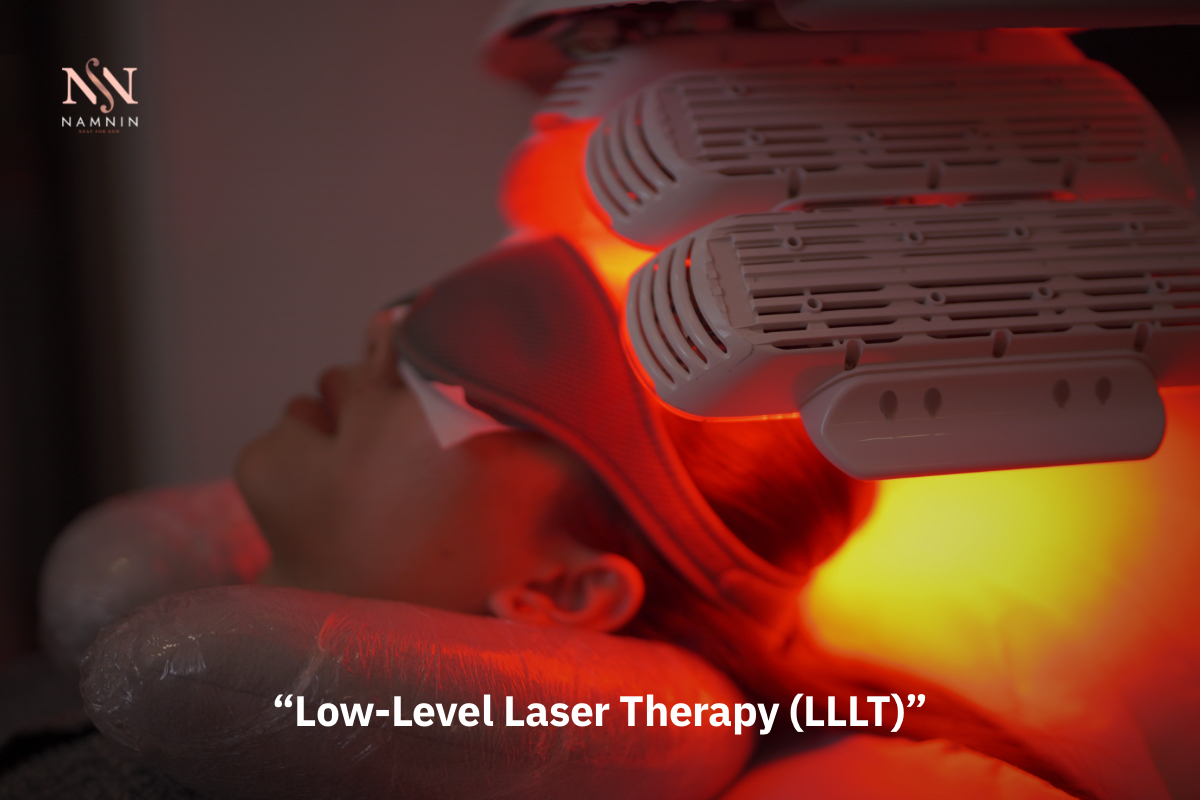
For patients at Namnin Clinic, the physician provides follow-up care at every stage to monitor hair growth and ensure that the transplanted hair is developing securely. In addition, the clinic offers hair care treatments suitable for newly transplanted hair, such as LLLT+ light therapy and other services provided under the physician's recommendations.

☑ Ask About the Satisfaction of Previous Patients
For the final Checklist, what could be better than hearing firsthand experiences from people who have already undergone a hair transplant?

In addition to the clinic's own social media pages, which regularly share information about hair transplantation, you may also consider joining dedicated hair transplant communities where people discuss and exchange their experiences. These communities can provide another source of honest and straightforward feedback.


And these are the 6 Checklists to help you research your options step by step and ensure that, in the end, you can choose a hair transplant clinic that is right for you and meets your expectations, leading to new hair growth results that make this once in a lifetime investment worthwhile.

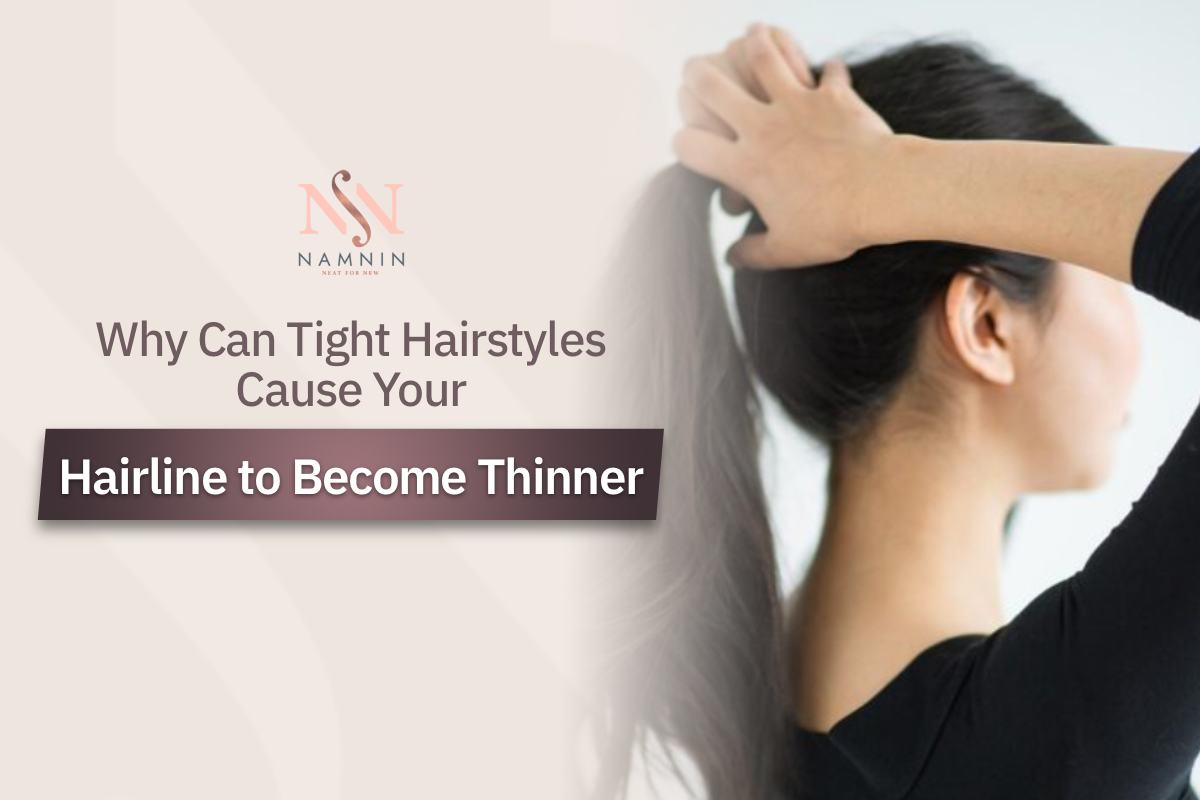
Why Can Tight Hairstyles Cause Your Hairline to Become Thinner?
For many women, hair is more than just part of their appearance. It is also an important part of their confidence. Whether it is a day spent in front of the camera, on stage, meeting clients, or simply a day when they want to feel especially good about themselves, they may spend more time than usual styling their hair. This may involve blow-drying, curling, setting, or tying their hair neatly to ensure it stays in place throughout the day. These habits are not necessarily because they do not care about their hair. Quite the opposite, they do so because they want to look their best in their own way.

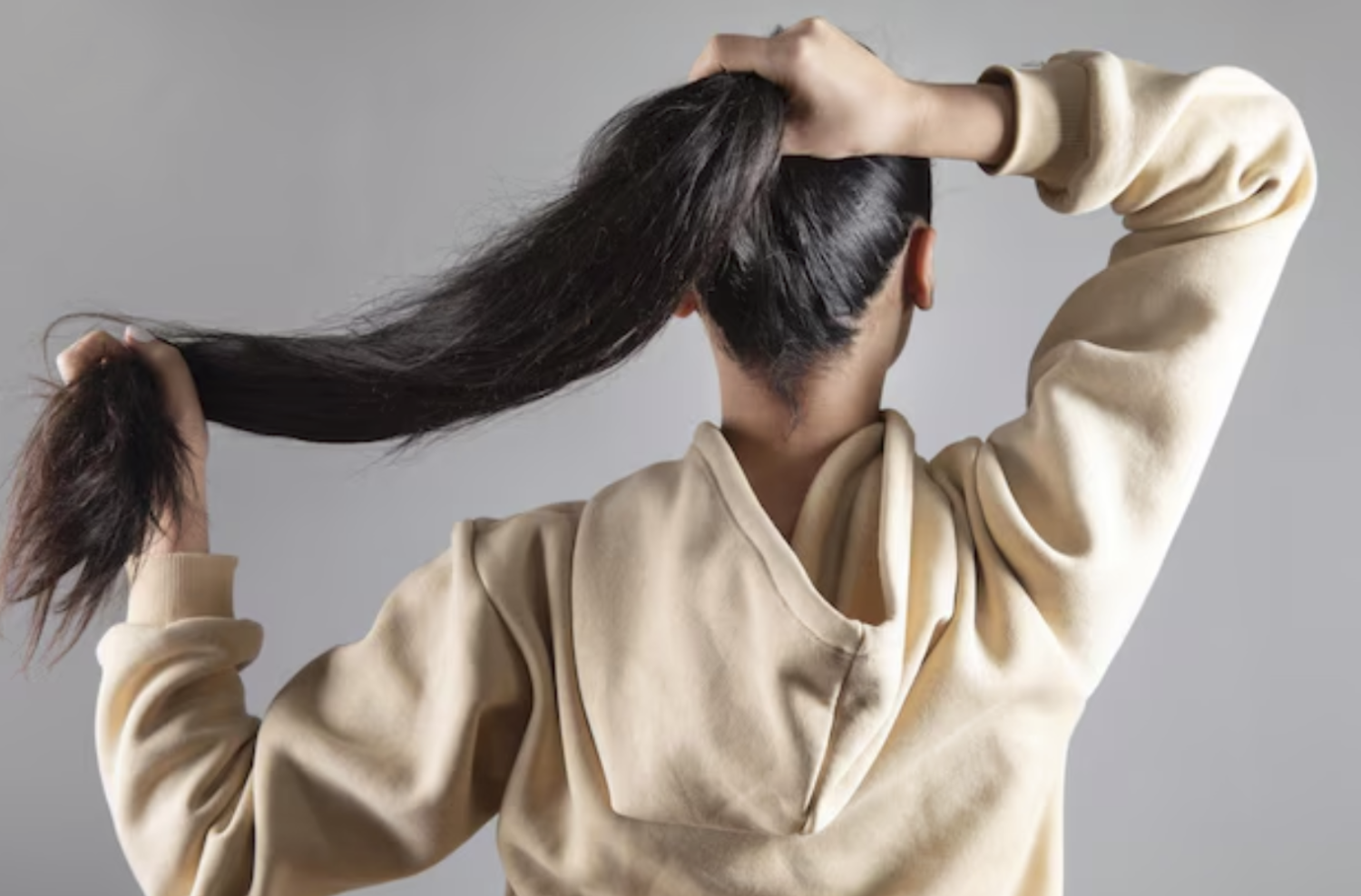
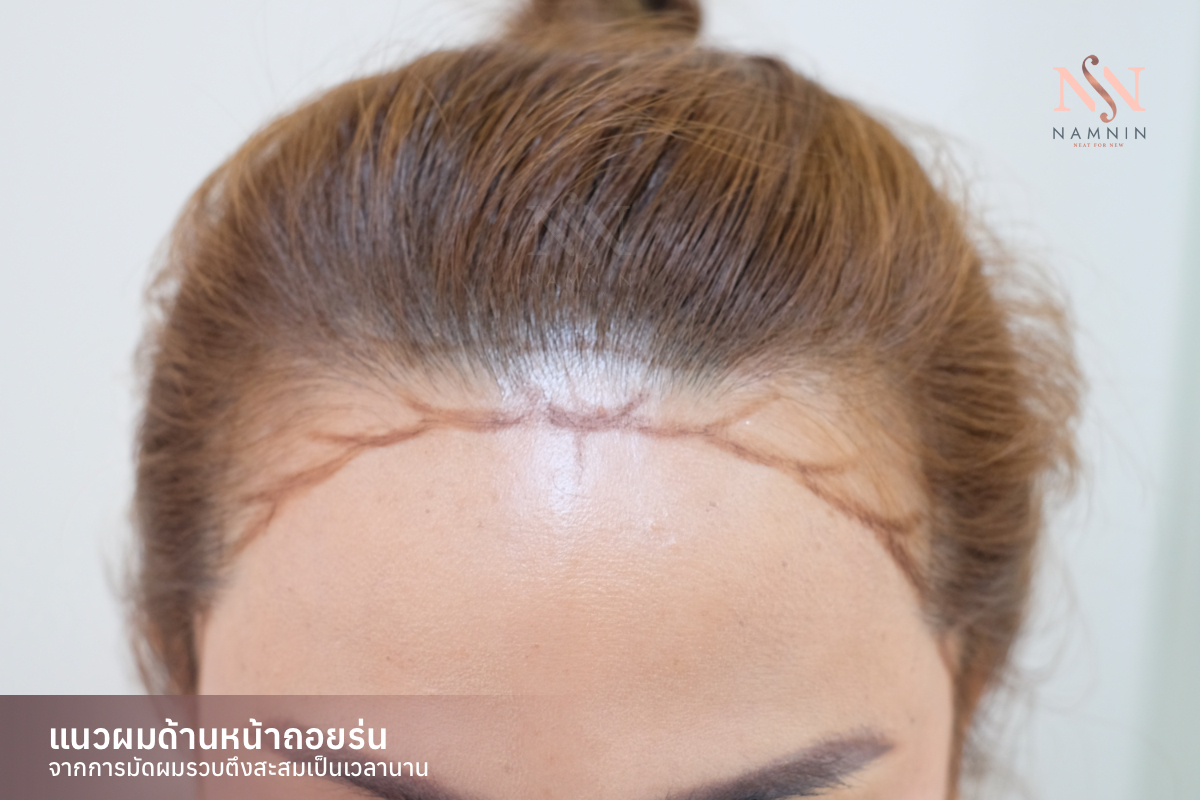
However, sometimes our hair may be trying to tell us, “Could you be a little gentler with me today?” This is because tightly tied hairstyles, high ponytails, or styles that repeatedly place tension on the same area over a prolonged period may affect hair follicle health and potentially lead to a condition known as Traction Alopecia, or hair loss caused by repeated pulling.


Traction Alopecia is a type of hair loss caused by repeated tension on the hair and hair follicles over an extended period. This can result from tightly tied ponytails, tight updos, braiding, or hairstyles that regularly place tension on the hairline. In the early stages, there may be no obvious signs of a problem. The hair may still look the same, and styling may continue as usual. However, when this tension occurs repeatedly, the hair follicles may become irritated and develop inflammation around them. If the pulling continues over a prolonged period, the hair in the affected area may gradually become thinner. In some cases, severe damage to the hair follicles can lead to permanent hair loss. Early signs to look out for include:
  • Hair around the temples becoming thinner
  • The frontal hairline appearing to recede or become wider
  • Fewer short hairs appearing along the hairline
  • Tightness, pain, itching, or irritation after tying the hair
Needing to style the hair more often to conceal thinning around the temples
  • Noticing that the hairline looks less full than before when wearing the hair down

The severity of this condition does not depend on the hairstyle alone. It is also influenced by the degree of tension, frequency, duration, as well as individual hair characteristics and the resilience of each person's hair follicles. This explains why even when two women wear exactly the same hairstyle every day, the effects on their hair may be different.

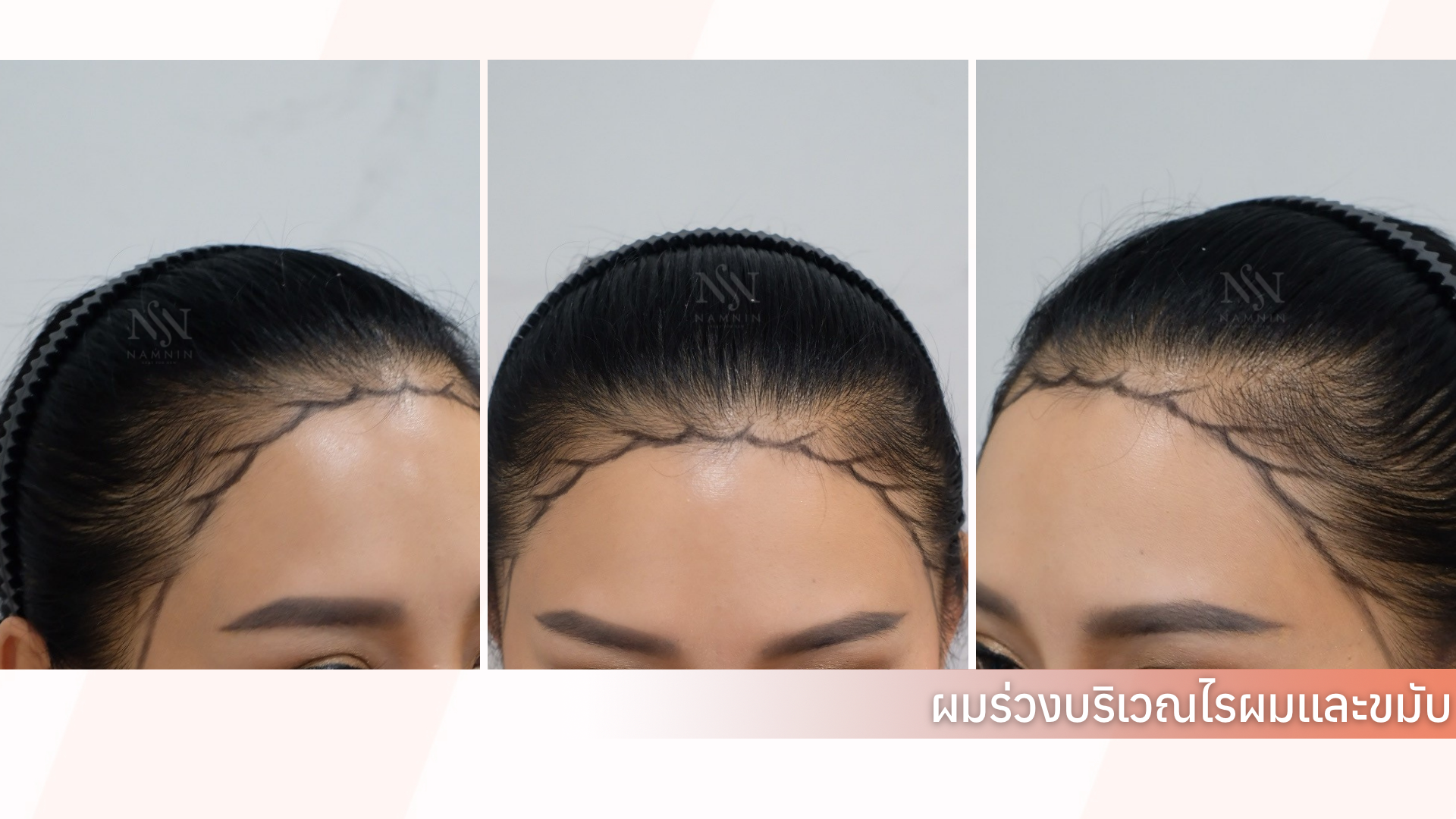
As hair around the temples gradually becomes thinner, the frontal hairline may begin to take on an M-shaped appearance, making the forehead look wider and changing the facial frame that was once familiar. For some women, these changes may seem minor to others. However, when we look at ourselves in the mirror every day, we can often immediately tell when something no longer looks the same.


Some women begin changing their hair parting, while others use the hair at the sides to conceal the temples. Some avoid hairstyles they once loved, and others spend more time styling their hair simply to make their facial frame look the way it used to. This is particularly relevant for women who work in image-related professions, such as artists, actresses, or those whose careers require them to appear in front of cameras. Subtle details of the hairline become even more important because cameras and lighting can make these small changes more noticeable.
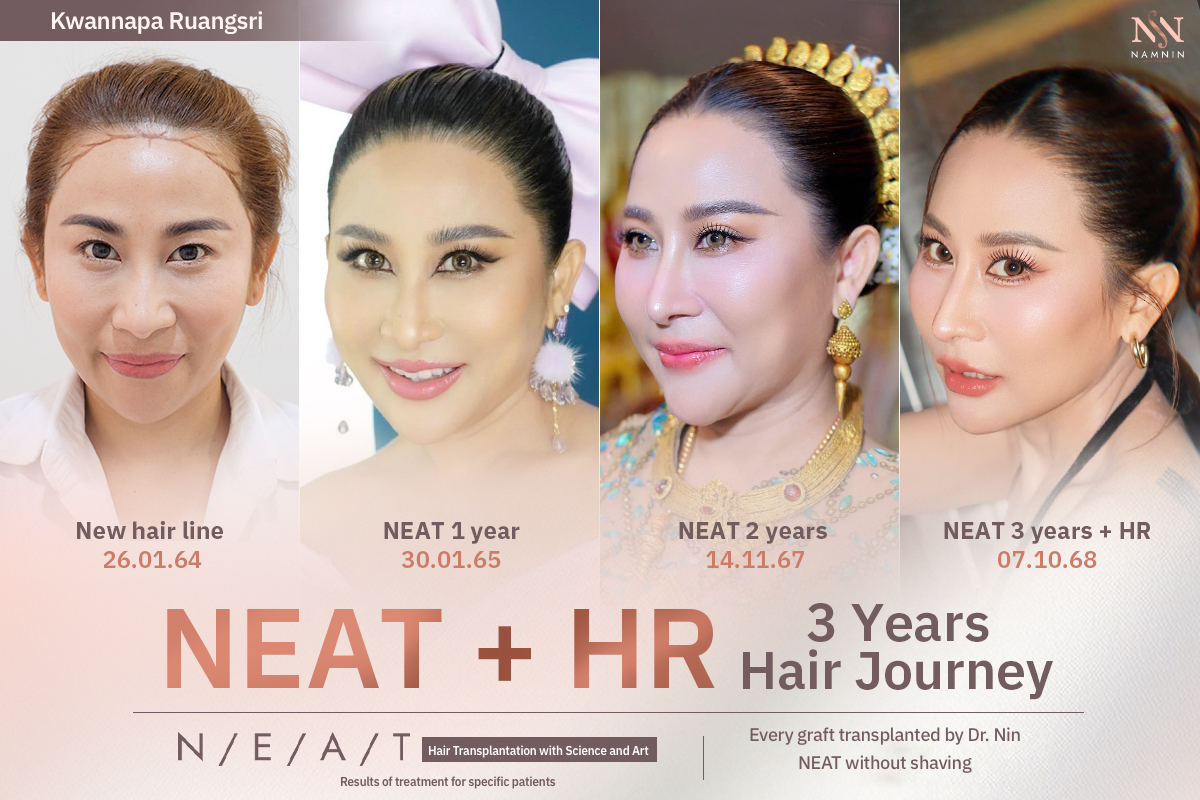
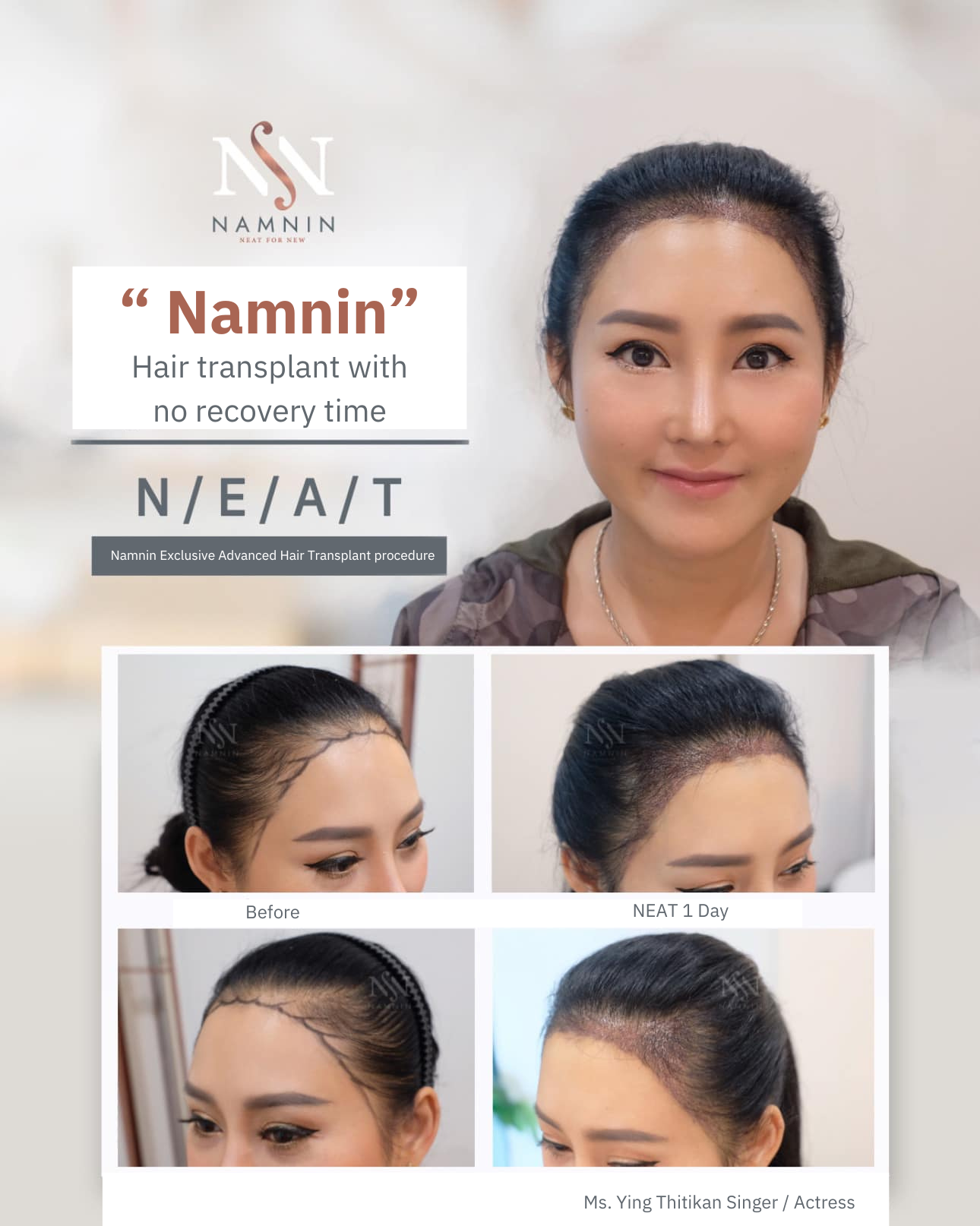
If the hairline has become so thin or receded to the point that the original hair follicles have lost their ability to produce hair, a hair transplant may be another option for restoring the hairline. This is particularly relevant for women who wish to achieve better balance in their facial frame. The NEAT Hair Transplant places great importance on designing a Hairline that suits each individual. Dr. Nin considers facial proportions based on the Golden Ratio, together with hair characteristics, personality, and each person's individual preferences. Whether the goal is to adjust the forehead hairline, add density around the temples, or make subtle hairline refinements, the key principle of the NEAT Hair Transplant is not to create an overly perfect result that makes it obvious that a procedure has been performed. Instead, the goal is to design a hairline that blends harmoniously with the face, looks natural, and preserves each woman's individual identity.

During the hair transplant procedure, Dr. Nin uses a small Implanter measuring approximately 0.6 millimeters to implant hair grafts one at a time with precision. Particular attention is given to the placement, angle, direction, and density of each hair strand to ensure that the newly transplanted hair blends seamlessly with the existing hair. This is especially important along the frontal hairline, which is a highly visible area. The placement and direction of each individual graft are therefore crucial details. The goal of hair transplantation for women is not simply to increase hair density, but to ensure that once the new hair has grown, the facial frame looks harmonious, soft, and remains true to the individual.

Although a hair transplant can help restore areas where hair has already been lost, long-term care is equally important, particularly when the original cause is related to repeated pulling. If we return to regularly wearing tight hairstyles or placing tension on the same areas, existing hair in other parts of the scalp may still be affected. Therefore, the period after a hair transplant can also be a good opportunity to gradually change the way we care for our hair.


There is no need to give up all the hairstyles we love. Simply try reducing the tension and alternating between different styles. Some days, we can wear our hair down comfortably. On other days, we can tie it loosely or change the position of the ponytail to avoid repeatedly placing tension on the same area. We should also care for our scalp and hair according to the doctor's recommendations. If you experience hair thinning or hair loss, consulting a doctor is advisable because female hair loss can have several underlying causes. Identifying the actual cause will help determine the most appropriate approach to care.


We do not have to choose between looking beautiful and taking care of ourselves. We can still tie our hair neatly when needed, style it for days when we have to appear in front of the camera, and experiment with different looks whenever we feel like having fun with our appearance. All it takes is a little more gentleness toward our hair. After all, our hair is with us every day, from the days we go to work and stand in front of the camera to the days when we simply want to dress up, look beautiful, and feel good about ourselves in the mirror.

We do not have to look perfect every single day. At the very least, we deserve to feel good about ourselves, just as we are, at every stage of life.
What to Do When You Discover Your Hair Is Thinning
Because hair is more than just one part of the body. It can reflect our appearance, personality, youthfulness, and confidence. It is therefore not surprising that men entering their 30s and beyond may spend more time in front of the mirror, observing changes in their hair and scalp.

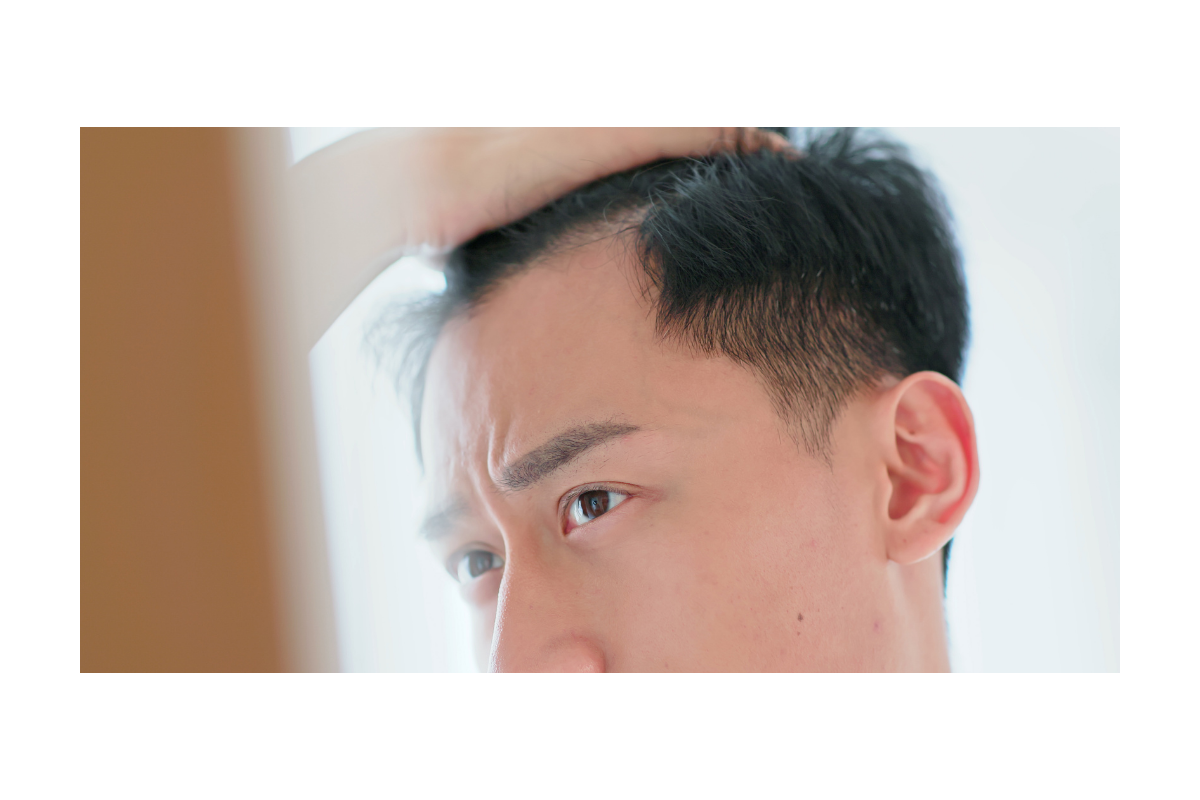
Hair loss and thinning hair often become easier to notice, whether it is a hairline that has begun to recede at both sides of the forehead, a widening hair part, or thinning around the crown. As a result, hair loss and thinning hair have become a concern for men around the world.

But believe it or not, even when your hair starts to thin, there are still options. The question is, which approach is suitable for your condition? At Namnin Clinic, we would like to begin by exploring different patterns of hair loss and thinning hair, as they may reveal certain warning signs.

Where Is Your Hair Thinning? What Does It Tell You?
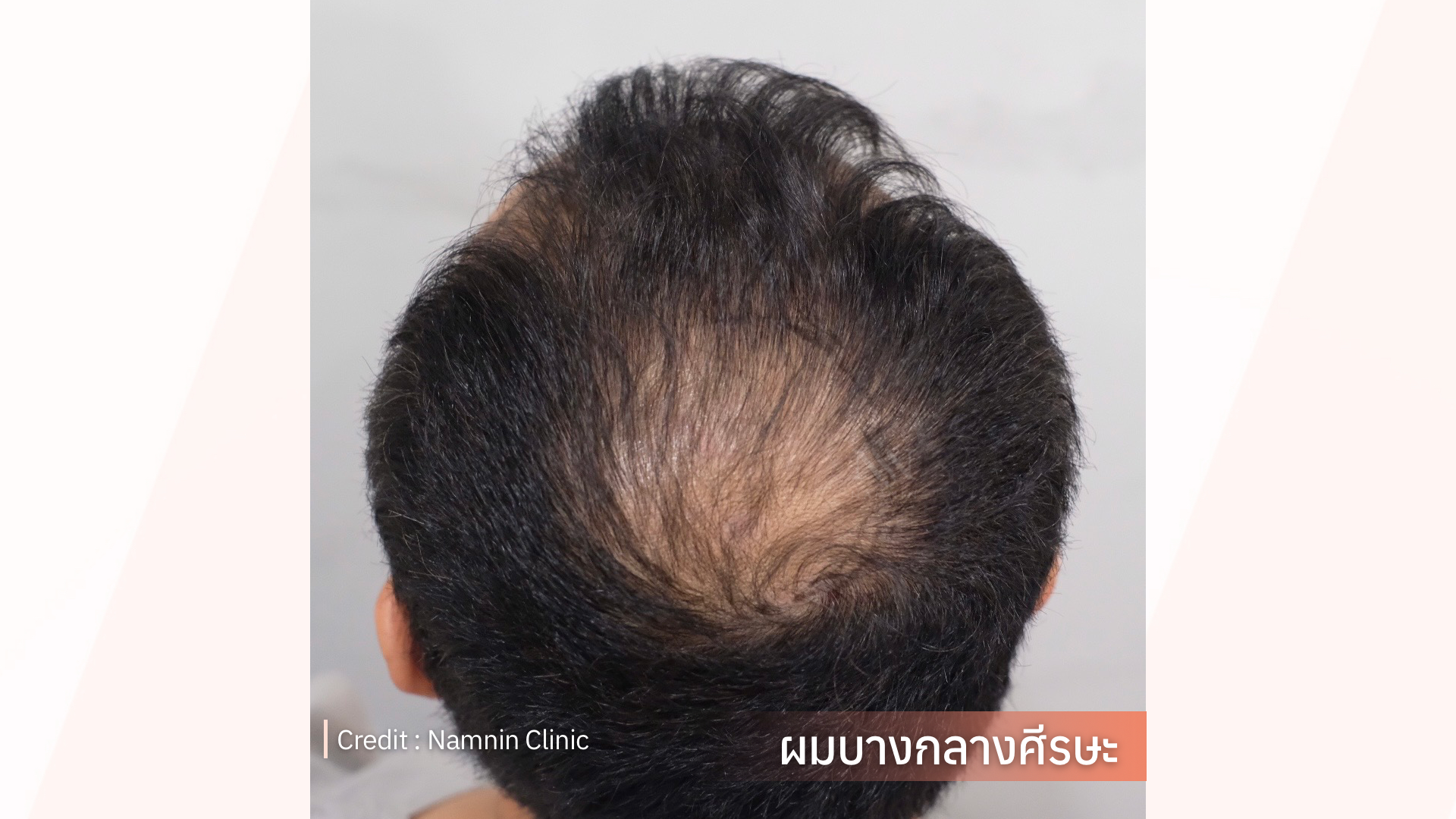
  • Thinning at the Upper Mid Scalp
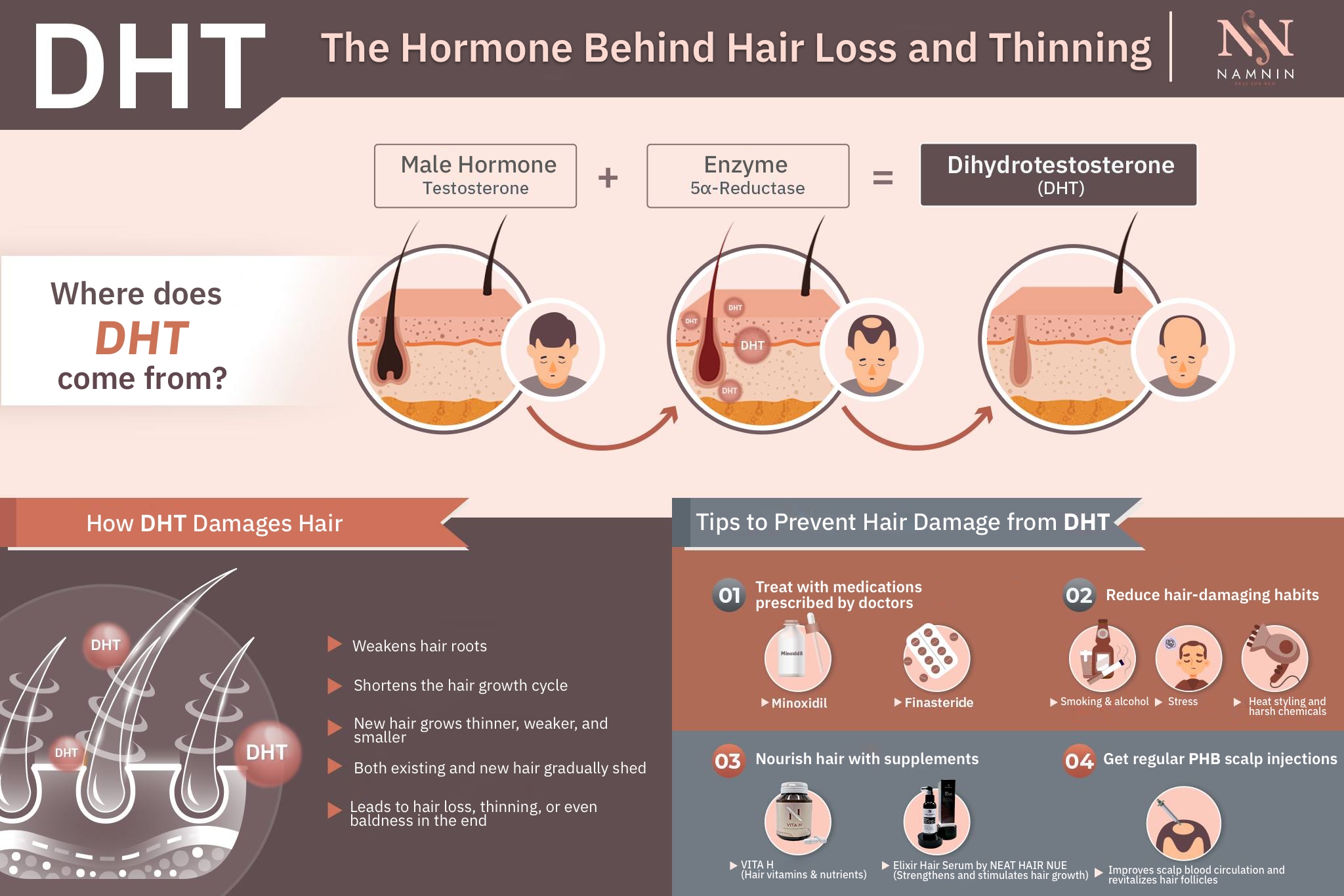
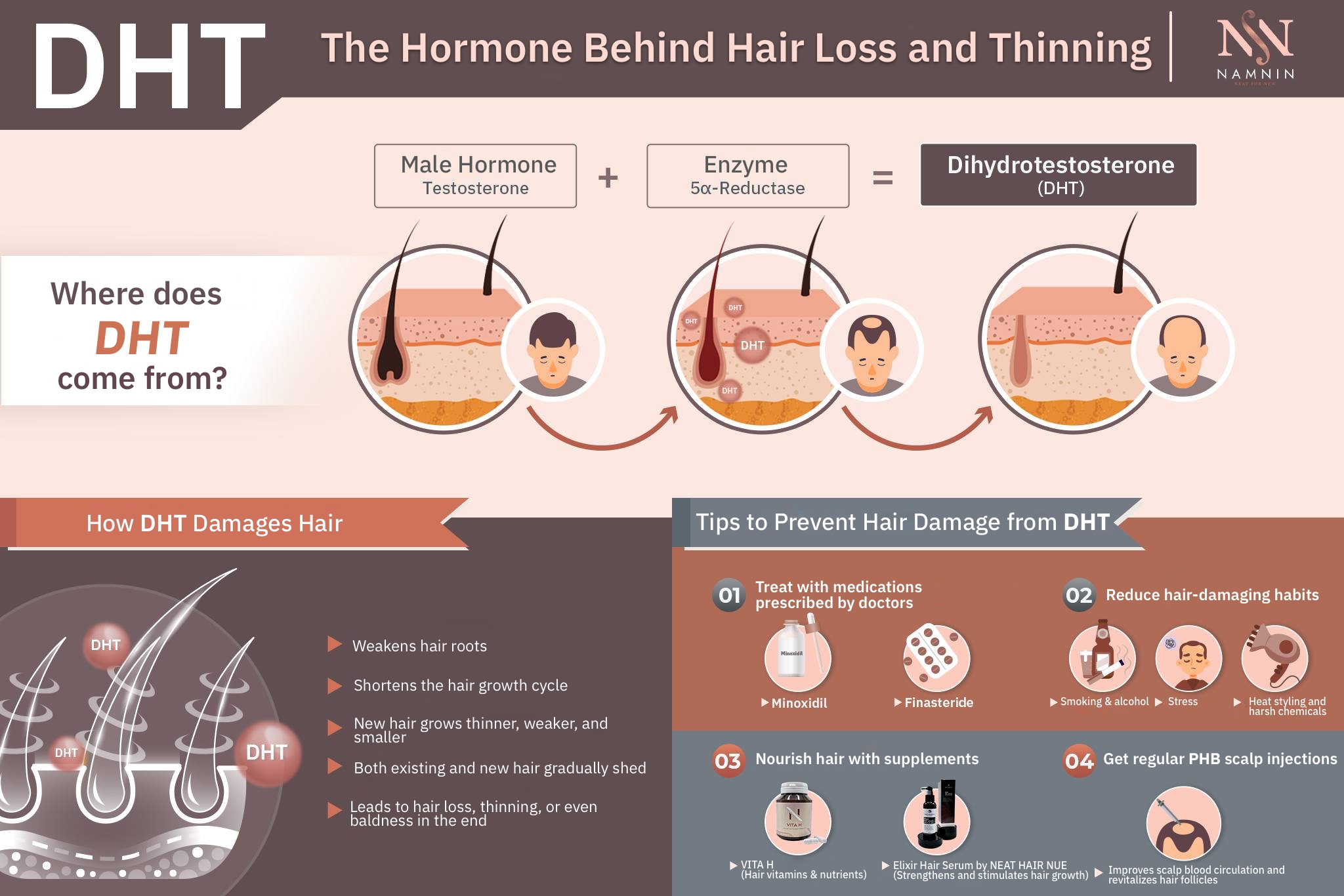
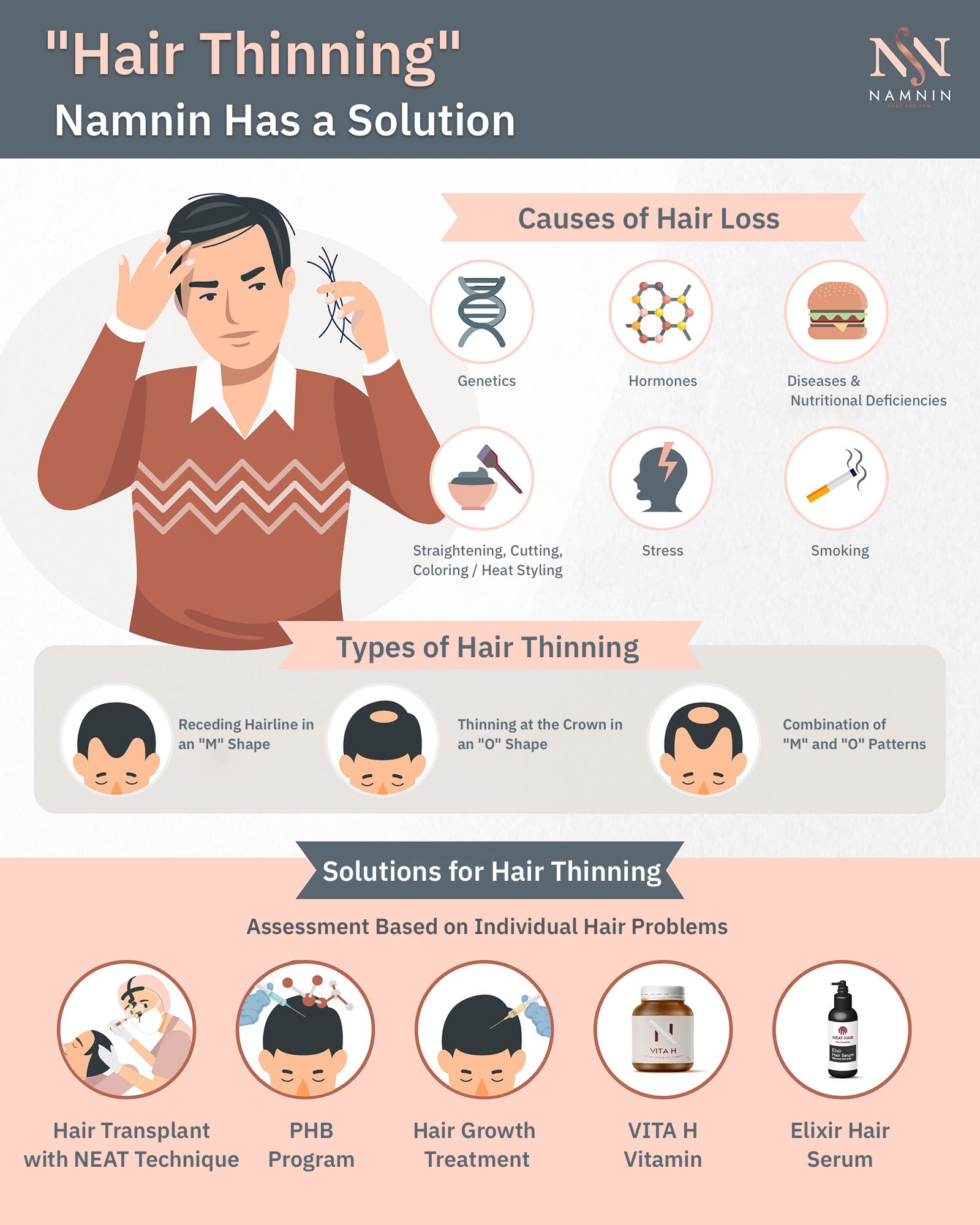
This may indicate hair thinning caused by genetics and hormones, known as Androgenetic Alopecia. The enzyme 5 alpha reductase converts testosterone into dihydrotestosterone, or DHT. DHT can cause the hair follicles to gradually shrink, resulting in progressively smaller hair shafts that eventually shed earlier than expected.


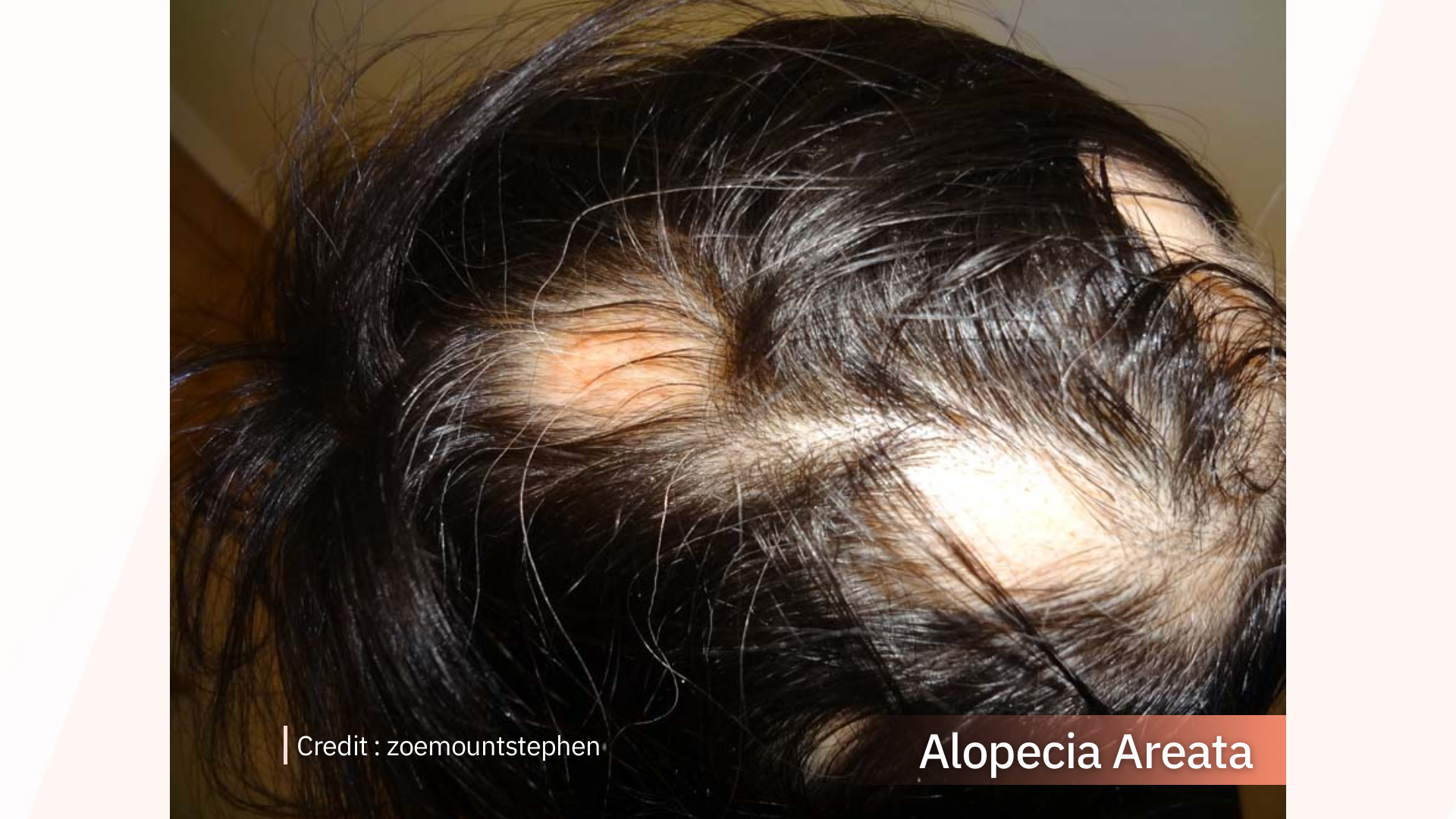
  • Smooth, Round Patches of Hair Loss
This is characteristic of Alopecia Areata, a condition caused by an abnormal immune response in which the immune system attacks the body’s own hair follicle cells.


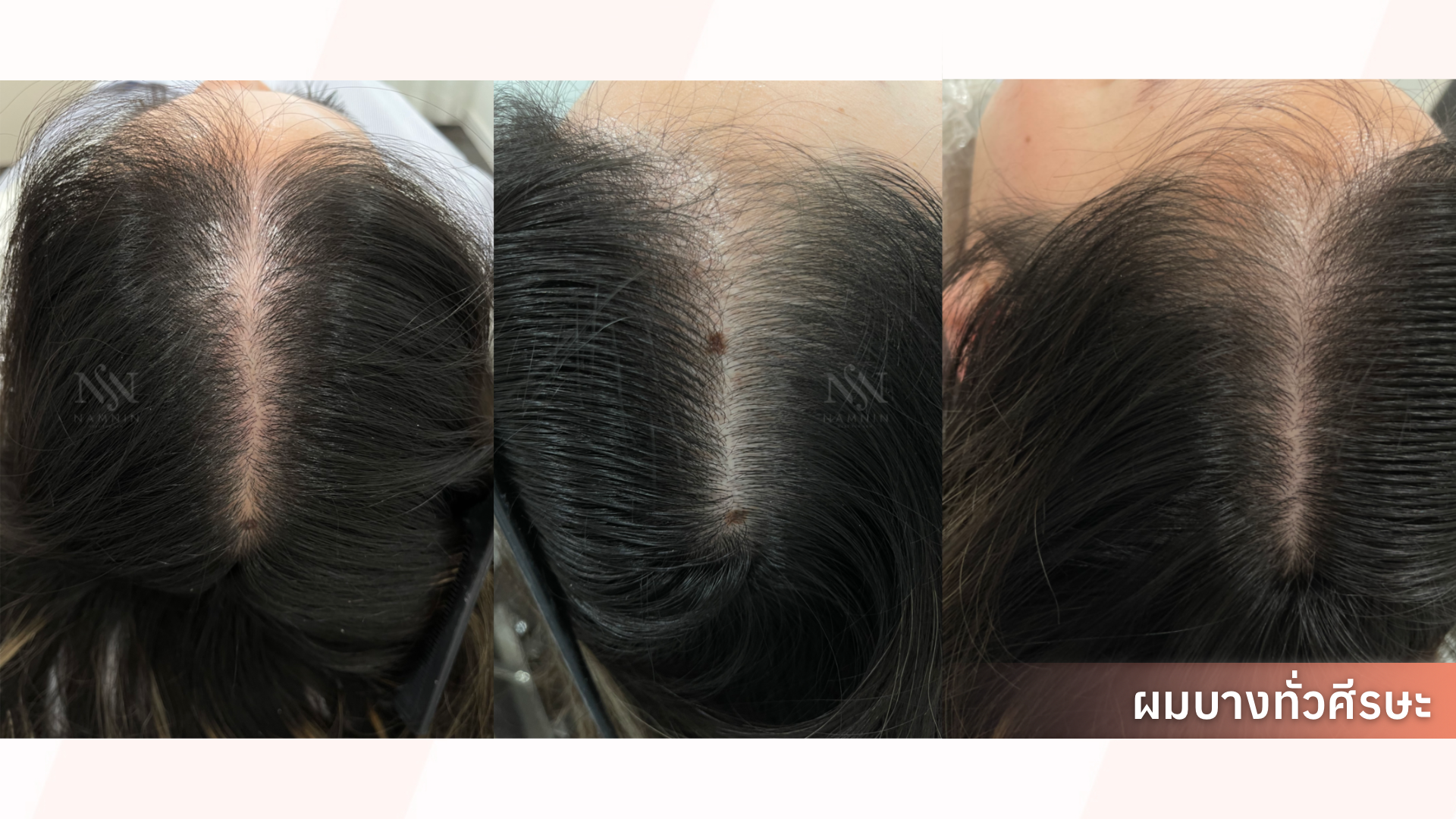
  • Diffuse Hair Loss Across the Scalp
This pattern of hair loss may indicate Telogen Effluvium, or sudden hair shedding. It may be triggered by stress, illness, nutritional deficiencies, or rapid weight loss.


  • Hair Loss Around the Hairline and Temples
This may be a sign of Traction Alopecia, such as from regularly wearing hairstyles that pull the hair very tightly or continuously wearing headwear or equipment that puts excessive pressure on the scalp for prolonged periods.


  • Receding Frontal Hairline
If inflammation is also present, this may be associated with Frontal Fibrosing Alopecia, or FFA. This is a form of hair loss involving scar tissue formation beneath the skin, which may permanently damage the hair follicles and should be evaluated by a doctor.


All of these patterns also tell us that hair loss and thinning hair can have different underlying causes. Trying to copy someone else’s treatment approach may therefore not be the most appropriate solution for everyone. Consulting a doctor can help identify the underlying cause and lead to a treatment plan that is appropriate for each individual.

Which Direction Should You Take?
Managing and Restoring Thinning Hair

Did you know that hair transplantation is not always the answer to every case of hair loss and thinning hair? In general, if hair loss and thinning are still in the early stages, permanent hair transplantation may not yet be necessary. These are some types of hair loss and thinning hair that may have other treatment options besides hair transplantation.

  • Temporary Diffuse Hair Thinning Across the Scalp
This may occur due to accumulated stress or insufficient rest, resulting in unusually increased hair shedding. In this type of hair loss, the hair follicles remain present, but the hair has entered the resting phase of the hair growth cycle. Adjusting lifestyle habits to help the body regain balance and choosing a diet that supports hair health can be one approach to managing the condition.
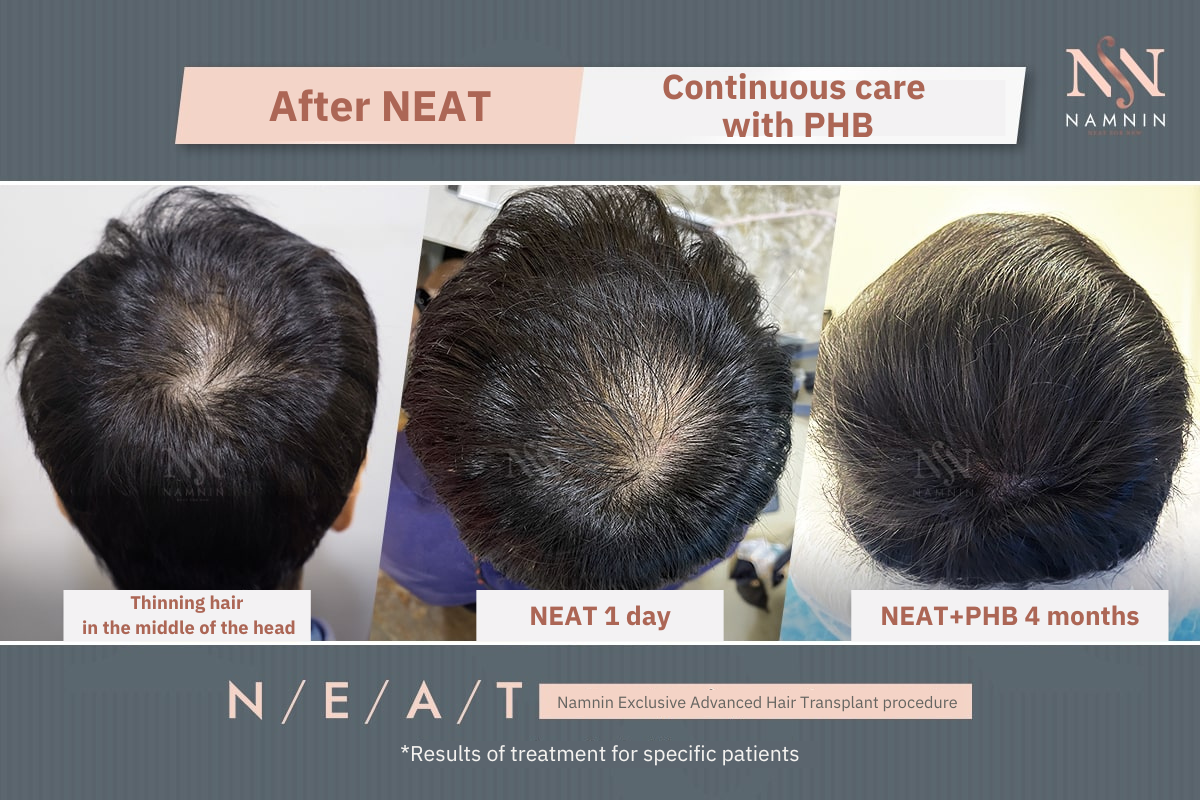
  • Hair Shafts Have Become Smaller but the Hair Follicles Are Not Yet Permanently Closed
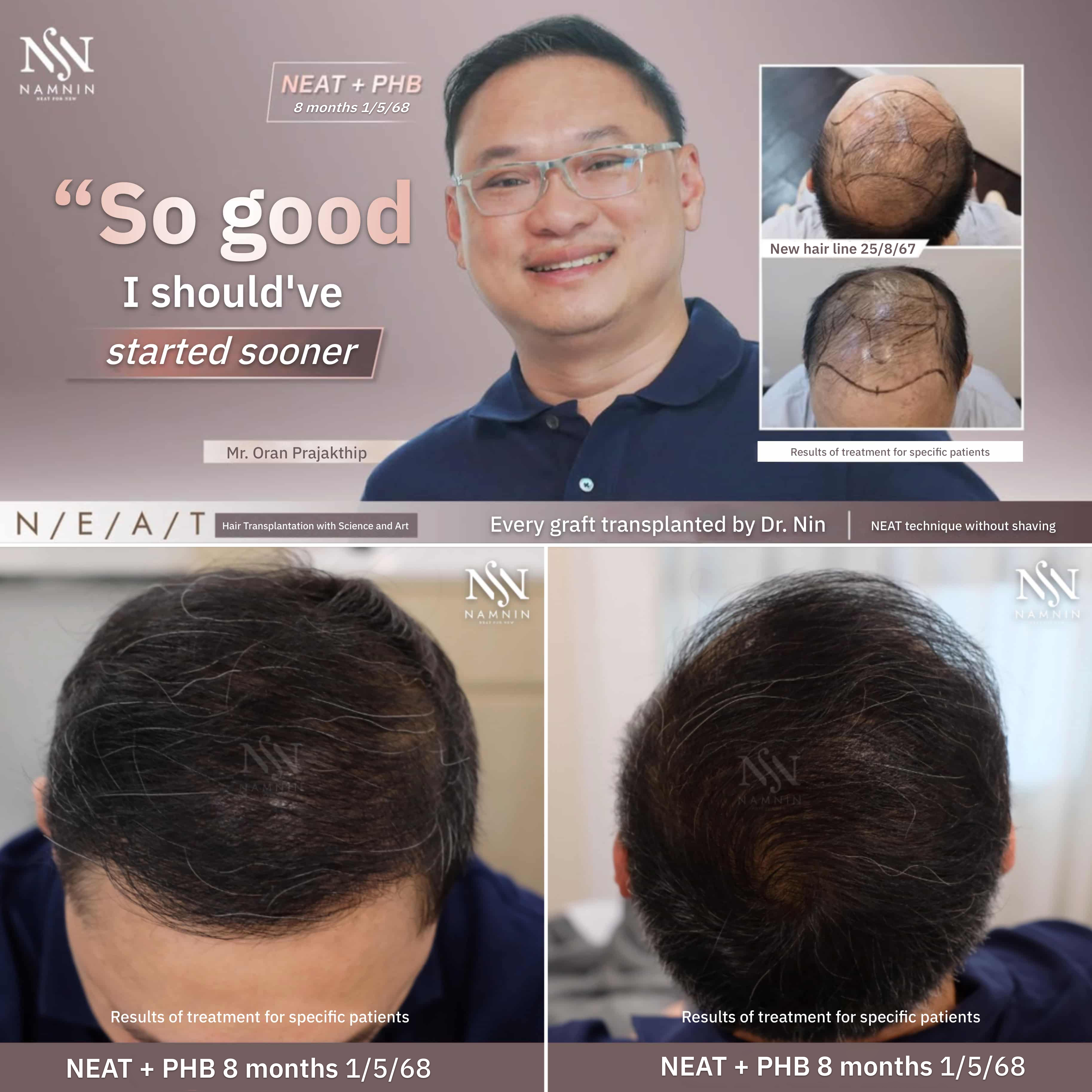
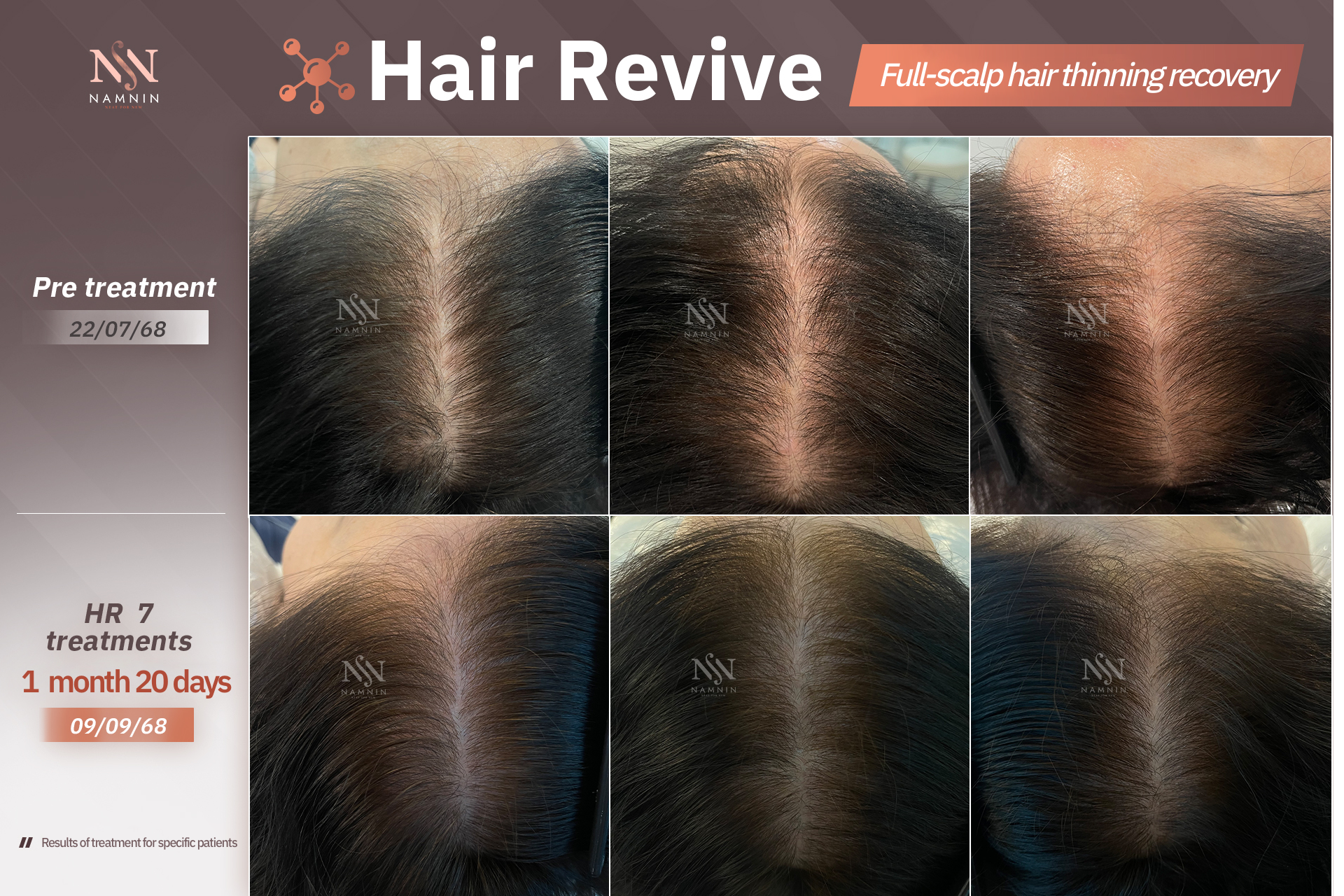
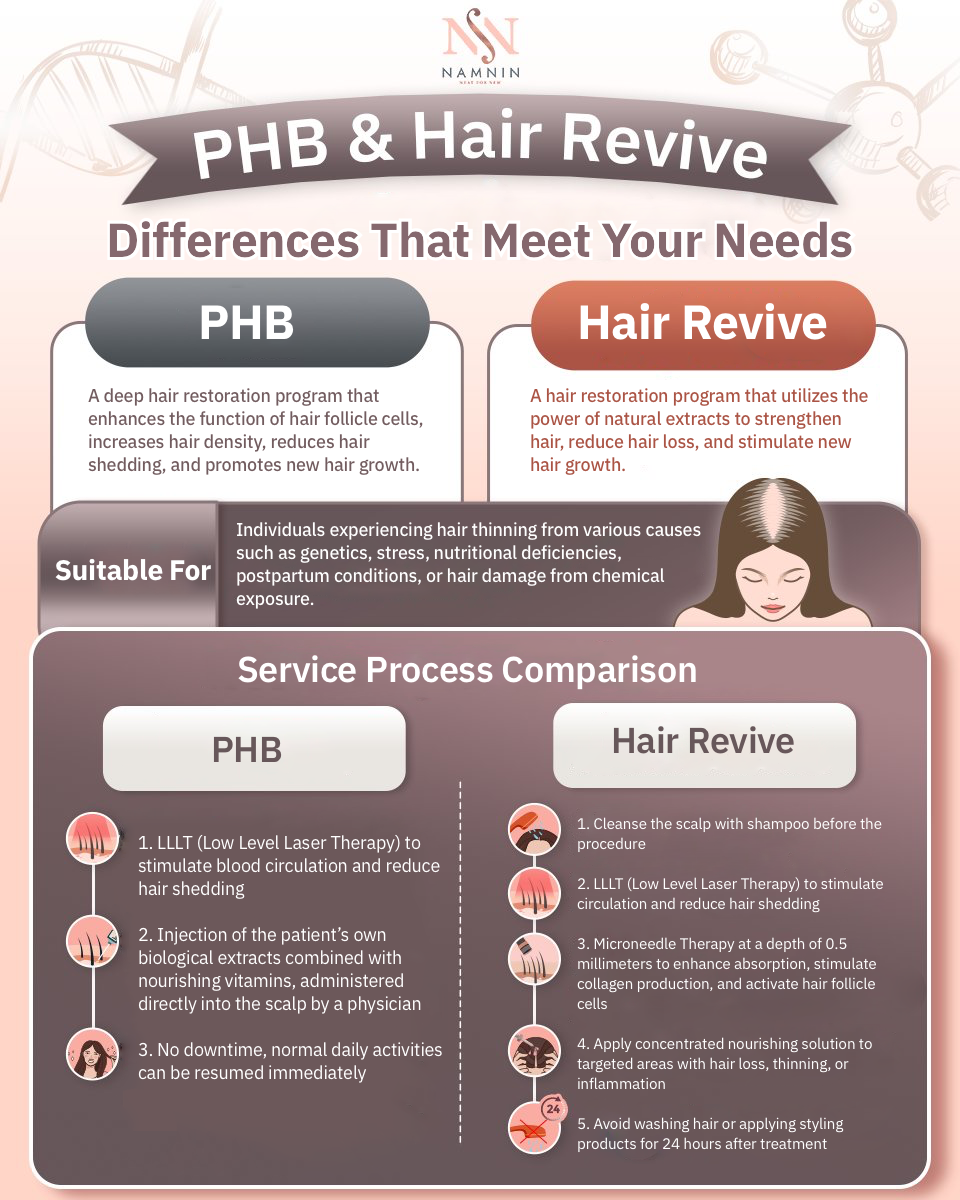
This means that the hair follicles may be entering a stage of miniaturization, but are still in the early stage, known as Early Miniaturization. A doctor may recommend hair root restoration treatments, such as LLLT, the Hair Revive Program, or the PHB Program, to support the hair roots and help them produce thicker and healthier looking hair.


The following are patterns of hair thinning for which permanent hair transplantation may be a more suitable option, as the hair follicles have entered an irreversible stage and can no longer produce new hair. Other forms of hair care cannot restore these follicles once they have permanently lost their ability to produce hair.

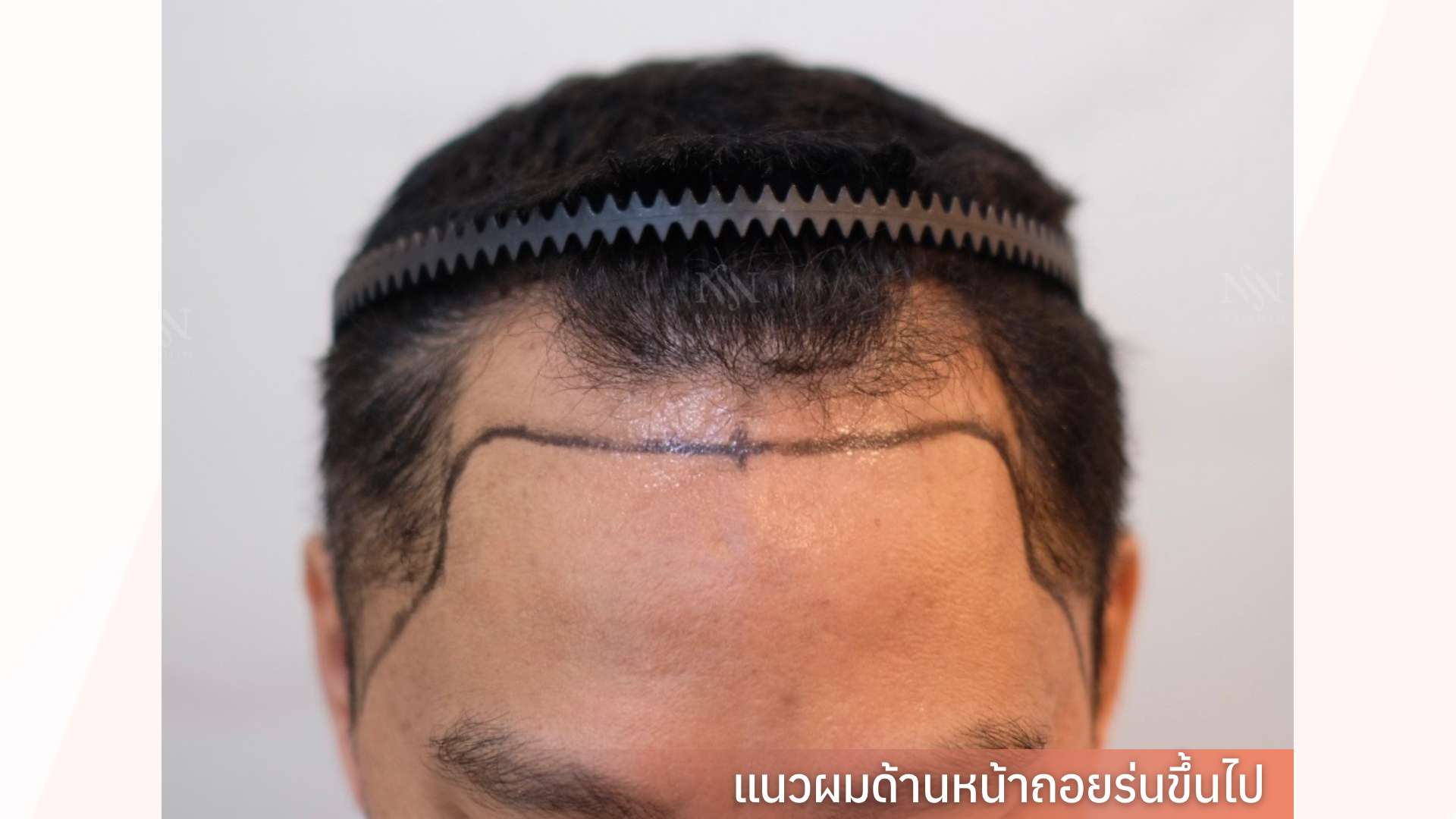
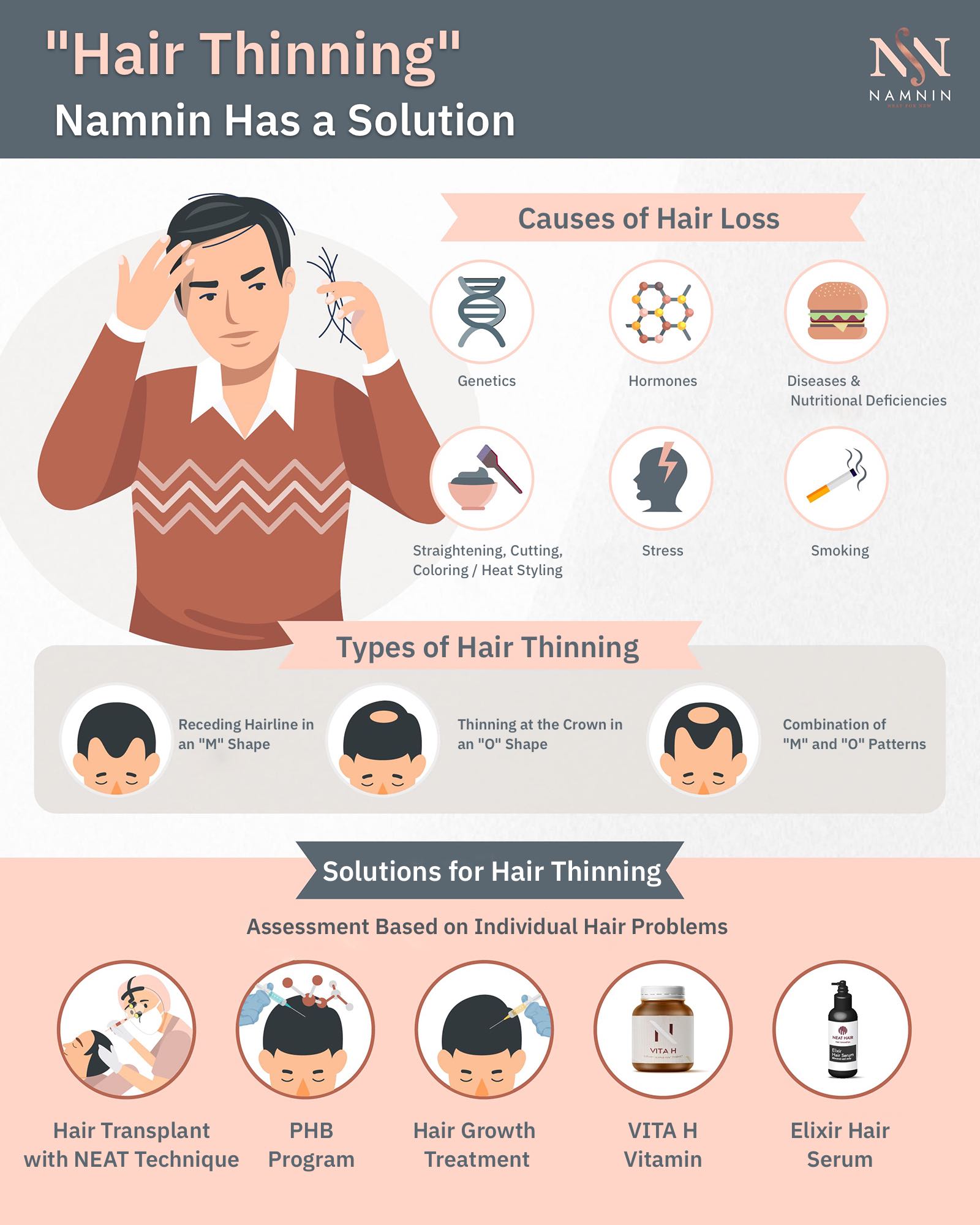
  • When the Frontal Hairline Has Clearly Receded Into an M Shape
This can be observed when the forehead area that previously contained hair becomes smooth because the hair follicles have shrunk and the follicles have closed. Hair transplantation may be the only way to recreate the Hairline in this area.

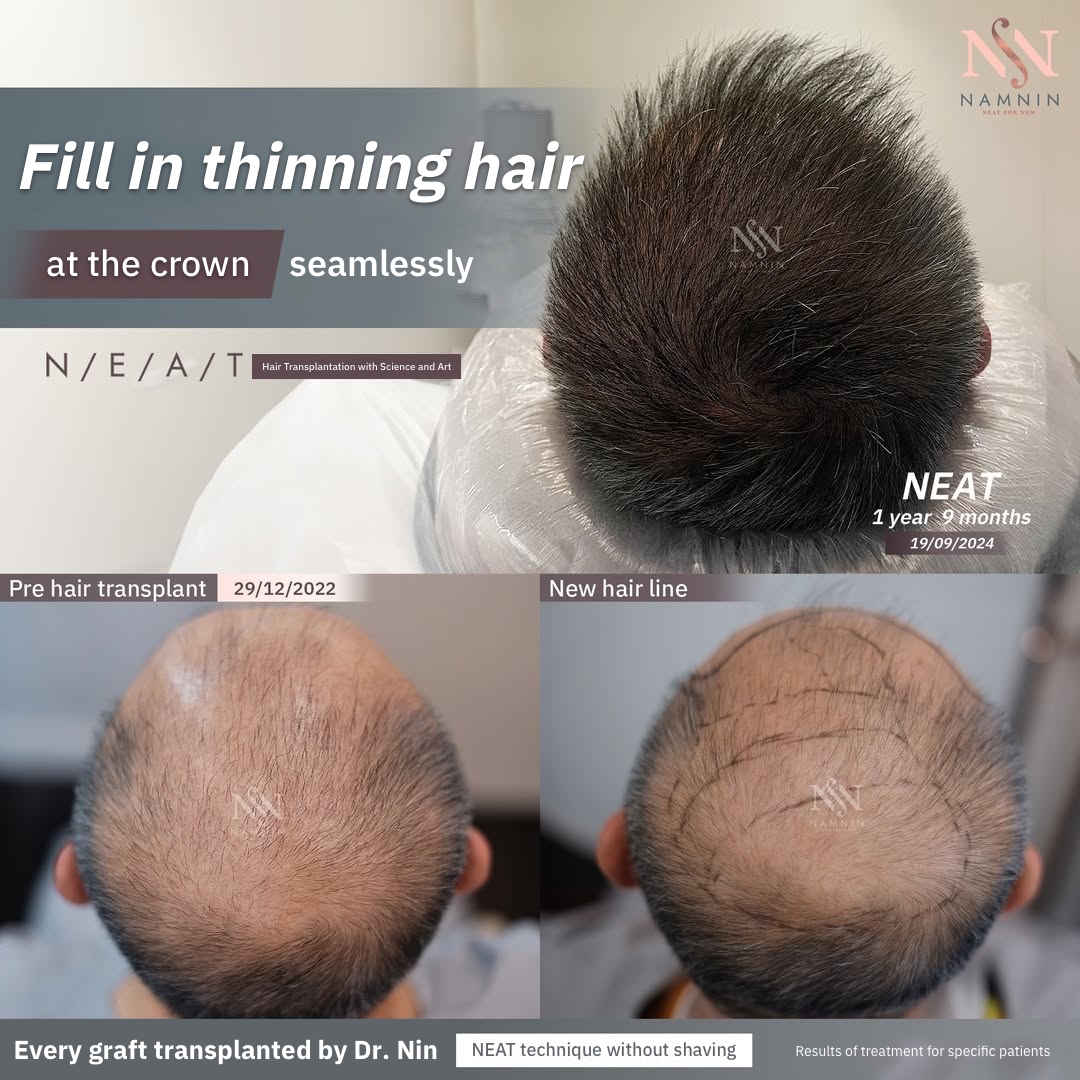
  • When Hair Has Become Thin Around the Crown Until a Large Area of Scalp Is Visible
This is sometimes described as the “egg shaped” pattern of baldness, where most of the original hair in the central area has disappeared. While other treatments may help preserve the surrounding hair, hair may not return to the central area once the follicles have been lost. Transplanting donor grafts from the back of the scalp may therefore be needed to restore hair density in the area.

  • When Both the Forehead and Mid Scalp Become Thin at the Same Time
Many men may be experiencing this pattern, where the frontal hairline recedes into an M shape while the hair in the mid scalp becomes diffusely thinner. The two areas may eventually progress toward each other. In such cases, if hair transplantation is considered, it is important to prioritize which areas should receive greater density in order to make the most appropriate use of the limited donor grafts available.


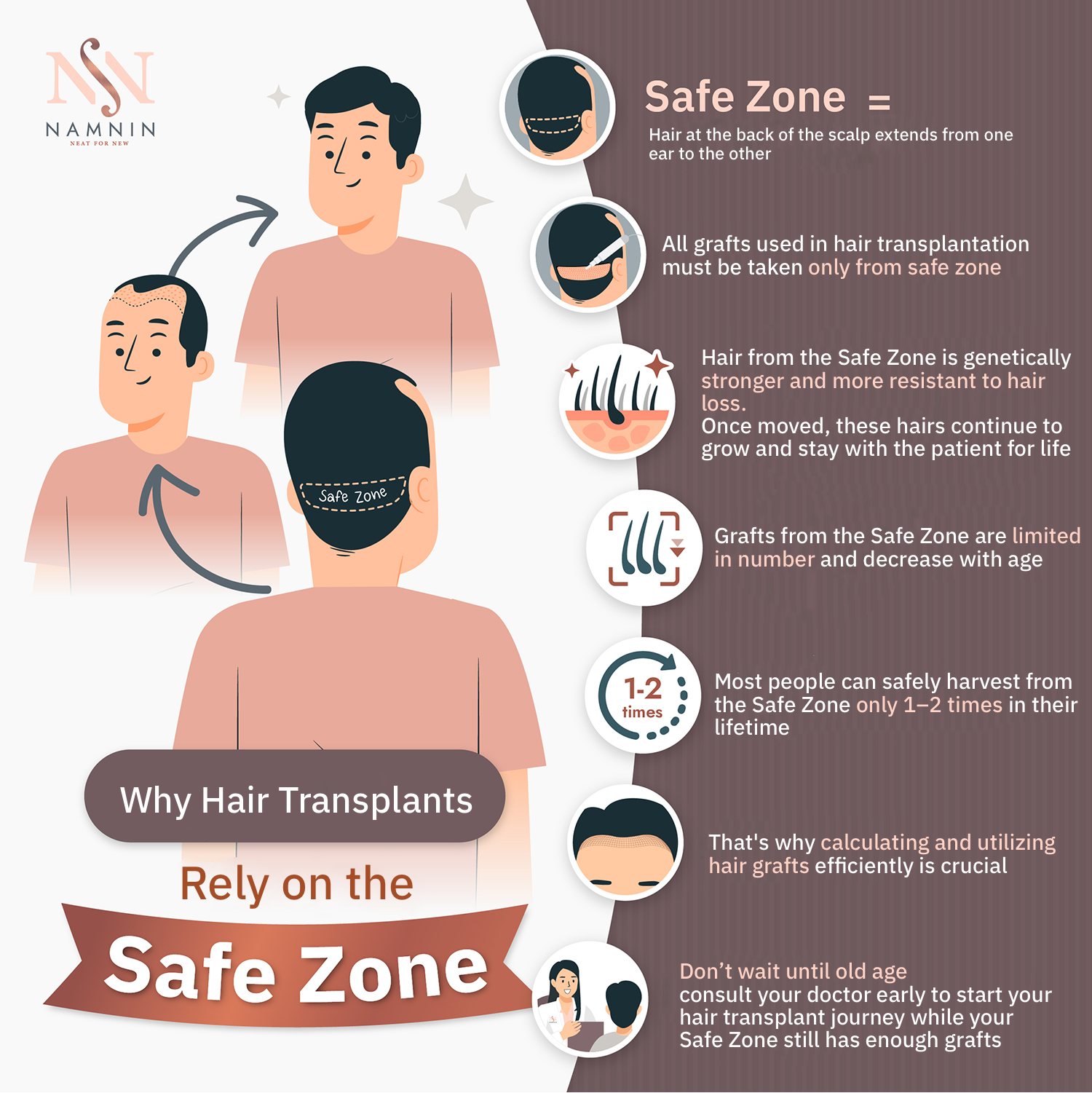
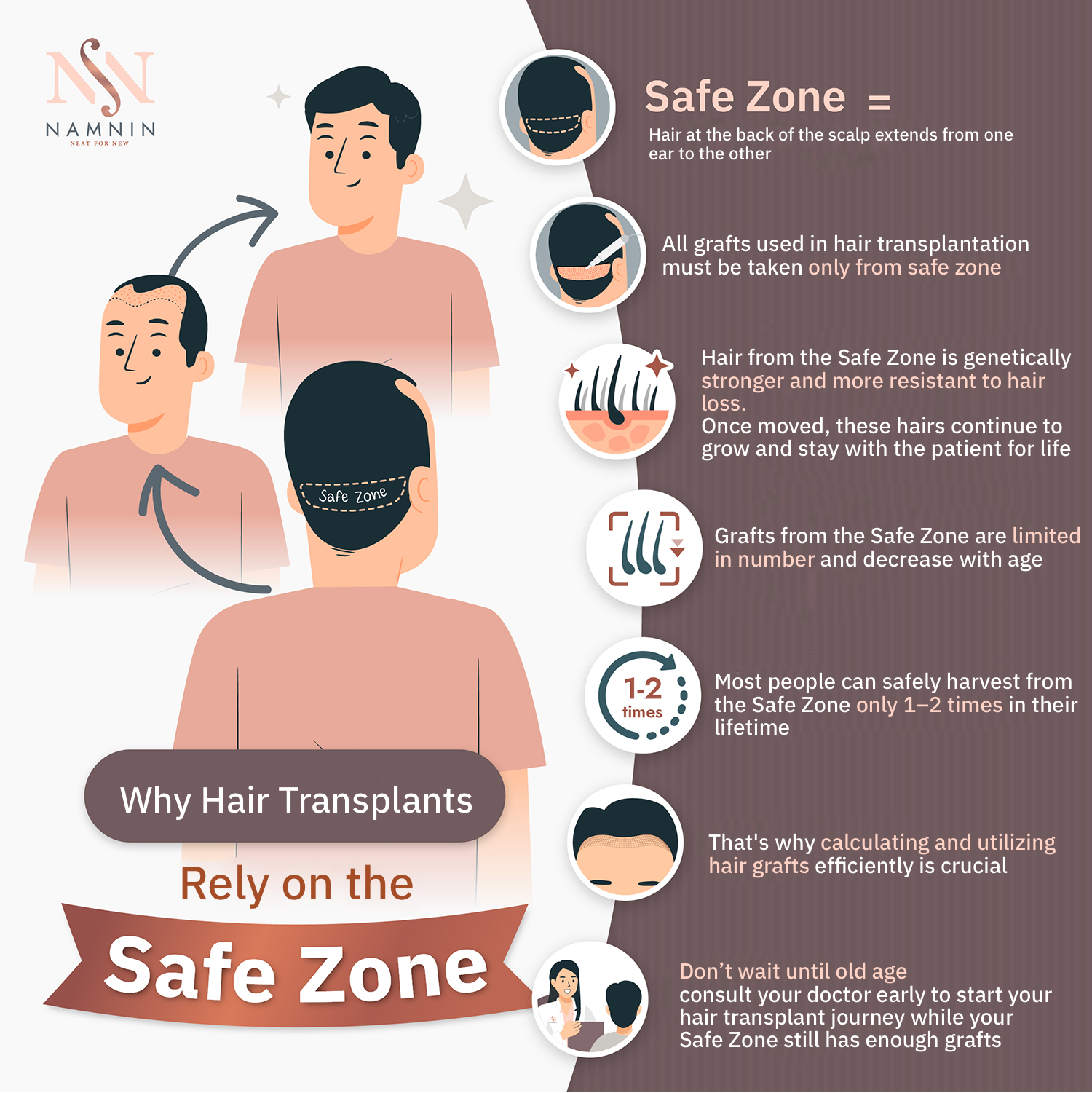
In addition to analyzing the pattern of hair loss and thinning, assessing the condition of the Donor Area is also an important step. The Donor Area, located at the back of the scalp, is the primary area from which doctors can harvest donor grafts for transplantation because the hair in this area is relatively resistant to the effects of DHT, making it more stable and less prone to shedding.
However, the supply of donor grafts is limited. They may only be available for one or two permanent hair transplant procedures, and as a person ages, the quality and strength of the donor grafts may also decline. This is therefore an important limitation and consideration for anyone deciding whether to undergo a hair transplant.

NEAT Hair Transplantation
Personalized Care for Every Individual

With the NEAT technique at Namnin Clinic, the doctor assesses the condition and readiness of the hair and scalp, as well as analyzes various factors that may affect the success of the hair transplant. Once the doctor determines that hair transplantation can address the patient’s hair loss and thinning, the treatment planning process begins. This includes calculating the available donor grafts to make the most appropriate use of them, designing a new Hairline in the forehead area, and identifying areas where the patient would like to prioritize greater hair density when thinning occurs in multiple areas. Throughout the process, the doctor places the patient at the center of an individualized treatment plan.


Not only that, the doctor personally performs the entire hair transplantation procedure, graft by graft, to control the angle and direction of each hair, the depth at which each graft is implanted, and hair density, using specially designed small hair transplantation instruments. This is accompanied by close, continuous post transplant care personally provided by the doctor for a full year.


...Do you believe it now? At Namnin Clinic, there is always a way forward when you are experiencing thinning hair.
Can You Still Get a Hair Transplant After More Than 20 Years of Hair Thinning?
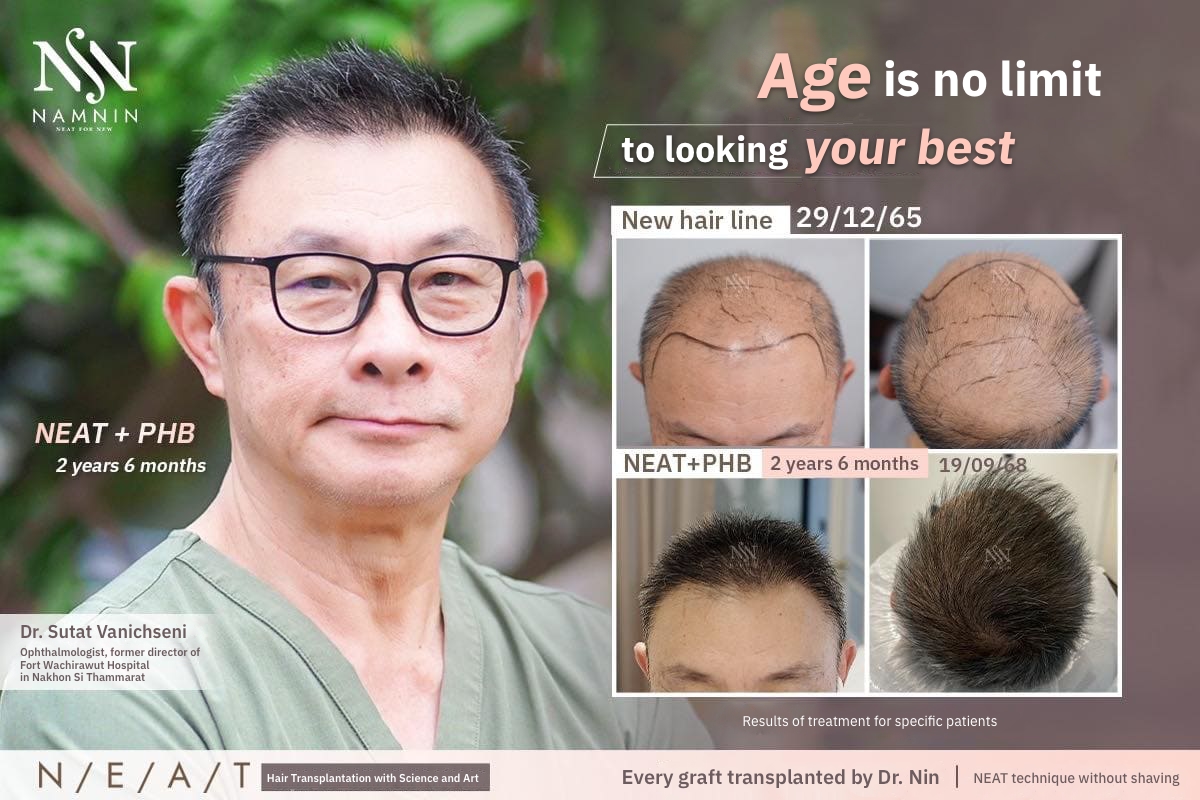
Believe it or not, there are many men who have lived with hair loss and thinning hair for more than 20 years. At first, the hair loss may have been mild and not very noticeable. But when they do not consult a doctor or receive continuous restorative treatment, the hair loss and thinning can gradually become more severe. After 10 to 20 years, the thinning may become more pronounced, with visible signs of thinning or hairline recession, eventually becoming a concern in everyday life. By then, many men may be approaching their 50s or 60s. This leads many to ask: if we have allowed our hair to become thin for more than 20 years, can we still undergo a hair transplant?


For this question, there is no definite answer. Each man should undergo an individual medical assessment, allowing the doctor to determine whether a permanent hair transplant can be performed successfully and how worthwhile the procedure would be as an investment. This is because hair transplantation involves many factors and conditions that need to be considered, which vary from one patient to another. These are the factors the doctor will assess to determine the feasibility of a hair transplant.

  • Donor Area Condition

The Donor Area refers to the area at the back of the scalp where the doctor can move donor hair grafts and transplant them to other areas where they are needed. Hair in this area is strong and more resistant to shedding. When transplanted, these characteristics are retained, allowing the newly transplanted hair to potentially remain with us for a lifetime. If the Donor Area is in good condition, this also affects the quality of the donor hair grafts.

  • Quantity of Donor Hair Grafts

Donor hair grafts can be considered one of the key factors in hair transplantation. Since donor hair must come from the Donor Area at the back of the scalp, each person has a limited number of available donor grafts. These can generally be used for hair transplantation only once or twice. Importantly, donor grafts can also deteriorate with age. If a person undergoes hair transplantation at an older age, there is a possibility that the donor grafts may become weaker, which can also affect the quality of the hair transplant.

  • Area Requiring Hair Transplantation

Whether the available donor grafts are sufficient also depends on the size of the area requiring transplantation. If a patient has only mild hair thinning, donor grafts may be sufficient to restore the thinning areas. However, if the patient has experienced hair thinning continuously for more than 20 years, the thinning area may be relatively extensive and require a larger number of donor grafts to restore it. This is therefore another important factor to consider.

  • Desired Hair Density

Each patient has different expectations regarding hair transplantation. If a patient wants to achieve a high level of hair density but does not have enough available donor grafts, the result may not meet the patient’s expectations.

For patients who are beginning to enter older age, particularly those aged 50 and above, the available donor grafts may be limited while the areas requiring transplantation may be extensive and involve multiple areas, such as the forehead or mid scalp. In this case, the doctor will work with the patient to design a treatment approach by prioritizing the areas to be transplanted. This helps make the most effective use of the available donor grafts. Patients can choose which area they would like to prioritize, while other approaches for managing hair loss and thinning can be used for the remaining areas under the doctor’s care and guidance.

This is one of the important steps in the NEAT permanent hair transplantation technique at Namnin Clinic. The doctor places importance on an initial assessment of the hair and scalp, as well as calculating the available donor hair grafts, so that patients can design a treatment approach that closely matches their needs. It is an individualized approach that places the patient at the center of the treatment plan.


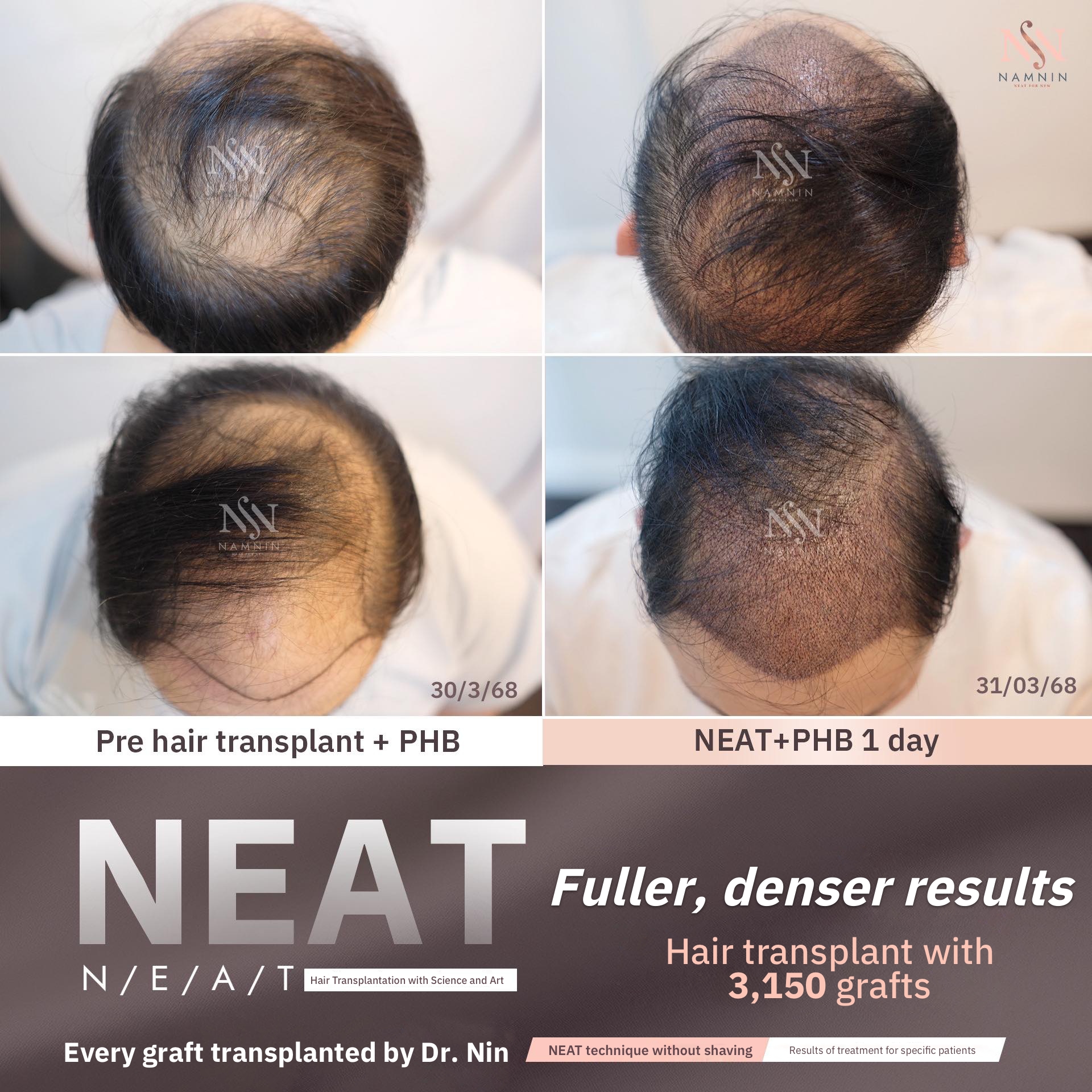
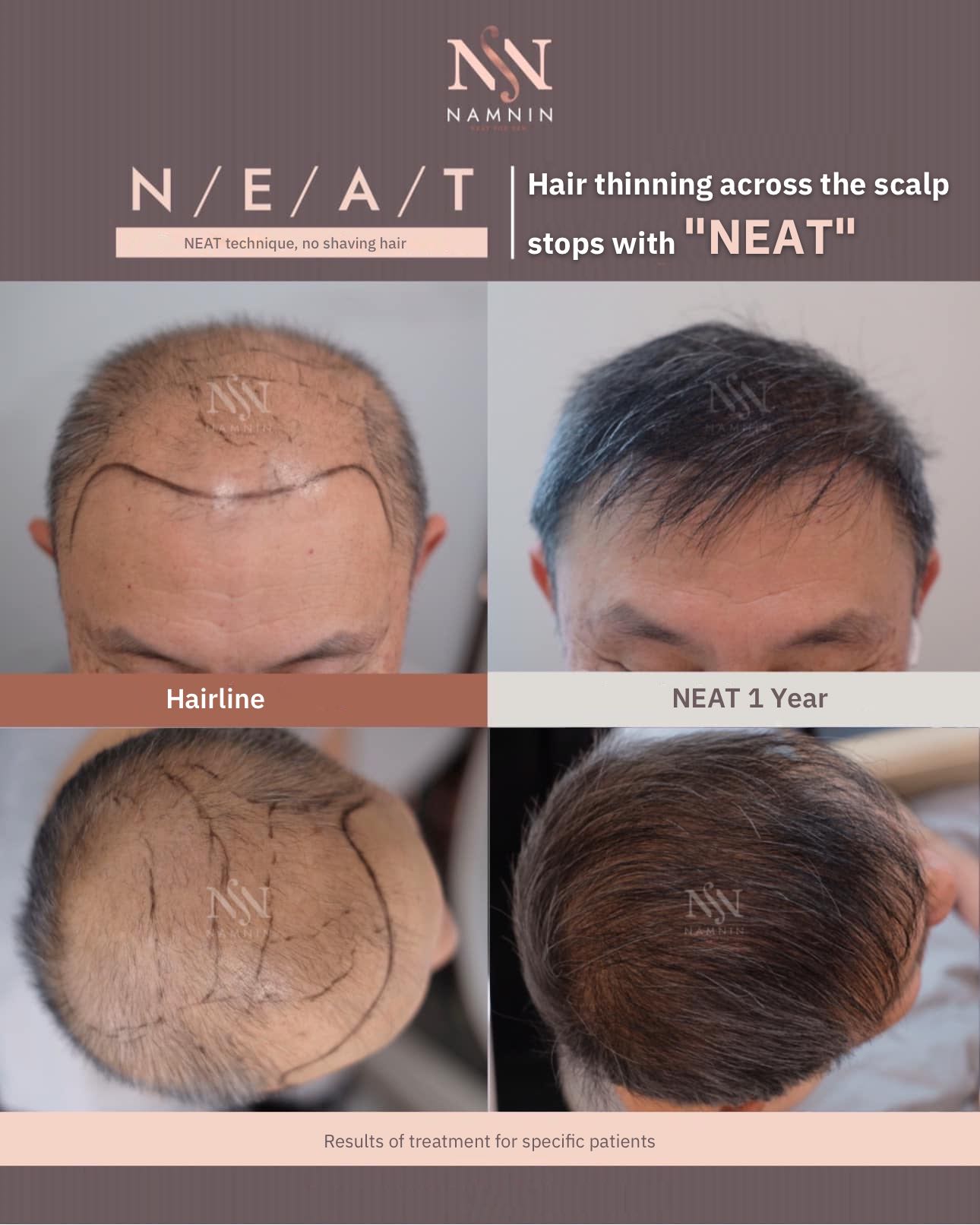
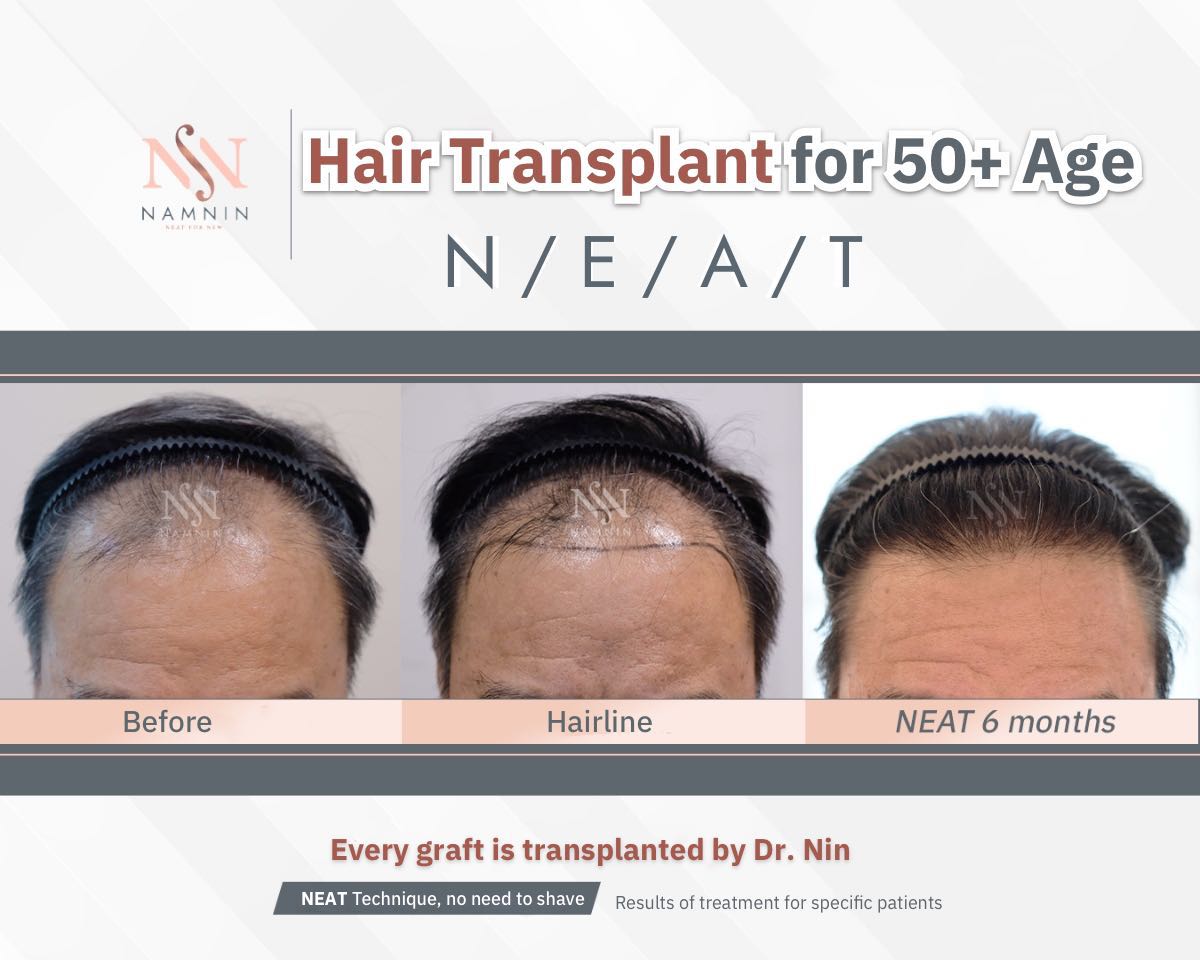
NEAT permanent hair transplantation also emphasizes hair transplantation performed personally by the doctor, graft by graft and hair by hair. Patients do not need to shave their hair, and techniques are used to help conceal the extraction sites at the back of the scalp. After the procedure, swelling is rarely observed, and there is no need to wear a head bandage. Importantly, when transplanting hair in the mid scalp area, the doctor uses a technique that places the transplanted hair among the existing hair to create a harmonious appearance.


Men can also feel reassured that after the hair transplant, the doctor personally provides continuous consultation and follow up for a full year, supporting the growth and condition of the newly transplanted hair, even for those in their 50s and beyond.
Thinning Hair in Women: Early Signs and Targeted Care
For many women, “hair” is more than just a matter of appearance. It is also part of their confidence in everyday life. We may not pay much attention to our hair when everything looks the same as usual. But one day, we may notice that our parting looks wider, our ponytail feels thinner, or more of the scalp is visible than before. These small changes can gradually affect our confidence. In women especially, hair thinning often develops gradually without being immediately noticeable. Paying attention to changes in the hair from an early stage is therefore one way to better understand the problem and choose appropriate care.

Many women do not experience obvious hairline recession in the same way that is commonly seen in men. Instead, they may begin to notice gradual changes such as:

  • A wider hair part, especially when parting the hair in the same area regularly
  • Reduced ponytail volume. A ponytail that once felt thick and full may begin to feel smaller
  • Diffuse hair thinning across the scalp rather than thinning in one specific area
  • Increased scalp visibility, particularly around the crown or along the hair part
  • Gradual thinning of the hair shaft and hair follicle, known as Miniaturization, which refers to the hair becoming smaller and thinner over time

In some cases, the frontal hairline can also recede. This may be associated with several factors, including genetics, hair care practices, or hairstyles that repeatedly pull on the hair in the same area. These changes can occur so gradually that they may go unnoticed because they do not happen overnight. Sometimes, by the time we realize that our hair has truly become thinner, several months or even years may have already passed.

An important aspect of managing hair thinning in women is that not everyone needs the same approach. The pattern and underlying causes of hair thinning can vary from person to person. Medical evaluation therefore plays an important role in determining an appropriate approach, particularly when changes in the hairline or progressive hair thinning begin to appear.

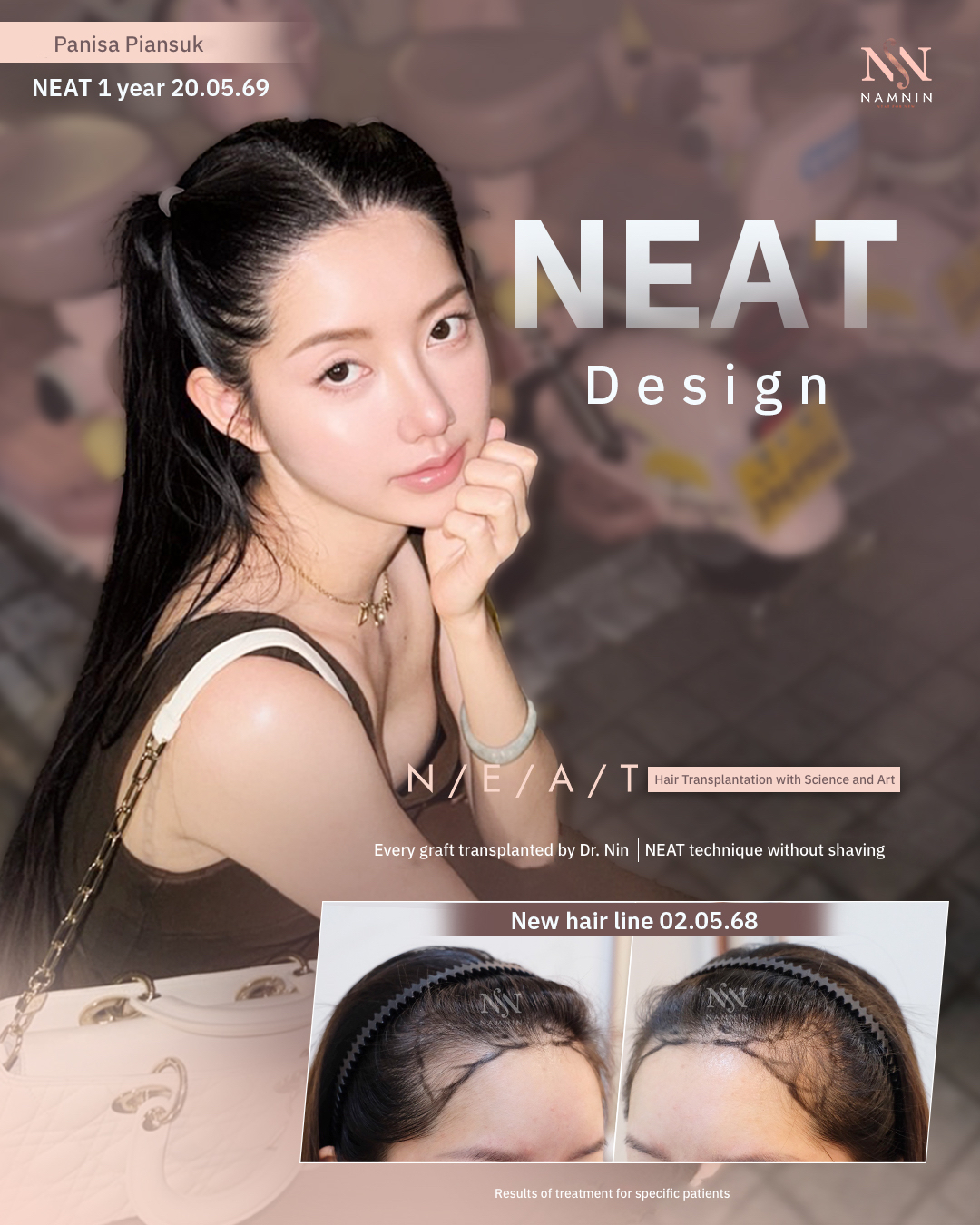
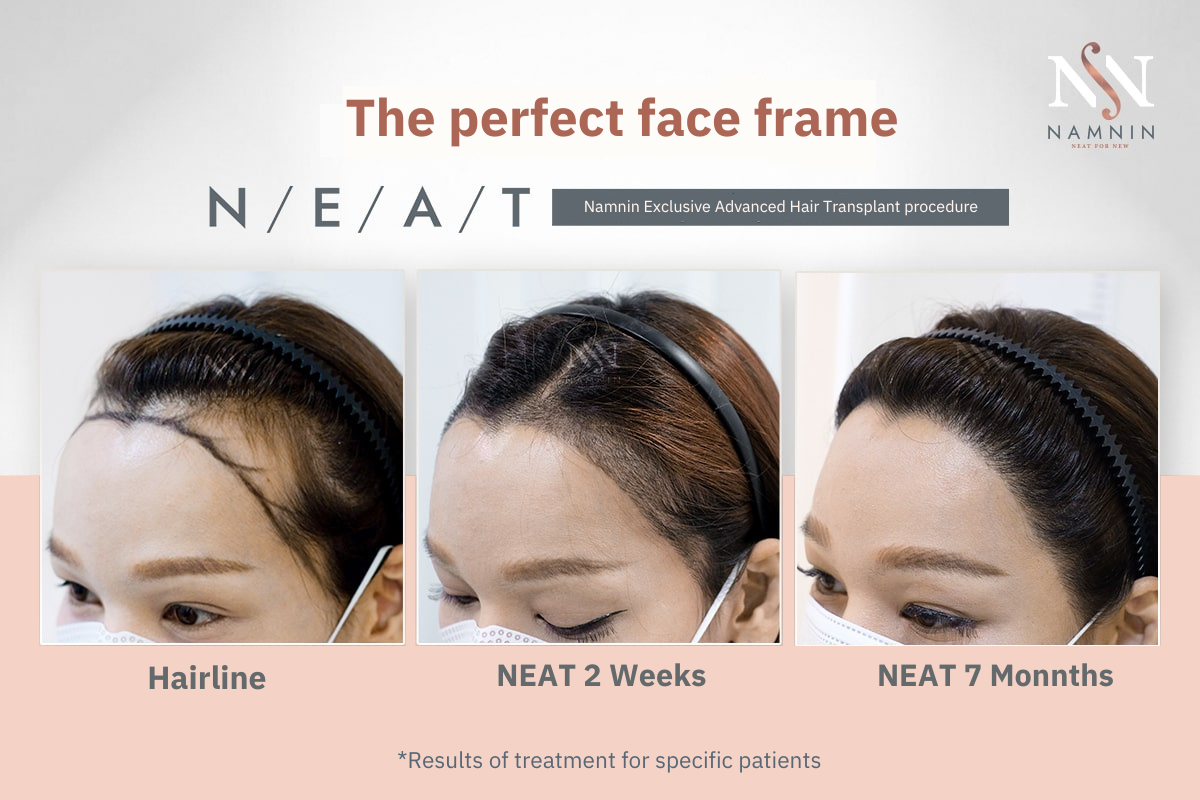
For women experiencing recession of the frontal hairline, hair transplantation with NEAT is one approach that can help design and restore the areas where additional hair is needed. In women, however, hair transplantation is not simply about adding more hair. A well designed hairline should also complement each person’s facial features and individual characteristics.


With NEAT hair transplantation, before the procedure, Dr. Nin considers facial proportions based on the Golden Ratio together with each individual’s needs and unique characteristics to design an appropriate Hairline. Some people may want to create a more balanced appearance of the forehead. Others may want to add hair around the temples, while some may only need subtle adjustments to the frontal hairline. The goal is therefore not to create a hairline that looks overly precise or unnatural, but to create one that, once the transplanted hair grows, blends well with the face while maintaining the person’s own identity.


Another important detail in hair transplantation is the direction and placement of each graft. Placing the hair in an inappropriate direction can affect the appearance of the result. Dr. Nin personally performs every graft placement, paying close attention to the direction of hair growth, placement, and hair density. This is particularly important around the frontal hairline, which is highly visible. Careful placement of each hair is therefore essential to create a hairline that looks natural and complements the facial features as much as possible.

“Hair transplantation does not end on the day you leave the clinic.” One of the concerns many people have is what happens after the procedure. At Namnin Clinic, Dr. Nin provides care from the first day of the hair transplant through the gradual growth of the transplanted hair and the progression toward a more visible result. Follow up and guidance are also provided for 1 year after the hair transplant to monitor hair development and provide appropriate hair care recommendations.

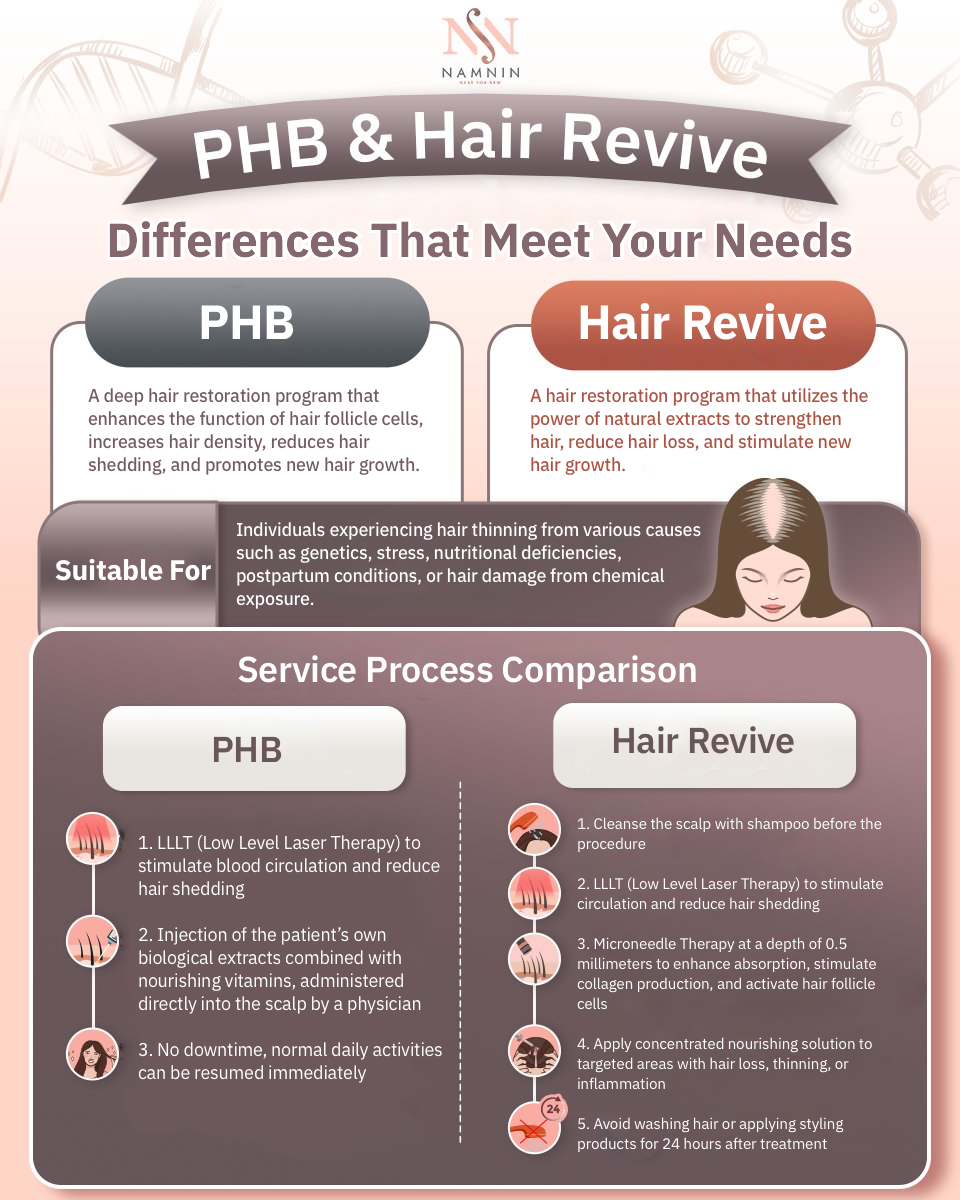
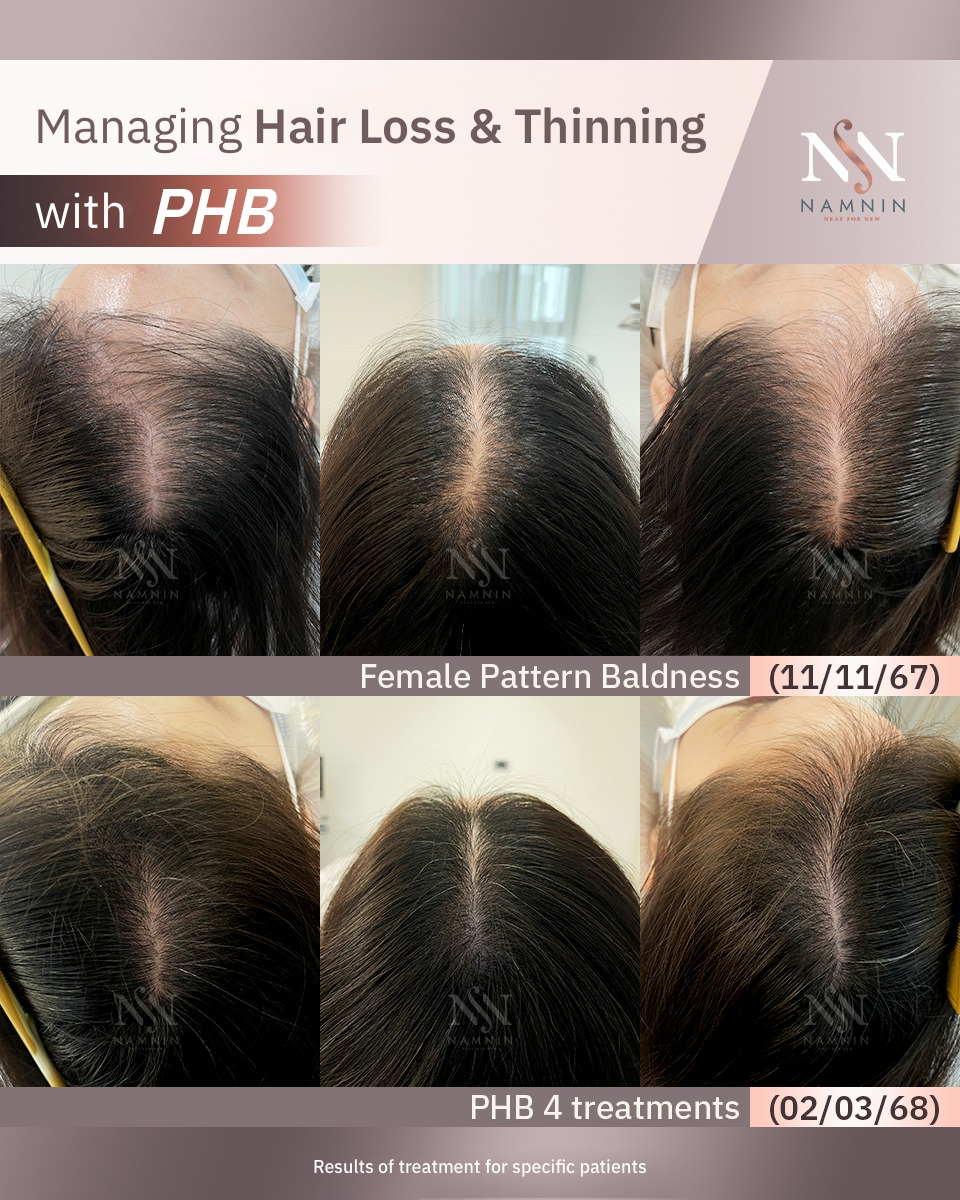
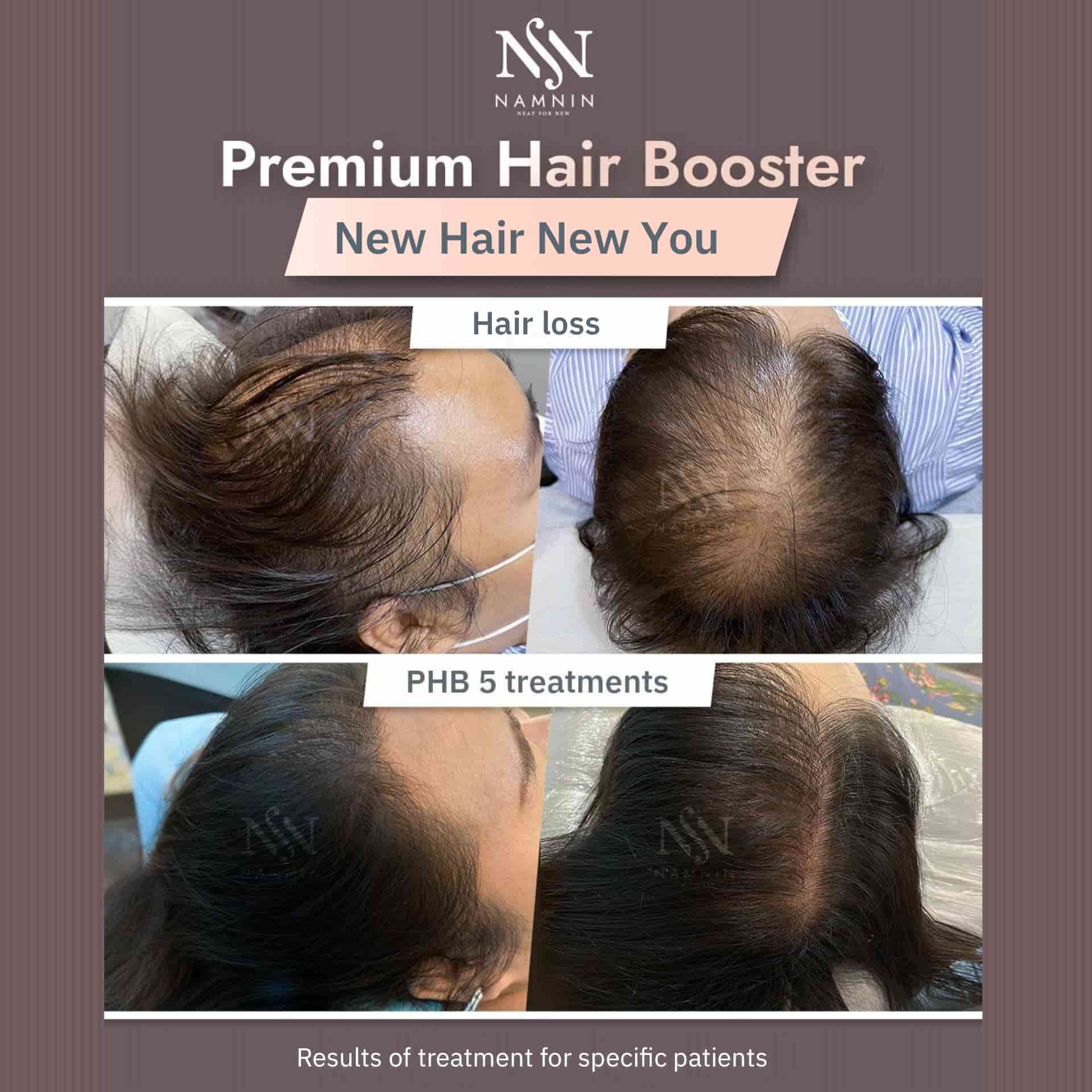
For those who do not have a receding hairline but experience hair loss, thinning hair, or reduced hair density across the scalp, care focuses more on restoring and supporting the strength of the hair roots. The clinic offers the PHB Program and Hair Revive Program, which use slightly different approaches and techniques. Dr. Nin will assess each individual’s hair condition and recommend the approach that is appropriate for their needs.


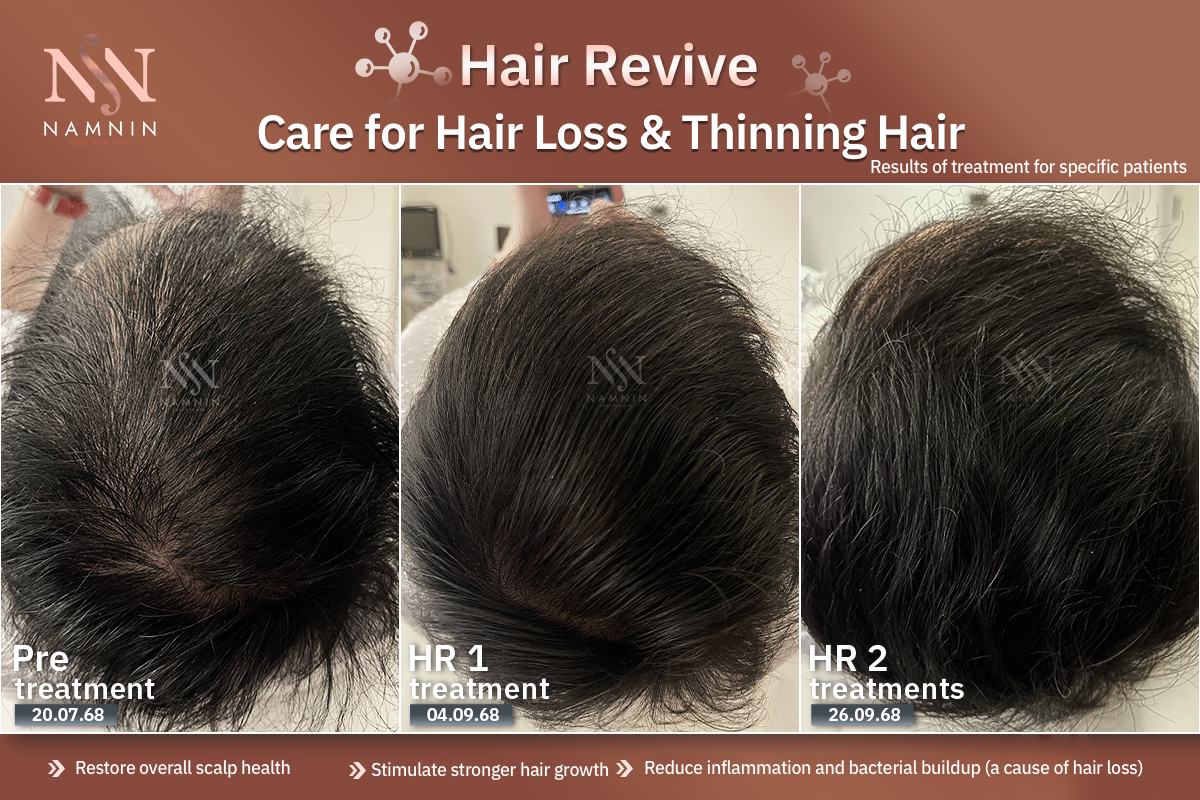
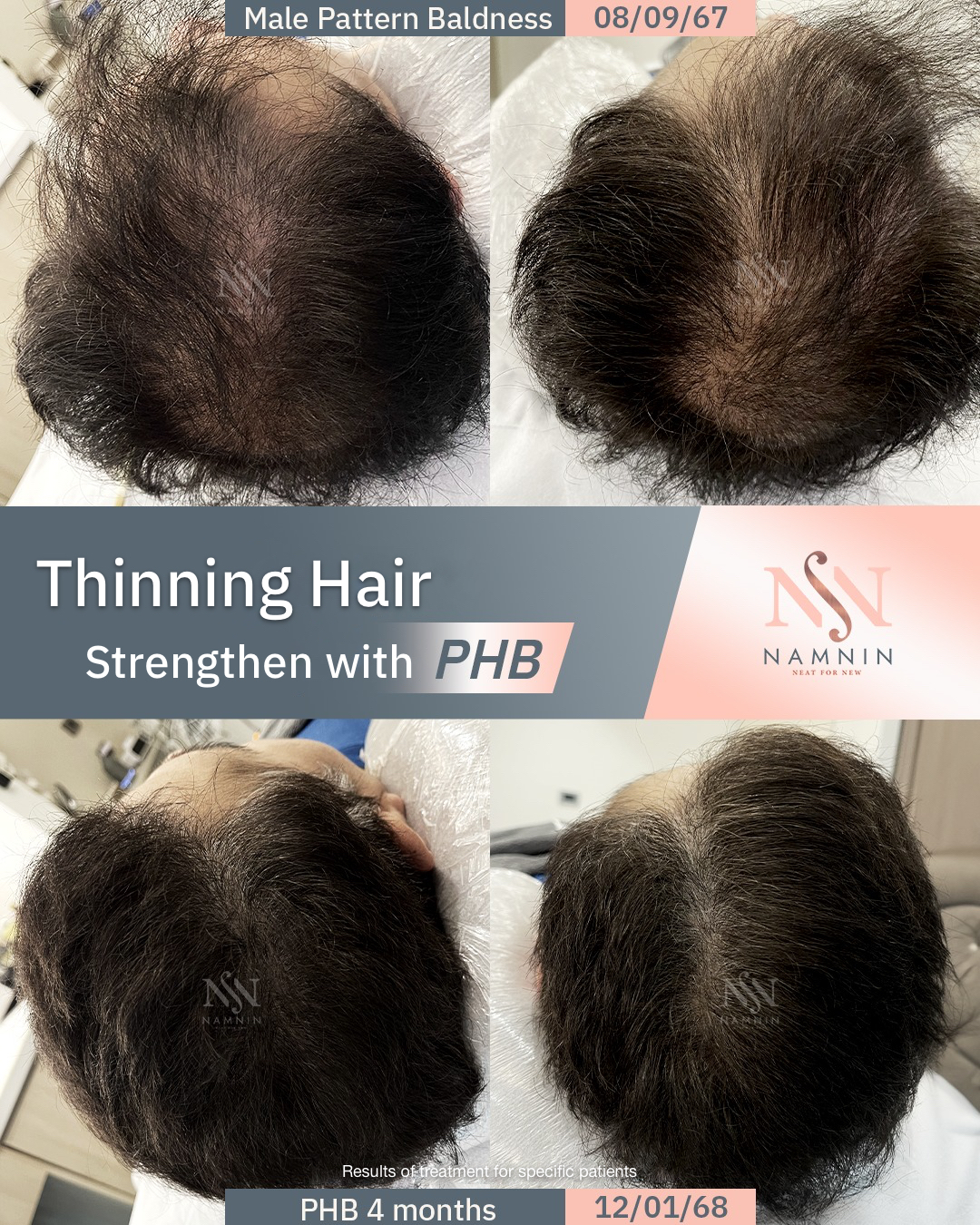
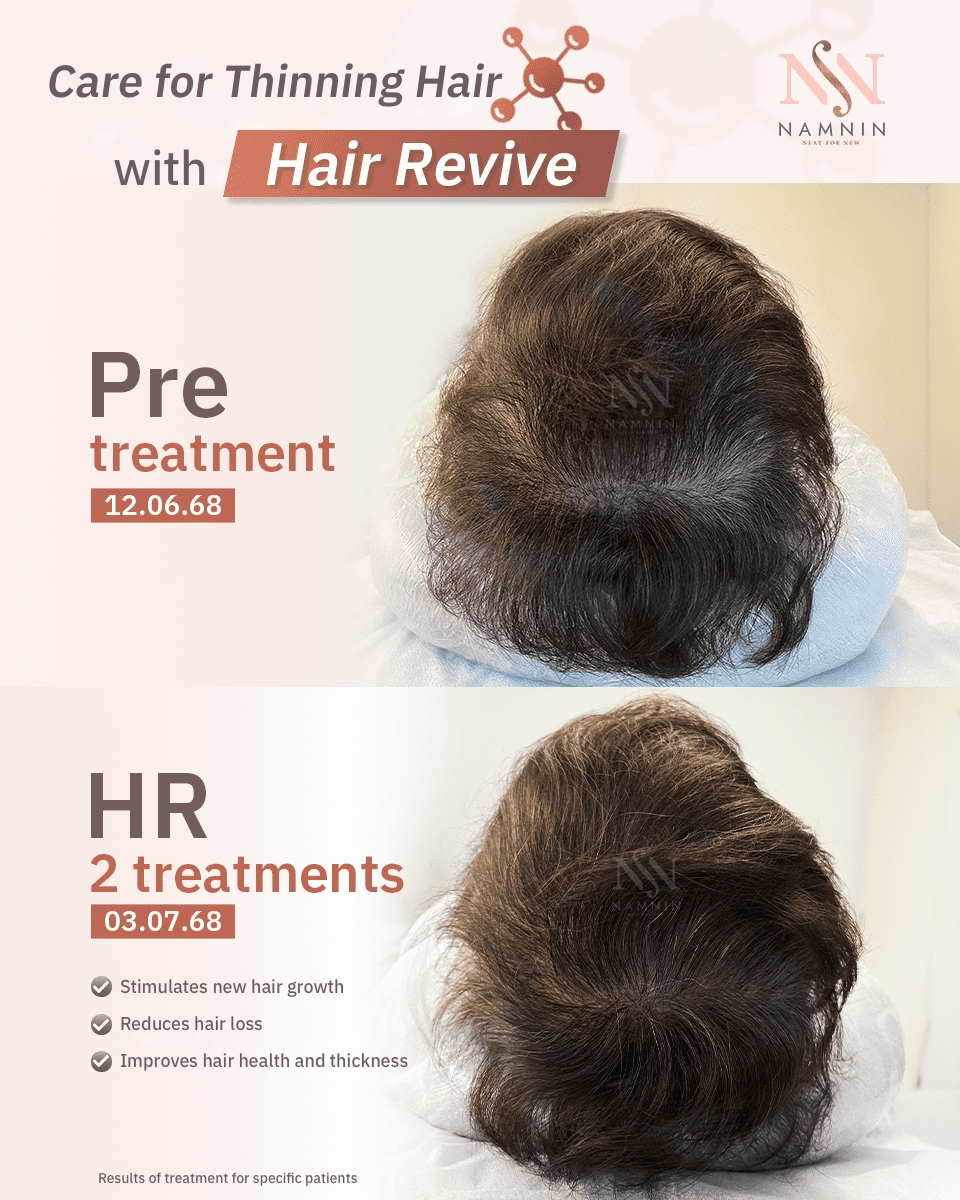
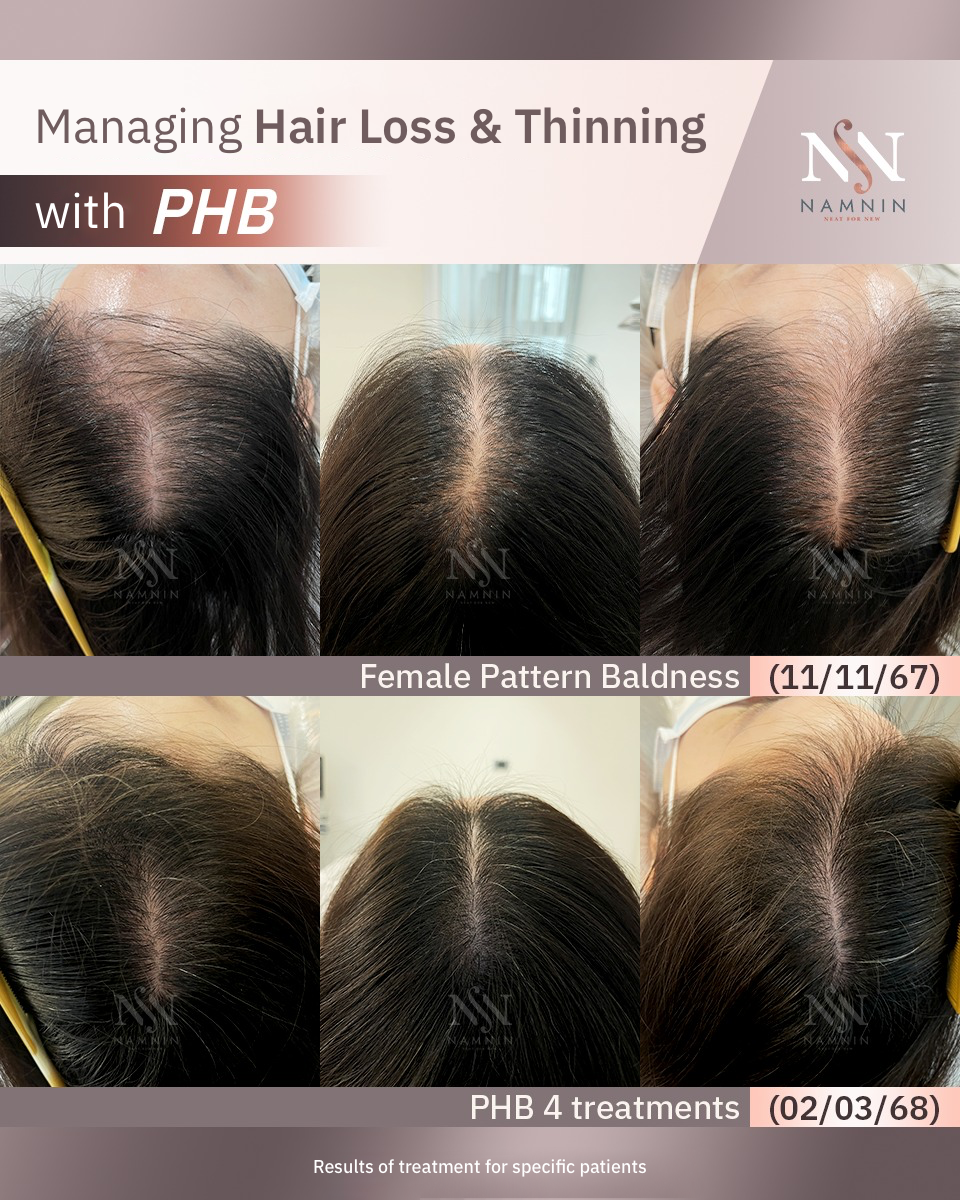
The PHB Program involves injecting nourishing substances into the scalp to directly support and replenish the strength of the hair roots. It is suitable for those who want to care for hair that has begun to weaken and help it look stronger, more vibrant, and healthier. Meanwhile, the Hair Revive Program is designed for people seeking deeper scalp care through Microneedle Therapy, which uses fine needles to gently stimulate the scalp before applying targeted nourishing products. The nourishing products are then applied to support the strength of the hair roots over the long term.

For those who have undergone a hair transplant, continued care of both the hair roots and the existing hair remains important. Newly transplanted hair and the existing hair on the scalp both require appropriate care. Programs such as the PHB Program or Hair Revive Program may therefore be incorporated into post transplant care according to the doctor’s recommendations.


Hair may not change noticeably all at once, but it can gradually send us small signals to observe, whether it is a widening hair part, a thinner looking ponytail, or a hairline that has changed from before. If you begin to feel that your hair is no longer the same, take a moment to pay closer attention to yourself. If these changes continue, consulting a doctor to understand the underlying causes and choose an approach that is appropriate for you may help you feel less alone in dealing with your concerns. Starting to care for your hair today is not about changing who you are. It is about wanting to feel confident and happy with yourself every day.
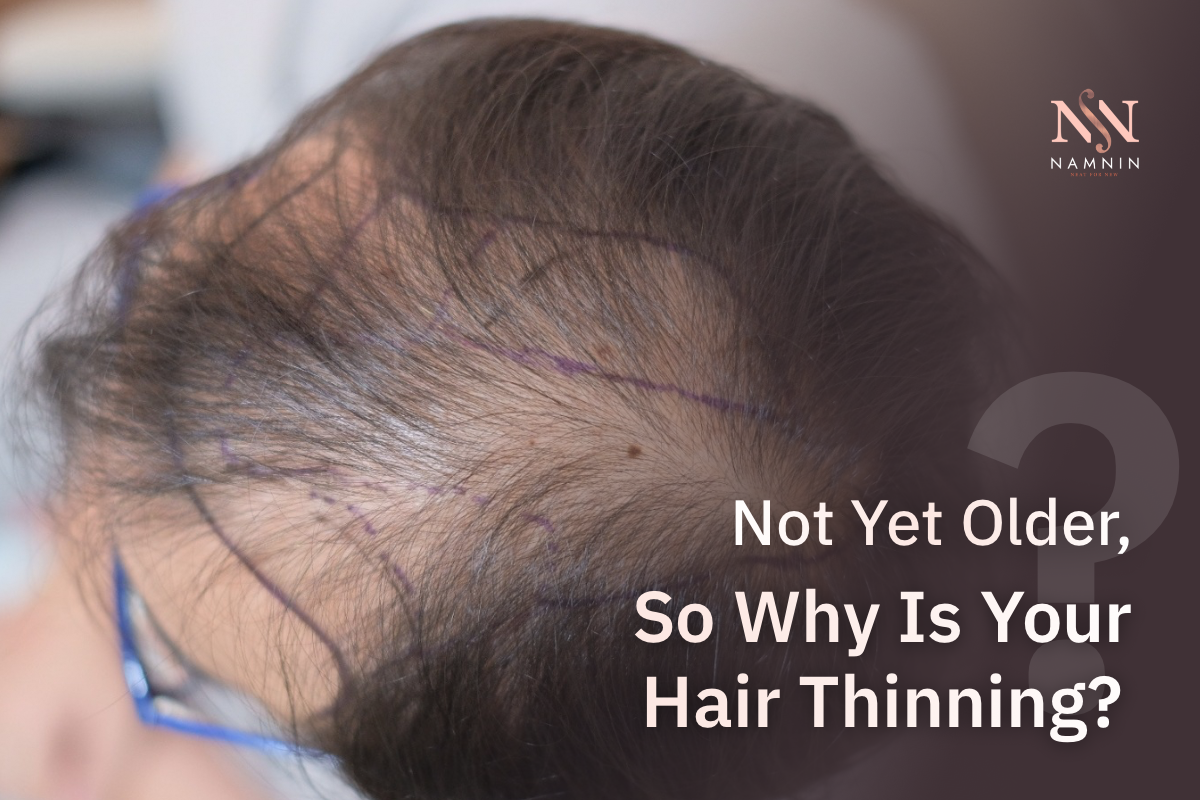
Not Yet Older, So Why Is Your Hair Thinning?
“Hair thinning” may often be associated with older people, but in reality, men in their 40s, 30s, or even 20s can begin to experience hair loss and thinning. Have you ever wondered why, even while still young, your hair may already be starting to disappear, leaving you searching for complicated ways to conceal it, while some older people, even well beyond their 60s, can still show off thick, dense hair without caring about their age?


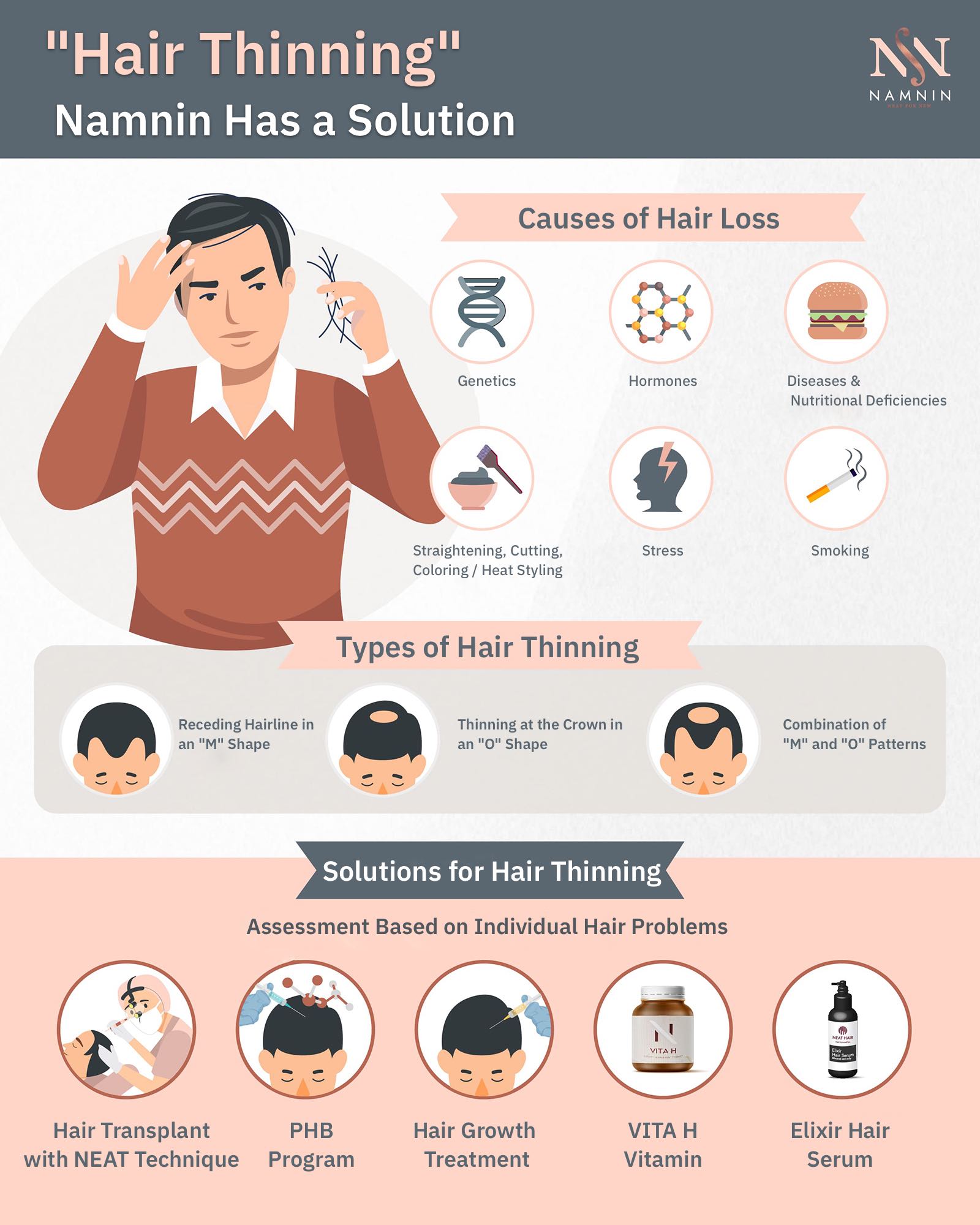
That is because “age” is only one factor contributing to hair loss and thinning. Let us take a look at the factors that can cause even young men to experience weak and shedding hair.

  • Genetics
Determines how sensitive hair follicles are to hormones that cause the follicles to shrink, eventually leading to hair loss.
  • Hormones
Especially testosterone, which is converted into DHT, a major factor that directly affects hair follicles regardless of age.
  • Scalp Health
A balanced and healthy scalp allows nutrients to properly nourish the hair, supporting healthy hair growth without problems.
  • Underlying Diseases and Medication Use
Conditions such as hypertension, diabetes, and chronic stress can affect the circulatory system, which is responsible for delivering nutrients to the hair.
  • Hair and Scalp Care Habits
For example, eating habits, sleep and rest, and hair care practices, which are ongoing behaviors accumulated throughout life.


At the same time, “age” inevitably plays a role in the biological changes that occur in the body. So, what happens to the scalp and hair as we get older?

  • Slower Skin Cell Turnover
This causes old skin cells to accumulate and makes the hair follicles more likely to become clogged.
  • Reduced Scalp Moisture
As the Scalp Barrier, or the outermost protective layer of the scalp, becomes weaker with age, the scalp begins to become drier and more prone to irritation than usual.
  • Reduced Circulatory Efficiency
This affects the delivery of nutrients and oxygen to the hair follicles.
  • Changes in Hormonal Response
Hair follicle cells may become increasingly sensitive to DHT signals, increasing the risk of hair follicle miniaturization.

Therefore, “age” is not the only factor a doctor considers when determining whether a patient can address hair loss and thinning through a permanent hair transplant. A doctor will also assess these 4 factors.

Donor Area Readiness
The Donor Area, or the back of the scalp, is the only area where hair grafts are strong and resistant to DHT, making them less likely to fall out and suitable for transplantation to a new area. However, this valuable supply of hair grafts is limited and decreases with age. Therefore, the doctor must carefully calculate and plan the use of grafts to ensure they are used appropriately and efficiently.


Pattern of Hair Thinning
This includes how severe the thinning is, whether it has progressed to baldness, how extensive the thinning area is, and where it occurs on the scalp. Some people may experience an M shaped receding hairline at the forehead, while others may have O shaped thinning at the middle of the scalp, which is a common pattern among men.


Health of the Hair Transplant Patient
The doctor will ask about underlying medical conditions, medication use, and overall physical health, all of which can affect the body’s readiness to recover after a hair transplant.

Expectations of the Hair Transplant Patient
Each person has different needs and circumstances in life. The doctor will therefore develop a Personalized Treatment Plan to provide the highest possible level of satisfaction within realistic and achievable conditions.

The NEAT, a permanent hair transplant from Namnin, is an option for people who wish to undergo a hair transplant at any age, whether they are young or over 60. The doctor will thoroughly assess the condition of the hair and scalp before working together with the patient to develop a treatment plan based on a patient centered approach. The doctor will explain each step in an easy to understand way, allowing the patient to clearly see the overall treatment process. The doctor will also discuss the likelihood of achieving the patient’s expectations based on realistic considerations.


When the day of the hair transplant arrives, the doctor personally performs the transplantation of every graft with meticulous care. This allows the doctor to control the direction and angle of the new hair so that it blends naturally with the existing hair. The appropriate depth and density are also determined to support hair growth. In addition, specially designed small transplantation instruments are used to minimize trauma to the scalp as much as possible. Not only that, the doctor personally follows up on the results for a full year after the transplant, until the new hair has fully grown according to the natural hair cycle.

Although the NEAT can help restore hair regardless of age, if men begin to notice even minor signs of hair loss or thinning, they should not ignore them or wait until they are older. Seeing a doctor and starting appropriate care early can improve treatment effectiveness and increase the chance of keeping the hair for many years to come.
Men’s Pain Point “Not Aging. Just Thinning Hair.”
One of the biggest concerns for men around the world is looking in the mirror and feeling older than they really are, even at a relatively young age, while friends of the same age still appear sharp, youthful, and confident.

There are many reasons why men may lose a youthful appearance, whether from age itself, lack of self care, unhealthy habits, or even personal style. But one of the most underestimated “enemies of youth” for men is hair.

Hair is often seen as a symbol of age. People naturally judge whether someone looks younger or older than their actual age based on their hair. More importantly, hair is a key part of a man’s overall image. It reflects personality, confidence, professionalism, and personal style, all of which contribute to how confident a man feels in everyday life.

If you are still young, take care of yourself well, and dress with style, but still feel that your appearance looks older than it should, try looking in the mirror again and paying attention to your hair.
…Does it seem thinner than before…?

Today, Namnin Clinic would like to explain in a simple way how thinning hair can make men appear older than their actual age.

For most men, thinning usually begins around the forehead area. The hairline gradually recedes on both sides into an M shape, a common condition even among younger men.

So what happens when the hairline recedes and the forehead appears wider? Normally, facial proportions follow what is often referred to as the Golden Ratio, creating a balanced and attractive appearance. But when the forehead becomes larger due to hair recession, facial proportions begin to shift out of balance, making the overall appearance look older and more mature than intended.

Another common early thinning area is the crown. Since every man’s hair whorl pattern is unique, thinning in this area can disrupt the natural direction of the hair, making hairstyles appear less structured and more difficult to manage. This can also contribute to an older appearance.


As hair becomes thinner in any area, many men begin trying to hide it. Certain hairstyles may no longer feel possible, and styling choices become more limited. When freedom of self expression through hairstyle disappears, it can affect confidence, style, and overall appearance.

Hair loss and thinning also never pause with time. They gradually progress if left untreated. Whether the changes happen slowly without notice, or because someone believes they are still too young to worry about it, continued thinning may eventually lead to permanent follicle closure, where hair no longer grows back, progressing toward baldness that becomes increasingly difficult to restore.

At this point, many men begin to realize the importance of early treatment and restoration, not only to regain a more youthful appearance, but also to prevent thinning from becoming more severe in the future.


One solution that Namnin Clinic proudly offers is the NEAT Hair Transplant, developed further by Dr. Nin specifically to address hair loss and thinning while restoring natural density for each patient. However, Dr. Nin often explains that one key factor affecting transplant success is timing. The difference between “transplanting early” and “waiting too long” can significantly affect the final outcome.

See a Doctor Early. Decide Early.

Choosing a hair transplant while thinning is still mild has several advantages. Since the thinning area is smaller, fewer grafts are needed. Hair grafts are limited resources taken from the back of the scalp, where the follicles are naturally more resistant to the hormones responsible for hair loss. Once transplanted, these grafts continue growing throughout life.

Using fewer grafts allows for greater density in the treated area while preserving grafts for possible future needs.


When men undergo transplantation before hair loss becomes severe, their appearance changes more subtly and naturally afterward. This often reduces concerns about others noticing the procedure, which is something many men value greatly.

And because fewer grafts are required, the overall treatment cost is usually lower and more cost effective as well.

Waiting Too Long. Transplanting Too Late.

On the other hand, delaying treatment until hair loss becomes severe means a much larger area requires restoration, resulting in the need for significantly more grafts.

The challenge is that donor grafts at the back of the scalp are limited. In some cases, the donor supply may not be sufficient, or doctors may need to distribute grafts more broadly across a large area rather than focusing on maximum density. At the same time, enough donor hair must remain at the back of the scalp to avoid visible thinning in the donor area itself. This becomes one of the biggest limitations for men who wait too long before considering transplantation.

And naturally, using more grafts also means higher overall treatment costs.


Dr. Nin has extensive experience performing the NEAT Hair Transplant for patients with various levels of hair loss and thinning. Each case is carefully evaluated to calculate the most suitable and efficient number of grafts. Dr. Nin personally performs the transplantation graft by graft, carefully placing each one according to the natural angle and direction of existing hair for seamless, natural looking results.

The technique leaves only tiny wounds, requires minimal recovery time, and allows patients to return to normal daily life almost immediately. Most importantly, Dr. Nin provides continuous follow up care for a full year after the procedure, allowing patients to receive ongoing guidance and consultation throughout the recovery process.

The NEAT Hair Transplant is therefore a worthwhile investment for men who want to restore thinning hair, regain a sharper and more youthful appearance, and rebuild confidence while still looking like themselves.
Hair Thinning After 45: Causes and Care Options
As men enter their mid 40s and beyond, many begin to notice subtle changes that gradually become more visible. A slightly receding hairline, thinning at the crown, or hair that no longer feels as dense as before. These changes rarely happen overnight. Instead, they develop slowly and quietly, to the point where many may feel that “the hair is still there,” just not the same as it used to be.

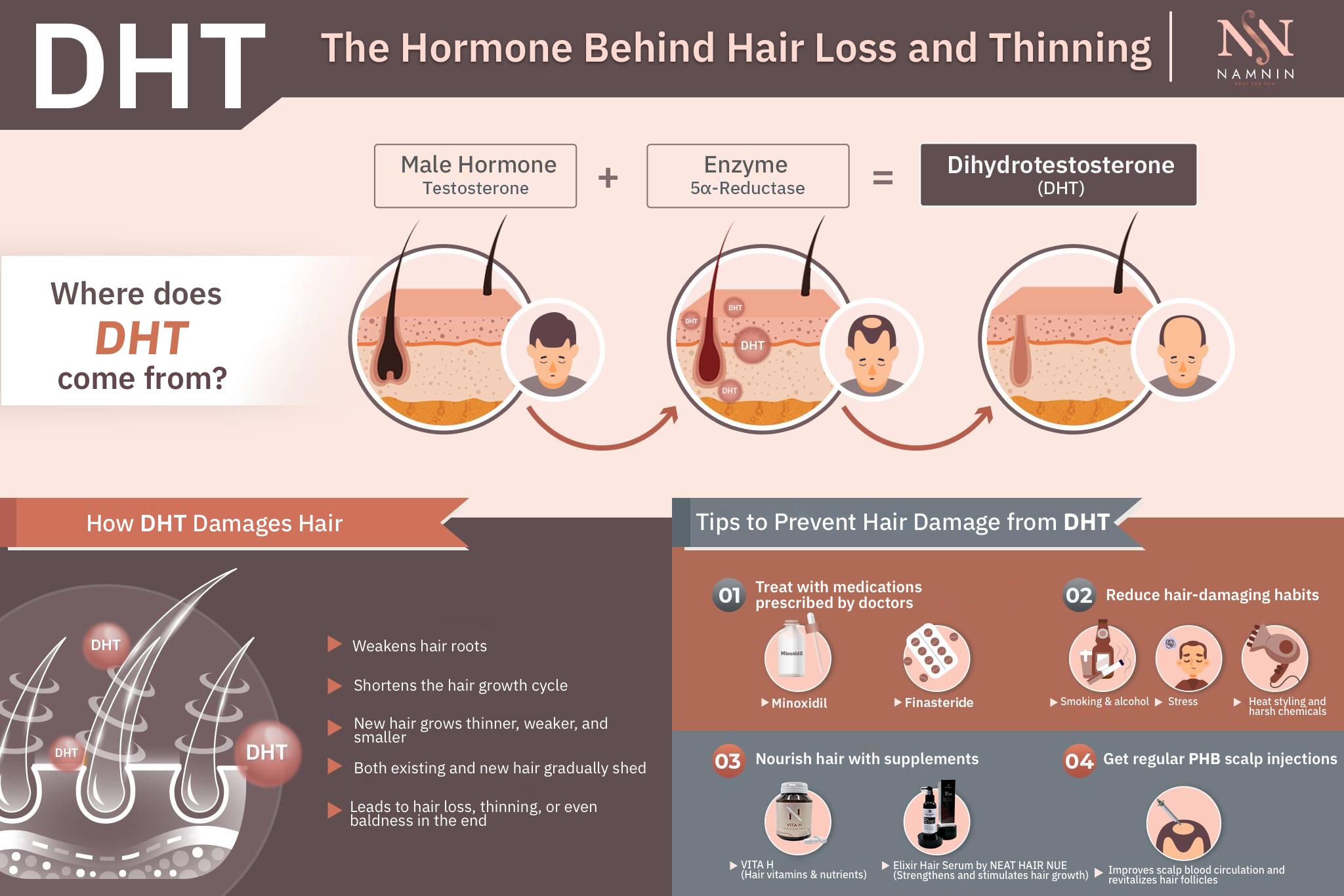
This condition is often associated with androgenetic alopecia, or hereditary hair thinning. In some men, hair follicles are more sensitive to DHT (Dihydrotestosterone) than usual. Over time, continuous exposure to DHT shortens the hair growth cycle. Newly grown hair becomes finer, thinner, and weaker, and in some areas, hair growth may eventually stop altogether.


Although genetics play a major role, everyday factors such as stress, insufficient sleep, nutritional imbalance, and underlying medical conditions may also accelerate hair thinning. For this reason, understanding the hormonal mechanism behind hair loss is an important first step before considering treatment options. Whether it involves medication, vitamin supplementation, or hair transplantation, each approach serves a different purpose. There is no universally right or wrong method, only the one most suitable for the individual condition.

When discussing hormone related treatments, anti androgen medications are among the most extensively studied options. Two commonly prescribed medications are Finasteride and Dutasteride. Both work by inhibiting the enzyme 5 alpha reductase, which converts Testosterone into DHT. As DHT levels decrease, the impact on hair follicles is reduced as well. This helps slow hereditary hair loss, delay thinning, and in some individuals, gradually improve hair density over time.

However, these medications cannot completely change genetic predisposition. Their role is to help regulate hormonal activity at a more suitable level. Once the medication is discontinued, DHT levels gradually return to baseline, and hair thinning may resume within 6 to 12 months. For this reason, medication is considered a long term management approach that should be monitored under medical supervision.

Many people worry that these medications might drastically reduce male hormones. In reality, they specifically reduce the conversion of Testosterone into DHT, while Testosterone itself generally remains within the normal range. Potential side effects related to sexual performance or fertility can occur, but are relatively uncommon and are often reversible after stopping the medication under a doctor’s guidance. Some individuals may also experience temporary increased shedding during the early stages of treatment. This process, known as shedding, reflects the hair cycle adjusting and does not necessarily indicate an allergic reaction or treatment failure. Clear understanding and open discussion with a doctor can help patients make decisions more confidently.

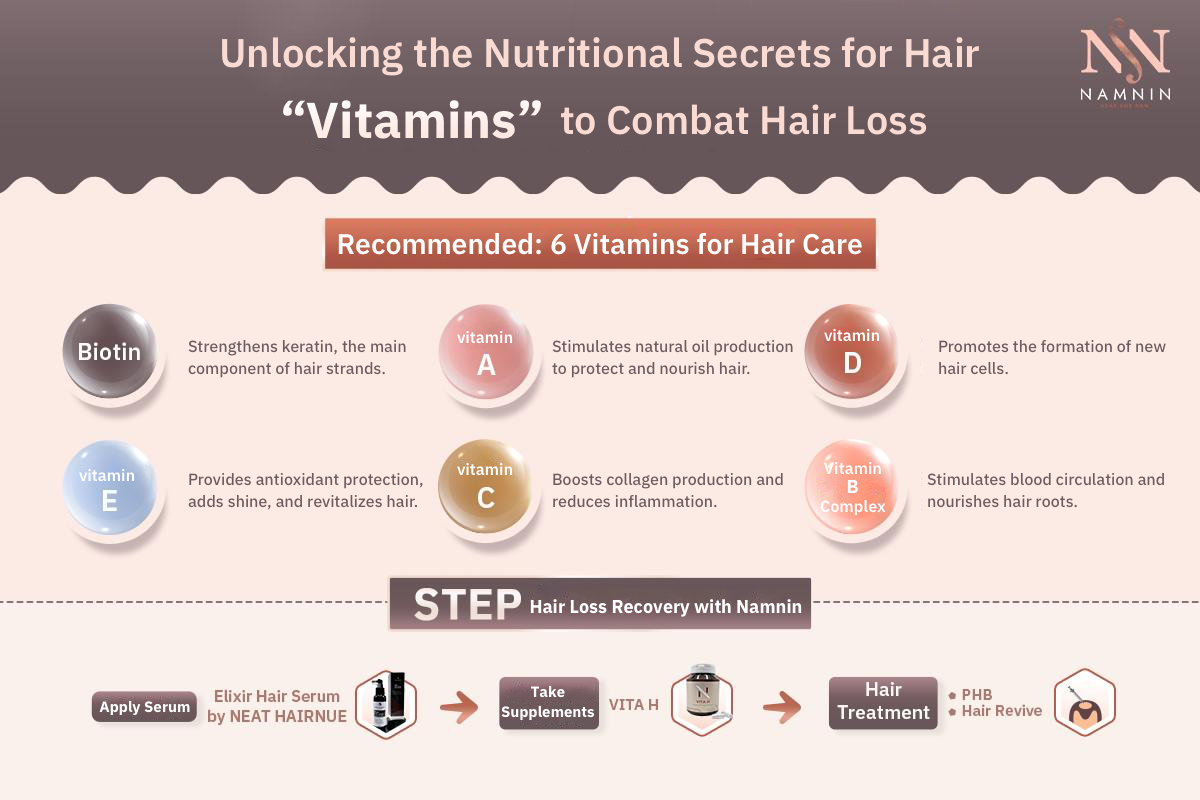
Beyond hormonal management, supporting hair health from within is equally important. Although vitamins do not directly block DHT, they help strengthen overall hair quality. Biotin supports keratin production, Vitamin D contributes to healthy follicle function, Vitamin E helps reduce oxidative stress, and B complex vitamins support blood circulation to the scalp. For middle aged men and older, evaluating overall health before starting supplements is a thoughtful approach, because proper care is not about taking everything available, but about choosing what truly suits the body’s needs.


In cases where hair thinning becomes more advanced and some follicles have permanently miniaturized, medication alone may not be sufficient. Hair transplantation can then become an option to restore lost density. The principle of hair transplantation involves relocating healthy hair grafts from the donor area at the back of the scalp to thinning areas such as the frontal hairline or crown. Hair from the occipital region is selected because it tends to be more resistant to DHT. Once transplanted, this resistance remains, allowing for long lasting results in the treated area.

The NEAT hair transplantation focuses on precision and individualized design. Doctors carefully assess the appropriate number of grafts and use a 0.60 millimeter implanter to place each graft individually while controlling direction and angle to blend naturally with the patient’s existing hair. The goal is to create a hairline that complements both facial features and age appropriately. Hair transplantation is not simply about increasing hair count, but about restoring confidence and creating a balanced, natural appearance that reflects each individual’s identity.


Even after transplantation, while the transplanted grafts remain permanent, the surrounding native hair can still be affected by DHT. Doctors may therefore recommend continuing hormone control medications to help slow future thinning, along with supportive scalp care programs such as PHB or the Hair Revive Program to maintain scalp and hair health over time. All treatment plans should be personalized and approached gradually under professional evaluation.

Ultimately, whether you are personally experiencing these changes or searching for information out of concern for someone close to you, the most important thing is understanding and making informed decisions without rushing. Hair may only be one part of the body, but for many people, it reflects confidence, identity, and different stages of life. Caring for hair is not only about appearance, but also about self care, confidence, and feeling comfortable in your own skin from within.
Hairline Concerns in Transgender Women: A Small Detail That Matters
When discussing beauty, the “hairline” is one detail that many people may overlook. However, for transgender women, the hairline is not just about hairstyle or hair density. It is an essential part of overall appearance, a sense of alignment with gender identity, and confidence every time they look in the mirror.

This article aims to provide a deeper understanding of hair related concerns in transgender women, along with appropriate care approaches and treatment options. At its core is the belief that everyone deserves to confidently be themselves in their own chosen way.

A transgender woman is an individual who was assigned male at birth but identifies and lives as a woman. Each person’s journey is unique. Some choose to undergo hormone therapy with estrogen combined with anti androgen medications, leading to softer skin, a more feminine fat distribution, and reduced facial hair. Others may choose breast augmentation or gender affirming surgery, while some may choose not to undergo any medical procedures at all. Regardless of the path taken, each decision is valid and meaningful.

However, one common concern among many transgender women is “hair and hairline issues.” Due to being assigned male at birth, many hair follicles are inherently sensitive to DHT (dihydrotestosterone). Some individuals naturally have masculine hairline patterns, such as a broad forehead, an M shaped hairline, or pronounced temporal recessions, which may become noticeable as early as adolescence. Even after initiating estrogen therapy and reducing androgen levels, while hormones may help slow hair loss and strengthen existing hair to some extent, receded hairlines, particularly in the frontal and temporal regions, typically do not regrow on their own.


Hair concerns in transgender women often involve multiple factors, including:
  • A firm or angular frontal hairline and prominent temples, resulting in a less soft facial frame
  • Thinning hair at the temples and crown, similar to male pattern hair loss
  • Miniaturized, finer hair strands due to prior DHT influence
  • And most importantly, the feeling of “not yet fully being oneself”

When the existing hairline continues to reflect masculine structural features, it can lead to reduced confidence in various aspects of life, including makeup, hairstyling, and daily activities. Many individuals feel the need to conceal their forehead, avoid preferred hairstyles, and may feel that their appearance does not fully align with their identity.

For transgender women, hair is a powerful reflection of identity, confidence, and self expression. Therefore, hair care should be approached holistically, considering both internal and external factors such as hormonal balance, scalp health, and hairline structure. If hair density is still adequate, scalp care, inflammation control, and proper nourishment can help maintain strong and healthy hair. However, if the hairline itself does not align with one’s identity, redesigning the hairline to create a softer curvature, refine the temples, and frame the face in a more feminine way can significantly enhance overall appearance.

The NEAT is designed to offer more than hair restoration. It focuses on creating a “new facial frame” that aligns with your identity. Every step begins with attentive listening. Dr. Nin prioritizes understanding each patient’s feelings, concerns, and expectations before proceeding. A detailed assessment of the recipient area is then conducted, and the Golden Ratio is applied to design a new hairline that harmonizes with facial proportions, combining medical science with aesthetic precision.

During the procedure, Dr. Nin performs implantation using a 0.6 millimeter implanter, placing each graft individually while carefully controlling the direction and angle to match the existing hair. Density and hair characteristics in each area are taken into account, with gradual transitions to ensure a balanced result. The outcome is a new hairline that blends seamlessly with natural hair, appears refined, and enhances a softer facial contour.


Following the procedure, Dr. Nin provides continuous follow up care for up to one year to ensure optimal and lasting results.

If additional nourishment is recommended, programs such as PHB or the Hair Revive Program may be suggested based on individual needs. These two programs differ slightly in technique. The PHB program involves the direct injection of nutrients into the scalp to strengthen hair roots, helping weakened hair regain vitality, thickness, and shine. The Hair Revive Program is suitable for those seeking deep nourishment without the use of autologous blood. It utilizes Microneedle Therapy with fine 0.5 millimeter needles to gently stimulate the scalp, enhance absorption of active ingredients, and promote collagen production and hair follicle regeneration. Targeted formulations are then applied to support long term root strength. Dr. Nin carefully evaluates and recommends the most appropriate approach for each individual.


The beauty of transgender women does not lie in becoming like someone else, but in embracing one’s true self with comfort and confidence. No matter where you are in your journey, self care is always a meaningful gift you can give yourself. When it comes to hair, you deserve care that is guided by genuine understanding.
Men and Hair Thinning: 5 Habits That Harm Your Hair Without Realizing It
Changes in hair can occur at any stage of life. As we grow older, hair may become thinner, fall out more easily, or the scalp may not feel as strong as before. However, these changes are not something to worry about excessively if we understand the causes and begin taking proper care of ourselves.

For many men, hair problems are not caused solely by genetics or age. They may also arise from daily habits that have become routine, without realizing that they are gradually affecting the hair little by little. In this article, Namnin Clinic would like to invite men to look at their hair with greater understanding through five common habits that many people may unknowingly do while harming their own hair.

1. Frequent Heat and Chemical Exposure
Blow drying with very hot air, as well as dyeing, perming, or straightening hair, may help improve appearance or style in the short term. However, heat and chemical substances can cause hair to lose moisture, becoming dry, brittle, and weakened. When repeated regularly, hair can break more easily and fall out more frequently.

2. Poor Hair and Scalp Hygiene
Washing hair inconsistently, leaving long gaps between washes, or choosing products that are not suitable for the scalp can lead to the accumulation of oil, sweat, and dirt that may clog hair follicles. This can weaken the hair roots and lead to itching or dandruff.

3. Stress, Insufficient Rest, and Poor Nutrition
Daily responsibilities may cause many people to rest less than they should. When the body becomes fatigued, its natural recovery processes cannot function effectively. In addition, an unbalanced diet especially a lack of protein, which is the main structural component of hair can weaken hair and make it more prone to shedding.

4. Tight Hairstyles or Wearing Hats for Long Periods
Men with long hair who frequently tie their hair tightly, people whose work requires wearing hats for extended periods, or professions that require wearing helmets throughout the day may experience increased scalp humidity and constant tension on hair roots. Over time, this can weaken the hair and make it easier for hair to fall out.

5. Lack of Consistent Hair Care
Many men may feel that hair care is unnecessary and does not require additional attention. In reality, hair requires consistent care just like other aspects of health. Choosing products that are appropriate for the hair condition and receiving proper professional hair care can help strengthen hair and maintain healthier hair over time.


Adjusting certain behaviors can help slow down hair loss. One simple starting point is maintaining a balanced diet that includes all five essential food groups, especially protein, which is the main component of hair. Easily digestible sources such as fish, eggs, beans, and soybeans are recommended. Important minerals and vitamins including iron, zinc, and vitamin B complex help support new hair cell production. In addition, beneficial fatty acids such as Omega 3 from marine fish and flaxseed can help reduce scalp inflammation and strengthen hair, making it less likely to shed.

Beyond personal care, those who wish to nourish their hair more intensively at the root level may consider professional programs available at Namnin Clinic, such as the PHB Program and the Hair Revive Program, both performed under medical supervision with clearly observable outcomes.

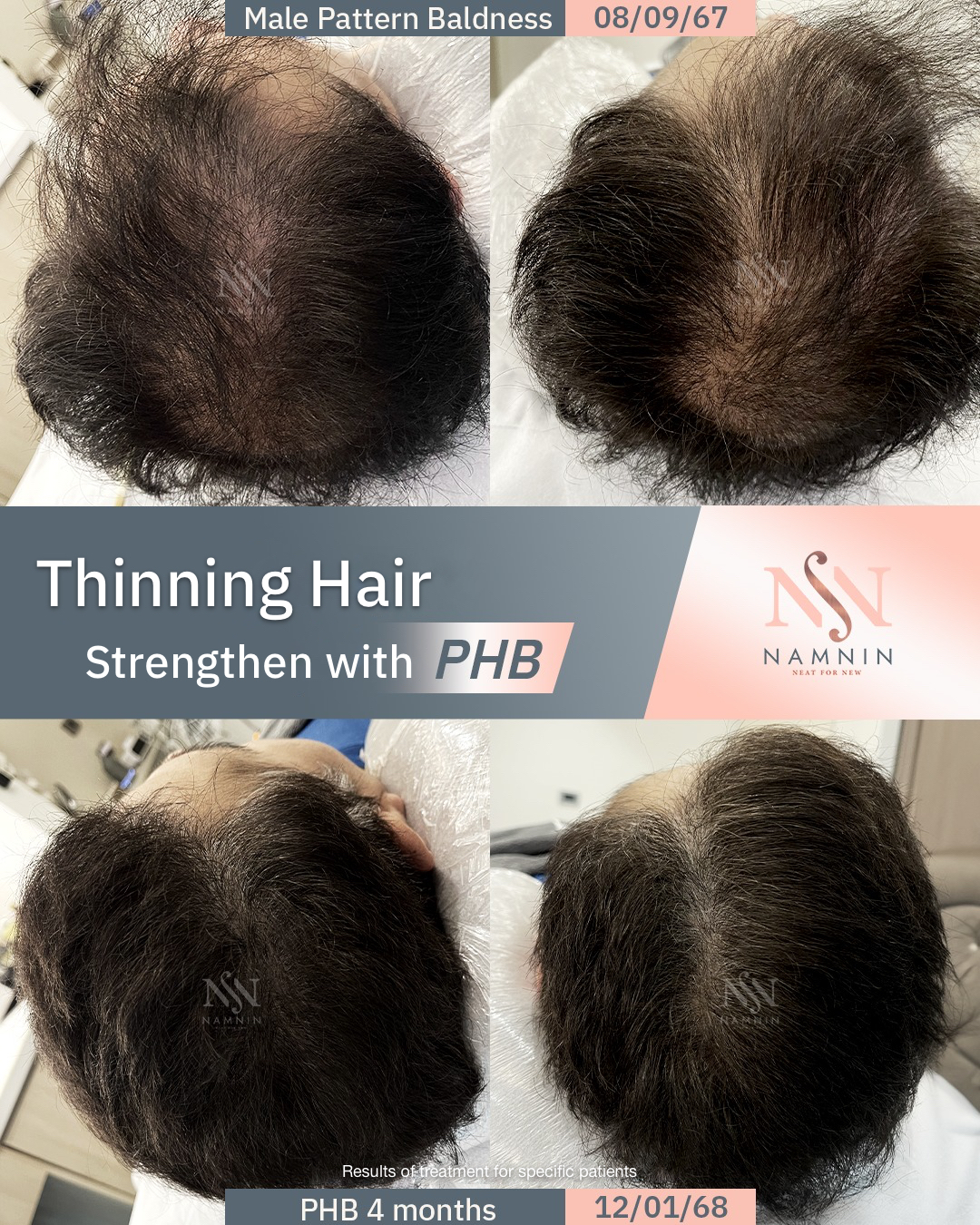
The PHB Program involves scalp nourishment using the patient’s own blood combined with a vitamin formula developed by Namnin Clinic, which is injected directly into targeted areas of the scalp that require restoration.


The Hair Revive Program uses microneedle technology, where very fine needles gently stimulate the scalp at a superficial level, creating micro channels approximately 1 millimeter deep to allow nourishing substances to penetrate deeper layers of the skin. This helps revitalize hair roots and stimulate collagen and elastin production. It is also an alternative option for those who prefer not to undergo treatments that involve the use of their own blood.


However, if a doctor evaluates that the hair loss condition cannot recover on its own, hair transplantation using the NEAT can be an effective long term solution. This method provides lasting results while blending seamlessly with existing hair.

Dr. Nin uses a 0.6 millimeter Implanter to place each graft individually while carefully aligning the direction with the patient’s existing hair. The design also considers hair density and characteristics in each area to ensure the new hairline integrates smoothly with the original hair. The result reflects not only technical precision but also meticulous attention throughout every step performed directly by the physician.


Hair may be something that many men overlook because it is often seen as purely cosmetic. In reality, hair strongly reflects personal image, confidence, and self care just as clearly as clothing. The most important step is choosing the approach that suits your hair condition. At Namnin Clinic, we are ready to provide consultation and appropriate care for every concern so that you can feel confident at every stage of life.
5 Hair Check Up Points Addressing Hair Loss and Hair Thinning
How well do we really know our own hair?

Hair is a part of our body that we touch, style, and manage every single day. Yet each small strand contains many structures and details that cannot be seen in the mirror or even with the naked eye.

This is why consulting with an experienced hair specialist is important not only for people who truly care about their hair, but also for anyone who wants to maintain strong, healthy hair for many years.

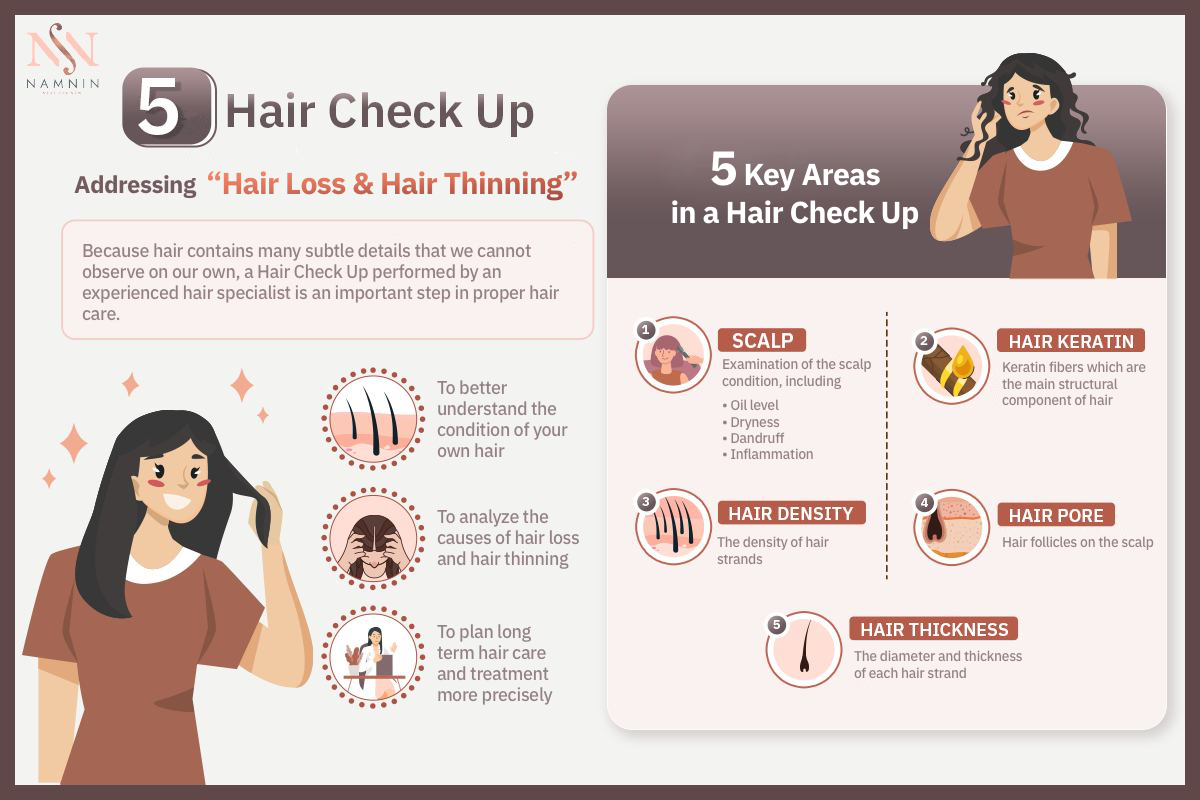
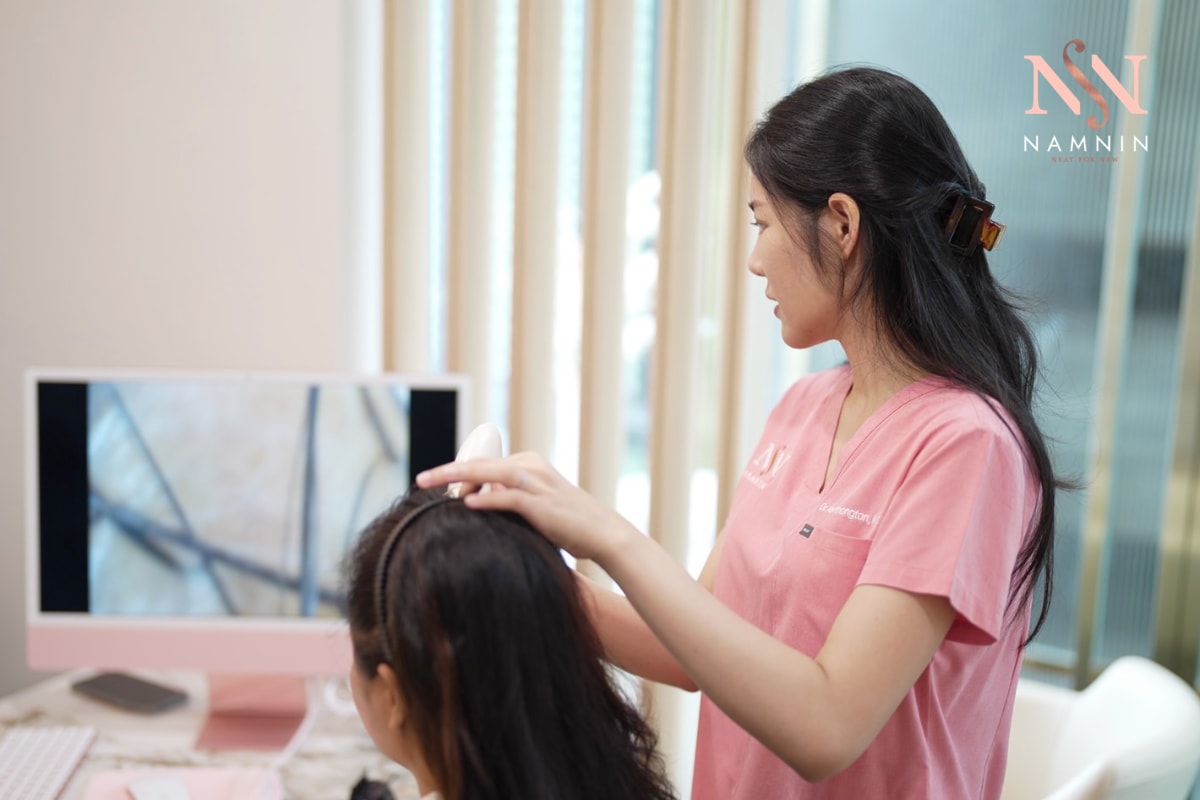
If you want to better understand your hair, whether it is your general hair condition or various hair and scalp concerns, a Hair Check Up with a hair specialist is the best approach. Hair contains many subtle details that require professional evaluation and analysis. When we understand the condition of our own hair, we can care for it properly, reduce potential risks especially the likelihood of hair loss and hair thinning in the future, and if hair problems already occur, identifying the cause early allows treatment planning to be more precise and effective.


Examples of key areas examined during a professional hair and scalp assessment include:

  • Scalp
Evaluation of the scalp condition to determine whether it is dry or oily, and whether dandruff or inflammation is present.

  • Hair Keratin
Keratin is the primary protein that forms the structure of hair. Analysis using high magnification imaging allows specialists to observe the different layers of the hair shaft, the characteristics of keratin fibers, and the moisture level of the hair, which helps determine whether the hair is receiving adequate care.

  • Hair Density
This refers to the density of hair growth. Each individual has different spacing between hair strands. Some people have high density, some moderate density, while others naturally have thinner hair. This information helps doctors plan appropriate treatment strategies.

  • Hair Pore
Did you know that scalp follicles vary from person to person? They also influence hair density. Some follicles may produce 3 to 4 hair strands per pore, while others may produce only 1 to 2 strands. This information is also valuable in planning suitable treatment.

  • Hair Thickness
Hair strands can be thick, medium, or fine, and this significantly affects whether hair appears dense or thin. Precise measurement of hair shaft diameter provides important data for hair care and can also reveal whether the hair strands have become thinner.

A hair assessment can be performed for people of all ages and genders. There is no need to wait until hair problems become severe. Anyone who cares about their hair can consult with the doctors at Namnin Clinic at any time. The doctors always listen carefully to each patient’s concerns and expectations in order to design a personalized hair care plan. If needed, when addressing the frontal hairline area, the doctor may also design a new hairline to help improve facial proportions.


Knowing this, are you ready to get to know your hair better and begin caring for it appropriately under the guidance of a specialist for truly healthy hair from within?
Hair Transplant with Confidence, Start by Understanding Hair Grafts
Many people often wonder: What should I know before getting a hair transplant?
In reality, there are many aspects about hair that are important to understand. A successful hair transplant with satisfying results depends on multiple factors. Some are internal, such as the natural health of your hair, the severity of hair thinning or balding at the time of treatment, age, gender, and lifestyle. Others are external, such as the doctor’s skill and precision, as well as a proper long-term treatment plan and aftercare.

At Namnin, we want to highlight one crucial keyword that everyone considering a hair transplant should fully understand: the hair graft. If you’ve done some research, you’ve likely seen phrases like “2,000 grafts” or “3,000 grafts,” usually tied to treatment costs that increase with the number of grafts.

But if you don’t know what a graft actually is or what a thousand grafts really means, it becomes difficult to make an informed, worthwhile decision about such a life-changing investment.

That’s why, if you’re beginning to learn about hair transplantation, the first lesson is: know your grafts. Welcome to “Hair Graft 101,” a fast, simple guide you can understand in just five minutes.

Chapter 1: What Is a Hair Graft?

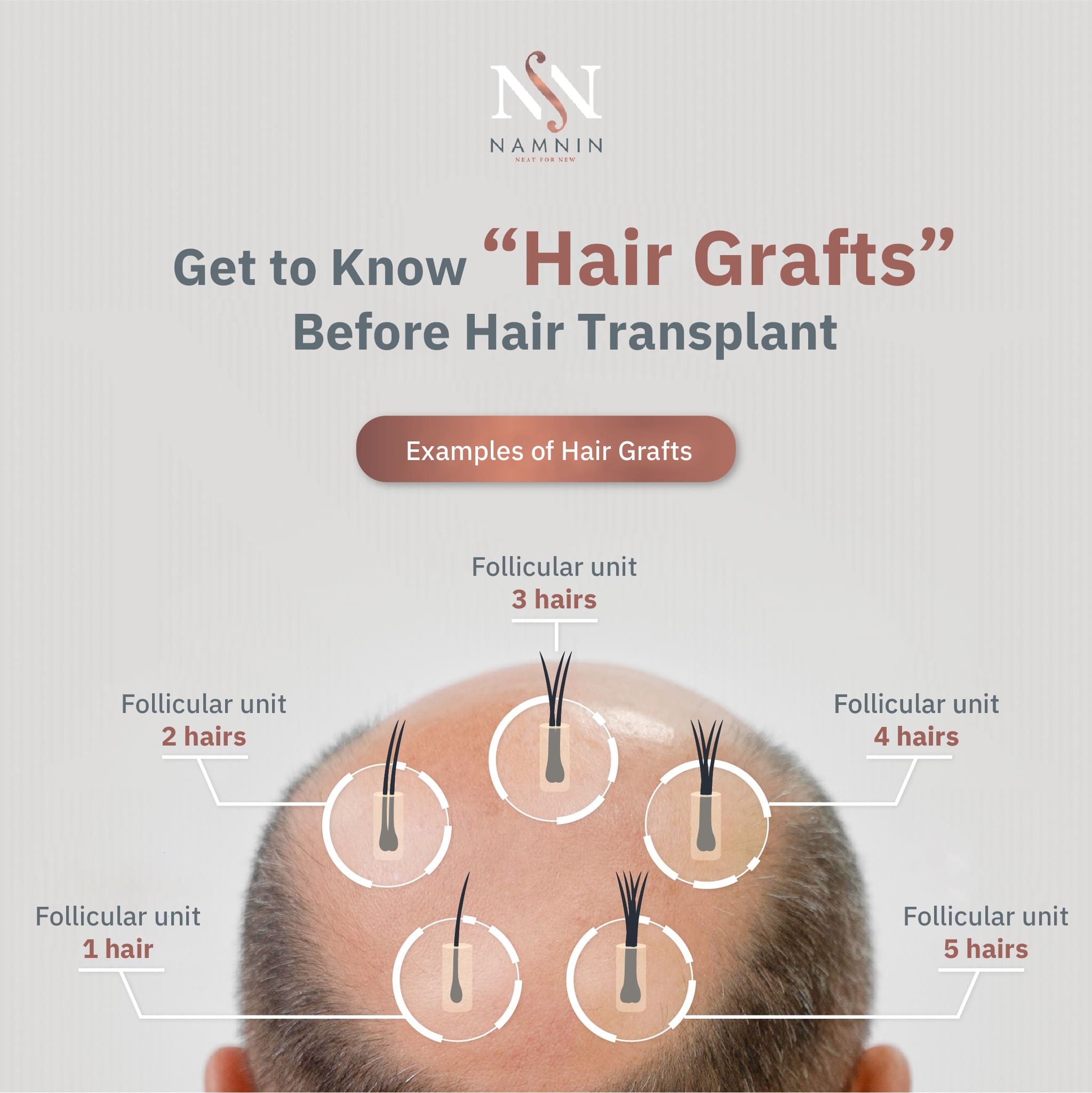
A hair graft refers to a natural grouping of hairs that share the same follicle and root. Typically, one graft may contain between 1 to 4 hairs. For individuals with naturally thick hair, a graft can hold 3–4 hairs, sometimes even 5. For those with finer hair, a graft may hold only 1–2 hairs.


The density also varies by scalp location. Along the hairline, grafts tend to contain fewer hairs (1–2), while at the crown or back of the head, grafts are denser with 3–4 hairs.

Chapter 2: Why Do We Need to Understand “Hair Grafts”?

The term “graft” is a medical term used to describe a group of hair follicles that are extracted in preparation for transplantation. That’s why this word often appears in the context of hair transplant procedures.

To review, the process of permanent hair transplantation involves extracting hair grafts from the back of the scalp (the donor area) and relocating them to thinning or balding areas, such as the crown or the frontal hairline.

But why do the grafts have to come from the back of the scalp? Here’s an important point: hair in different areas of the scalp can fall out, especially in those with genetic hair loss. This is because the scalp contains an enzyme called 5-alpha reductase, which converts testosterone into dihydrotestosterone (DHT). Remember this name—DHT is the main culprit that weakens the scalp and hair, making it easier to shed, even in young men.


However, the hair at the back of the scalp is known as the “Safe Zone” for hair restoration. The grafts from this area are considered “premium donor grafts” because the hair there is naturally resistant to DHT. This means it stays strong, durable, and less prone to shedding. As a result, hair taken from the back of the scalp is the best choice for transplantation. Even after relocation, the hair retains its resistance to DHT throughout the person’s lifetime—making it an effective and lasting solution to restore density in thinning or balding areas.

Chapter 3: The Limitations of Hair Grafts

Even though donor grafts are invaluable, they come with certain limitations:

  • Limited supply: Donor grafts are finite. Most people only have enough for one or two transplants in their lifetime.
  • Age-related decline: As patients age, even donor hair may lose some strength or density.
  • Severity of hair loss: A person with mild thinning may need only a small number of grafts, while someone with extensive baldness may require a much larger number, which might exceed the available donor supply.

For this reason, grafts are one of the most critical variables in hair transplantation. A highly experienced hair restoration doctor is essential to evaluate each case, calculate graft needs accurately, and create a personalized long-term treatment plan.


Chapter 4: The Doctor’s Challenge with Grafts

At Namnin, every case presents unique challenges. There is no one-size-fits-all solution in hair transplantation. After careful consultation and analysis, the doctor calculates the required grafts and allocates them strategically to maximize results.

Each graft is prepared before transplantation, and not all grafts are identical. Some may contain just one hair, while others may contain up to four. For patients with less severe hair loss, single- or double-hair grafts may be sufficient, allowing the doctor to preserve more donor grafts for future procedures if needed.


Beyond restoring density, aesthetics are equally important. At Namnin, Dr. Nin personally performs each transplant, ensuring precise control over hair angle, direction, depth, and spacing. This meticulous placement creates a natural blend with existing hair, avoiding unnatural patterns. It also ensures patients can continue styling their hair as they like, comfortably integrating the new hair into their daily lives.


These four lessons about hair grafts provide essential knowledge for anyone considering a transplant. They explain why early intervention, before hair loss becomes too severe, can maximize graft efficiency, preserve donor supply, and deliver fuller, more satisfying results.

At Namnin, we believe that understanding the value of each graft is the first step toward restoring not just your hair, but also your long-term confidence.
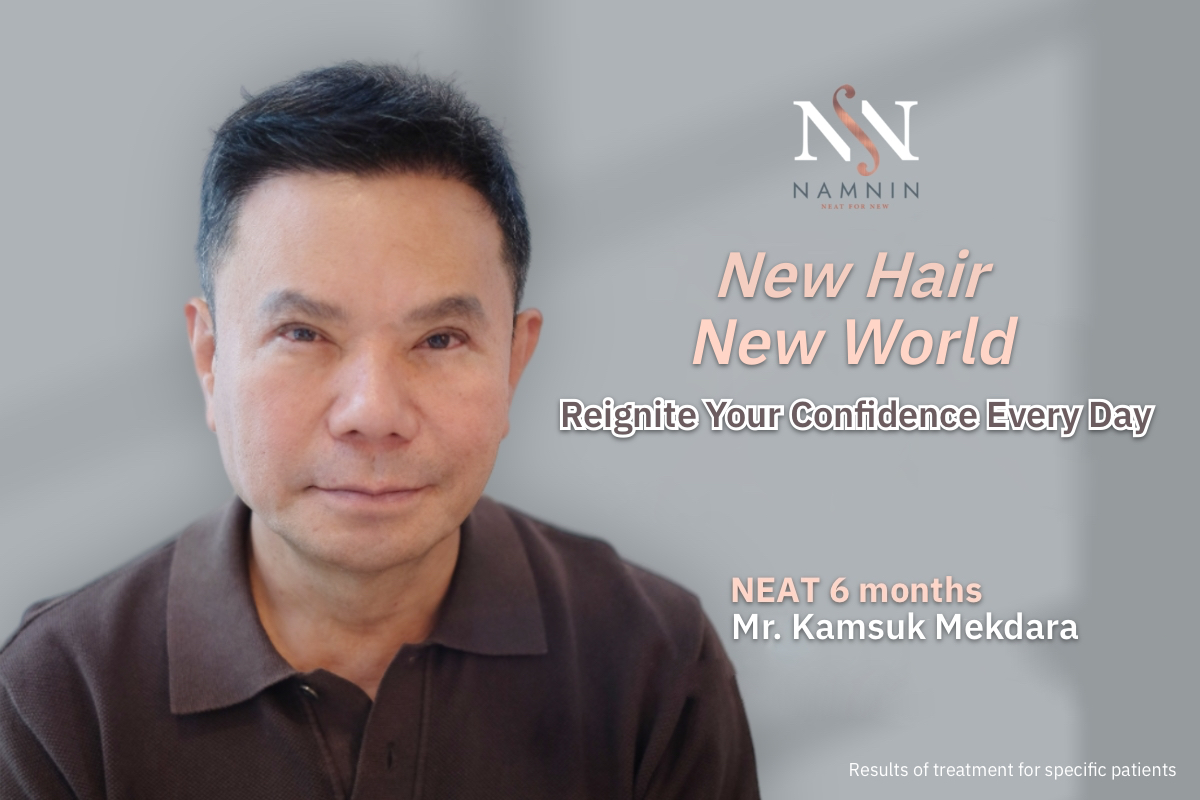
New Hair, New World Reignite Your Confidence Every Day
If confidence doesn’t have an expiration date, neither should the decision to restore it through a hair transplant.

Hair transplants today are a widely accepted option for anyone, regardless of gender or age. As people enter middle age, hair thinning and hair loss become common issues that affect not just appearance but also confidence, social interaction, and even career opportunities.

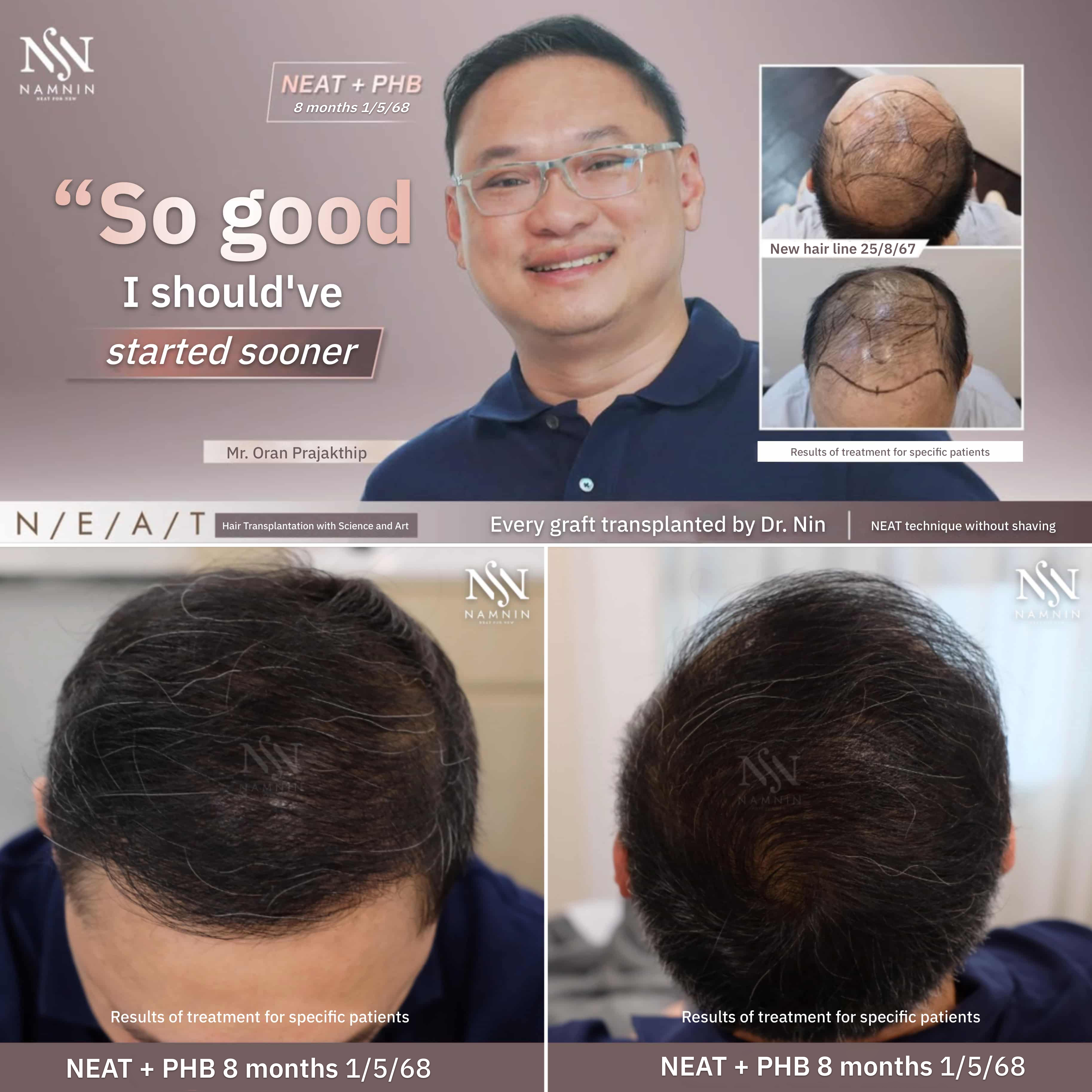
A hair transplant can restore both appearance and inner confidence. Having fuller, healthier hair doesn’t just enhance your look; it can also reshape how you feel about yourself. Many who have undergone the NEAT hair transplant with Dr. Nin describe a common turning point. Before, they may have believed aging meant slowing down and giving up on personal goals or trying new experiences. After the procedure, they regained energy, positivity, and self-belief, seeing life through a refreshed lens, open to new opportunities, and finding greater meaning and joy in everyday living.


NEAT is a hair transplant technique that blends medical precision with artistry, developed by Dr. Nin Namtongton, who understands the profound impact hair has on a person’s quality of life. Designed to offer both aesthetic and practical benefits, NEAT is suitable for all genders and ages, fitting perfectly with modern lifestyles that demand convenience and minimal disruption. The core strength of NEAT lies in Dr. Nin's hands-on approach. She personally performs each step of the process, from the first consultation to a full year of follow-up care, ensuring healthy growth of the newly transplanted hair.

No matter the type of hair issue, concerns, or expectations, clients can speak directly with Dr. Nin. She offers honest, thorough explanations and personalized guidance, making NEAT a trusted choice widely recommended by satisfied patients. Her dedication and genuine care consistently leave a lasting impression.


Beyond her commitment to personalized care, the results of NEAT speak for themselves. Patients gain a balanced facial frame, with new hair that blends seamlessly with their existing strands—every graft meticulously placed by Dr. Nin. Importantly, her care continues long after the procedure, with regular check-ins and close support to ensure lasting results. It’s no surprise that so many people trust and appreciate the NEAT method at Namnin.

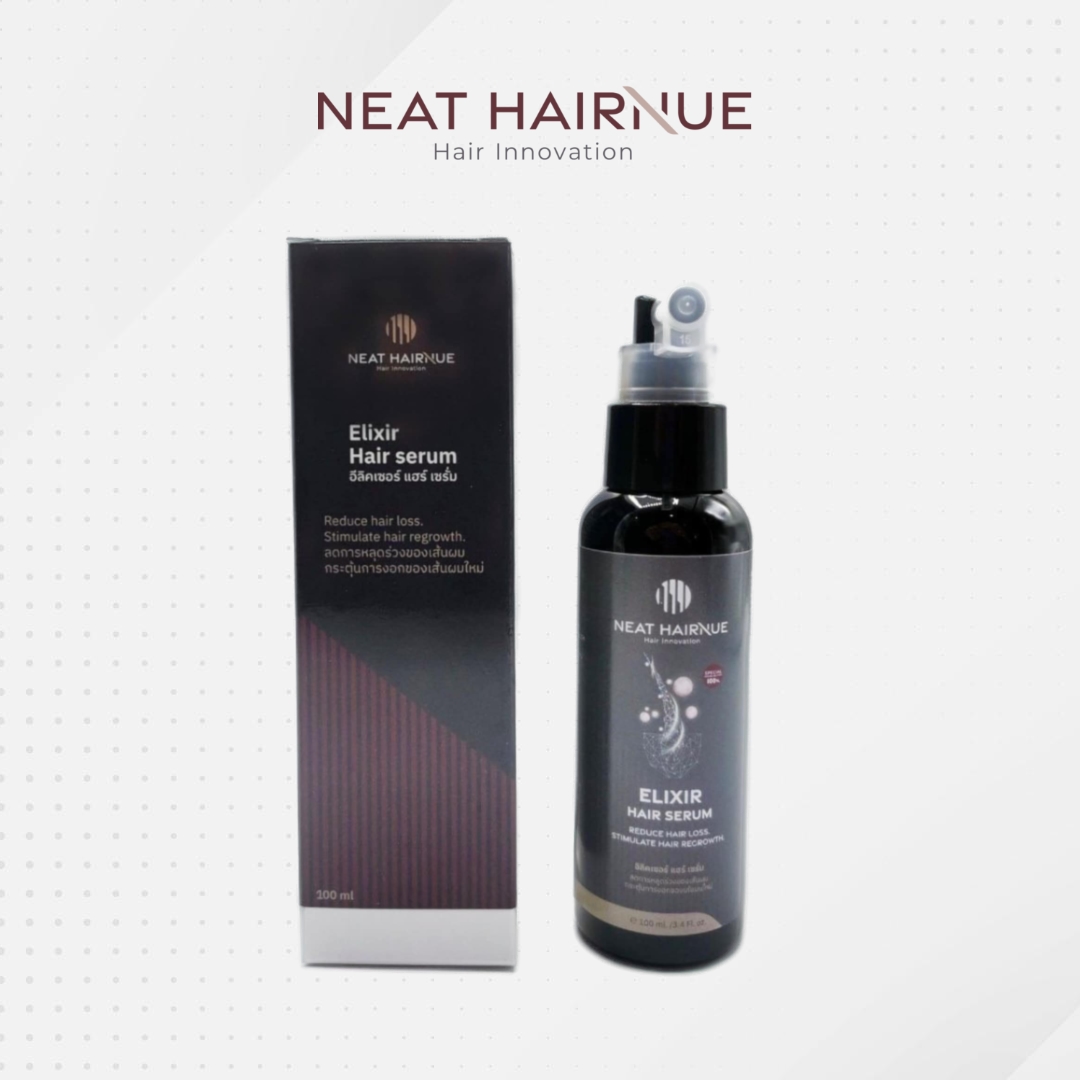
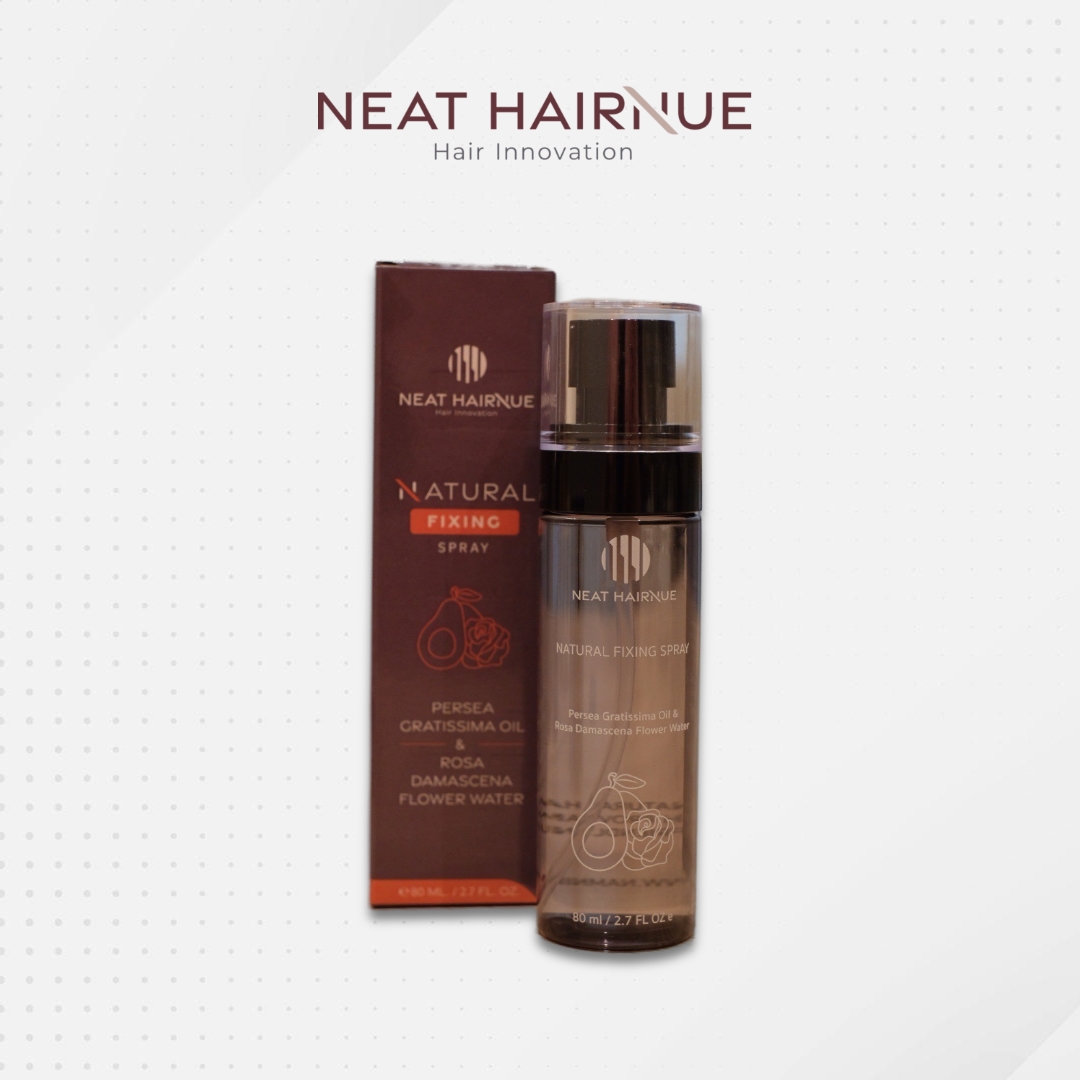
In addition to perfecting the NEAT, Dr. Nin has also developed a range of supportive hair care solutions to maintain and strengthen both transplanted and existing hair. These include gentle, post-transplant-friendly products like shampoos, conditioners, serums, and styling sprays.

Years after their transplants, many clients still choose to have Dr. Nin care for their hair health through the PHB program a recommended injection treatment that supports long-term strength and vitality of both new and original hair.


Hair transplantation is more than just an aesthetic upgrade. It’s a powerful investment in inner confidence. With renewed confidence, you gain the energy to pursue life fully and rediscover the joy and meaning of everyday experiences. It's a fresh start, a new world filled with confidence and happiness.
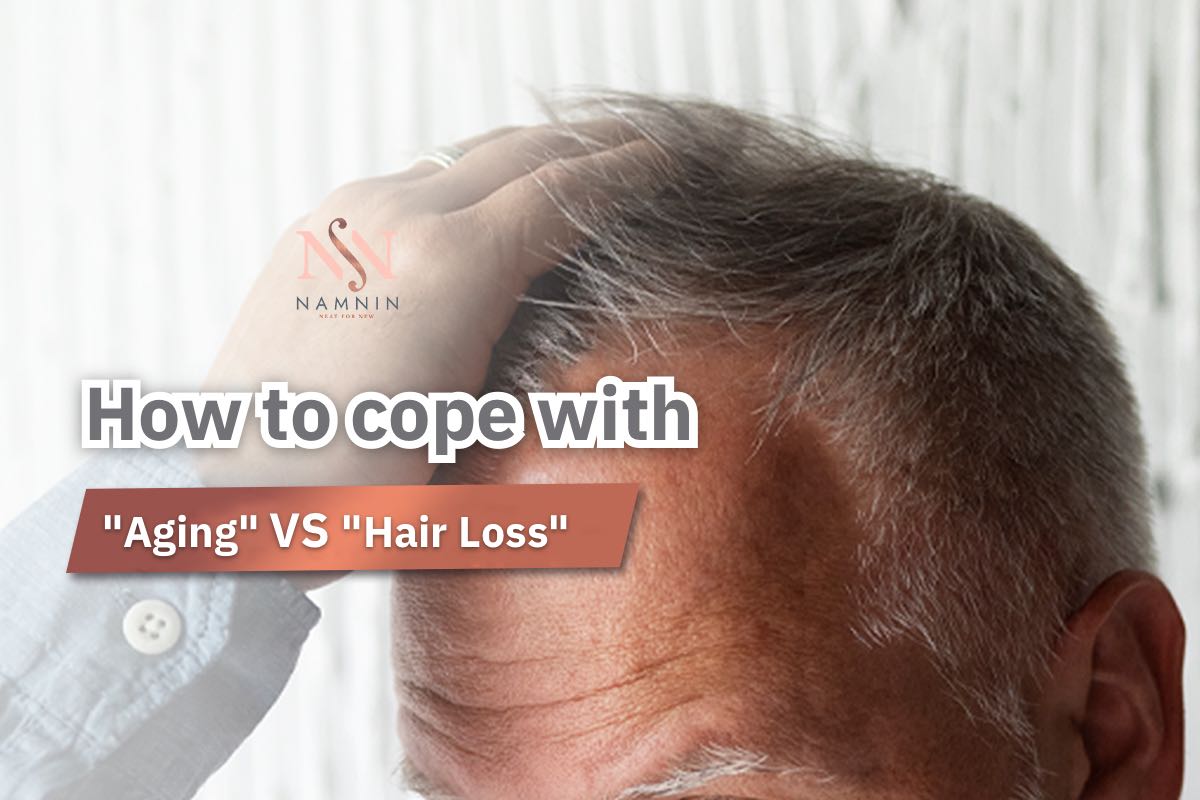
How to cope with "Aging" vs "Hair Loss"
One of the concerns for people whose age is advancing into the "elderly" stage is hair loss and thinning hair, whether due to genetic factors or hormonal changes. This can cause a loss of confidence when meeting others, especially when today's elderly people lead active lives filled with various activities. Unlike in the past, they are not at an age to stay home and look after grandchildren. Therefore, maintaining thick, healthy hair is a significant issue for older adults in this era.

These solutions are helpful for elderly individuals who want to restore their hair and regain their confidence once again.

Taking Medication
For example, Finasteride is a medication used for men experiencing hair thinning due to genetic factors. It works by inhibiting the enzyme that converts male hormones into DHT (dihydrotestosterone), which is responsible for narrowing hair follicles and causing the hair to weaken, shrink, and become thin, eventually leading to premature hair loss. This medication helps slow down hair shedding, preserving hair for a longer period.

Choose Hair-Boosting Foods
This is a way to nourish your hair from the inside by selecting foods that are rich in the nutrients your hair needs. Foods like eggs, which are high in protein, are important because protein is a key component of hair. Also, legumes and whole grains are beneficial as they contain biotin, which directly nourishes the hair. Red meat is significant as well because it is rich in iron, which helps nourish the blood and ensures nutrients are delivered to the hair follicles. Additionally, it's recommended to consume leafy greens, as they are rich in various vitamins that support healthy hair growth.

Take Multivitamins
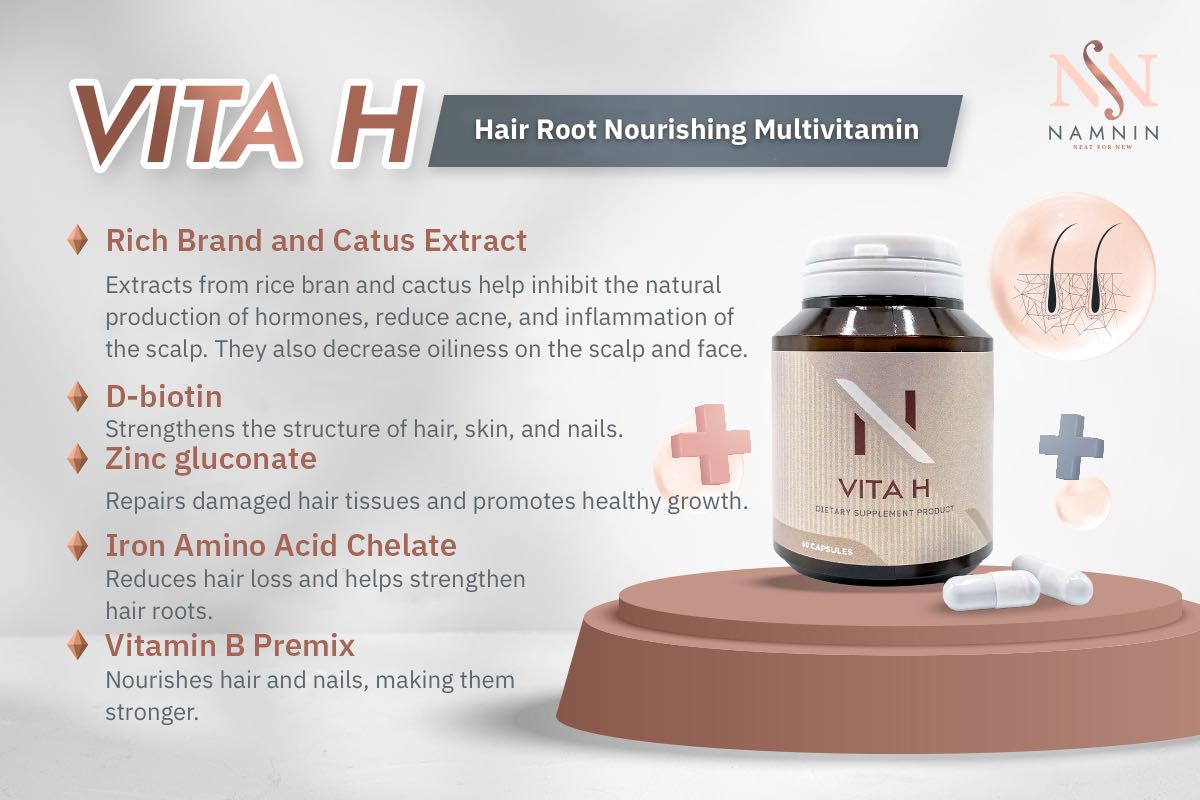
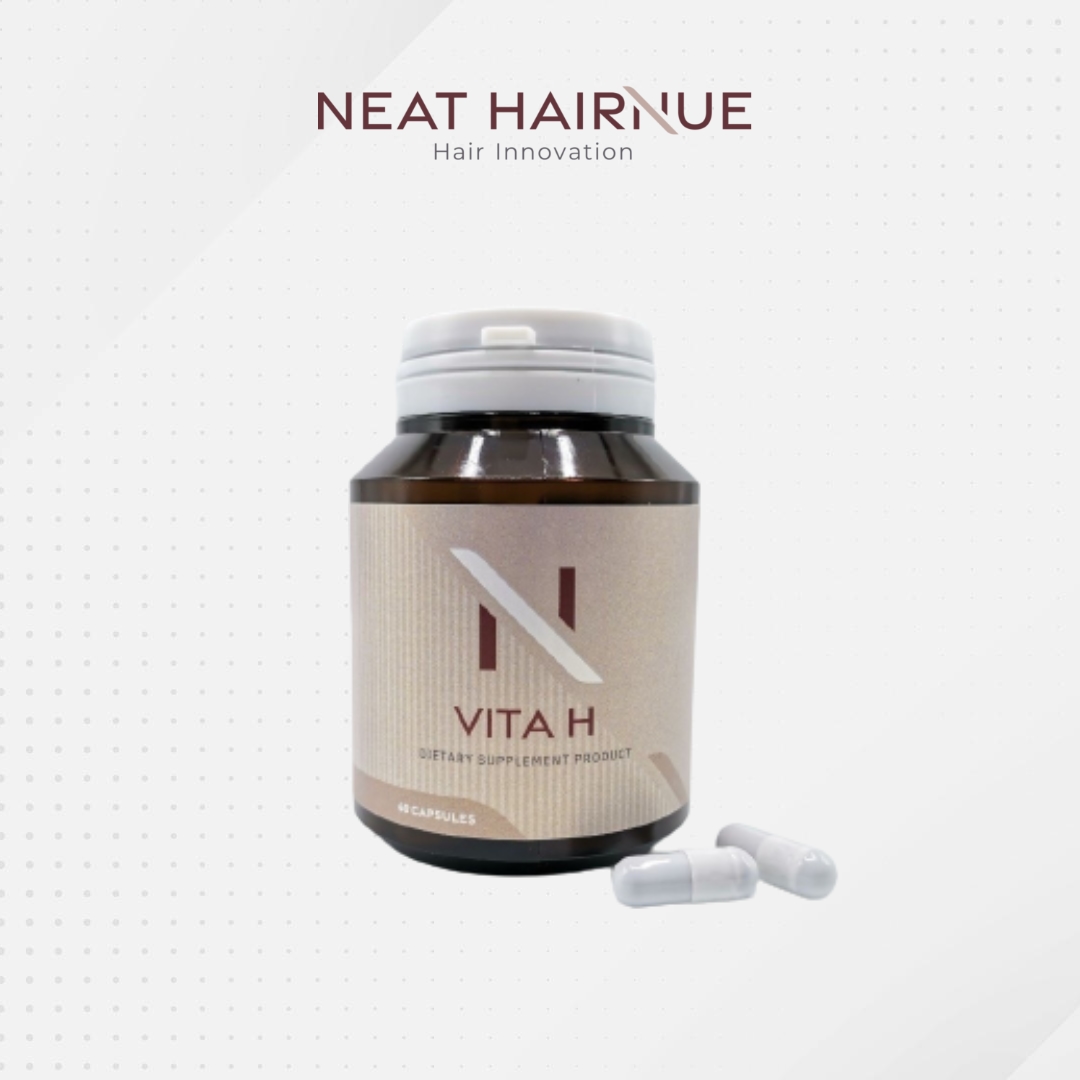
This is another easy and convenient way to get all the essential nutrients. For example, the VITA H product from Namnin comes in capsule form, where the doctor has carefully selected key vitamins to support deep nourishment for the hair roots. It is also enhanced with various natural extracts to help reduce scalp inflammation, repair hair, and strengthen hair structure, ultimately reducing hair loss effectively.


Permanent Hair Transplant
Namnin is proud to offer the NEAT hair transplant, continuously developed by Dr. Nin. This method involves extracting hair follicles from the back of the scalp and transplanting them into areas affected by hair loss and thinning. Dr. Nin personally oversees every step of the process, from consultation and treatment planning to the meticulous hair transplant procedure, performing the grafting strand by strand. Additionally, Dr. Nin provides continuous follow-up care throughout the entire year to ensure optimal results.


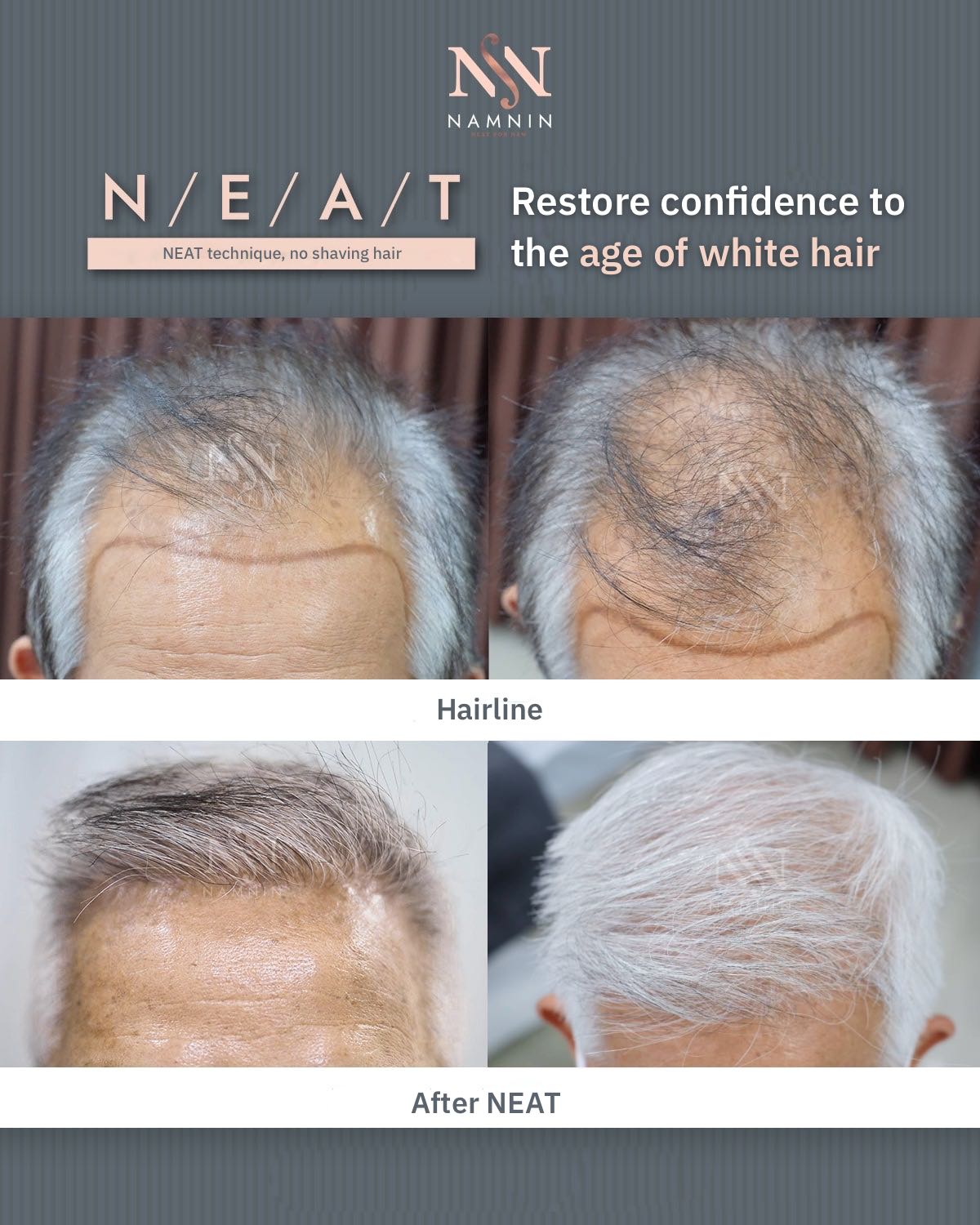
Dr. Nin has also designed additional techniques to ensure that the hair transplant experience is convenient, comfortable, and safe for people of all ages. With minimal recovery time, patients can return to their daily activities immediately after the procedure. Importantly, the NEAT hair transplant addresses hair loss issues effectively, meeting the needs of patients and restoring smiles and confidence, especially among many elderly individuals.


Older individuals now have various options to address hair concerns. However, if you're unsure about where to start or which method is best for you, or if you've been trying to treat hair loss without finding the right solution, we recommend consulting with Dr. Nin at Namnin. Together, you can design the most suitable treatment plan, helping to restore happiness and confidence for the elderly.

Targeted Hair Growth Solutions for Thinning Hair
The NEAT hair transplant technique, developed by Dr. Nin : Dr. Nin Namthongton Hair Transplant Doctor at  Namnin Clinic, has changed the traditional perception of hair transplantation after transplants eliminating the need for bandaging, recovery time, and complicated self-care. The NEAT technique makes hair transplantation more accessible, offering both beauty and convenience to every patient.


The heart of NEAT is a hair transplantation technique using a tiny 0.6 millimeter implanter. This results in very small wounds after the transplant, with minimal bleeding, almost no bruising or swelling, and barely any scabbing. It caters to a lifestyle that doesn't require long recovery periods and doesn't affect one's appearance even immediately after the transplant. Allowing patients to leave home and carry out their daily routines as usual.

Another crucial element, beyond the technique for successful hair transplantation, is the experience, precision, and attention to every detail of the "hair transplant physician." Dr. Nin personally implants every hair graft herself. All patients confirm that the doctor works as part of their team from day one - listening to their problems, assessing their expectations, creating correct understanding, designing the treatment, personally performing the hair transplant, and providing continuous post-transplant care. This ensures that NEAT can deliver new hair that perfectly restores the patient's appearance and confidence.

Ms. Ying Thitikan, who is a singer and actress, was one of those who felt that "thinning hair" was becoming a problem, starting to affect her work and daily life. She didn't hesitate and quickly sought a solution that was both suitable and satisfying for her as soon as possible.


Based on her own research and seeing many of her artist friends undergo the NEAT hair transplant technique by Dr. Nin, which turned out not to be as scary as she had thought. After the hair transplant, there were no wounds, no recovery period was needed, and normal activities could be resumed immediately. The results were excellent and looked very natural. When Ms. Nuch Wilawan introduced her to Dr. Nin, Ms. Ying did not hesitate to consult with the doctor about her own concerns right away.

After meeting with the doctor and having her hair thinning problem assessed, Dr. Nin praised Ms. Ying for her fast decision to consult a doctor, as her hair thinning was still minimal. This meant that not many grafts were needed for the transplant, making it an ideal time for the transplant. Dr. Nin recommended the NEAT technique as the most precise solution to her problem, exactly what Ms. Ying was looking for. “Dr. Nin recommended the NEAT technique, which is his own specialized technique. The doctor personally implants each graft. He oversees every step of the process himself. I would say it's not as scary as one might think. The doctor has a very gentle touch," Ms. Ying explained.


Because of Dr. Nin's meticulous care and unique technique in NEAT hair transplantation, even those close to Ms. Ying didn't notice any changes or abnormalities after the procedure. Because Ms. Ying was able to go on vacations, work, sing, and live her life normally in every way. The only thing that changed was her enhanced beauty.

From the first day of her hair transplant until today, a year later, Ms. Ying feels even more comfortable and happier than before. This is due to Dr. Nin's close post-transplant care. At every follow-up appointment after the transplant, Dr. Nin personally evaluates and monitors the treatment progress. If there are any doubts or concerns, patients can consult with the doctor directly during these appointments. This has made the 1 year following the transplant a reassuring, comfortable, and impressive experience for all patients.


"I'd like to say that I'm so happy that today I no longer need to use hair shadow. We just need to take care of and nourish our hair, take vitamins as recommended by the doctor, so that our transplanted hair will have strong roots and stay with us for a long time. That's all. It's a simple method that the doctor recommends."

NEAT is a cutting-edge, easy-to-understand hair transplant method intelligently designed to address all types of hair loss. It offers a fresh, innovative approach to hair restoration that you can experience at "Namnin" Discover how NEAT can transform your hair and boost your confidence with a solution that's both simple and effective.

New Hair by NEAT Technique
What, specifically, makes the name "Namnin" unique and well-liked in the hair transplant community? The "NEAT technique" for hair transplantation, which was created by "Dr. Nin - Dr. Nil Namthongton" and eventually became Namnin's Exclusive Advanced Hair Transplant Technique, is the obvious answer. The intention is to advance Dr. Nin's constantly hair restoration techniques so that patients can have the most upscale hair transplant experience possible.


The Namnin Exclusive Advanced Hair Transplant Technique, also known as the NEAT technique, is a highly advanced hair transplant method that originated from Dr. Nin's meticulous attention to every detail in merging science and art to effectively manage hair-related problems. Every letter has a hidden meaning that represents expertise in a unique way.

N – Namnin
The letter N denotes Dr. Nin, a genuine expert physician who oversees every aspect of the hair transplant procedure. This includes diagnosing the problem, creating treatment plans, implanting each hair graft solely herself, caring for it, and monitoring it closely for 18 months until the implanted hair grows strongly.


E – Exclusive
The letter E signifies an approach to constructing "individualized" treatment, as we fully understand that each patient has a unique combination of challenges. Furthermore, gender, age, conditions, desires, and needs vary. As a result, a different treatment technique needs to be developed for each of the patients. There is no universal solution for solving every problem as simply as feasible.


A – Advanced
The hair transplantation quality that is safe and meets international standards is reflected in the letter A. This attribute is the fruit of Dr. Nin's skills and experience, as well as her meticulousness and attention in each step of the treatment procedure to dismiss patient concerns and boost patient confidence.


T - Technique
In order to address pain points and improve the suitability of hair transplant outcomes for patients, Dr. Nin has also created a number of treatments. For example, the method of gradually removing hair from the occipital region in order to conceal the wound. Shaving the hair is not necessary. Without needing to hide it, you can freely style your hair. To perform implantation, Dr. Nin will carry out herself. Along with selecting the right size and thickness of hair for each area, we also emphasize the need of building appropriate density and positioning the hair grafts in the same direction as the original hair. This helps patients not only prevent hair loss but also recover quickly, allowing them to resume routine way of life practically immediately. 


The science of hair transplantation is an essential and challenging subject for hair specialists. It differs from other types of surgery in that it requires hair only from the back of the patient's head, the so-called Safe Donor Area. Such hair is limited and may not have enough for another procedure in the future, especially in patients with fragile hair or severe hair loss, the more hair will be left. Because of the limited amount of hair in the Safe Donor Area, the physician needs to take extra care while planning how to use it. Never forget that each patient could only undergo one or two hair transplants in their lifetime.

Furthermore, hair transplantation involves numerous procedures that require meticulous attention and care, including the removal of the graft and implanting into the problem area. At Namnin, we have a staff of medical assistants who have received direct training and skills from Dr. Nin to ensure that all of our patients receive satisfactory treatment that adheres to medical principles.

Dr. Nin also underlines the need for long-term care after hair transplantation. That is, there will be follow-up and monitoring throughout the 18-month treatment journey to ensure the best possible outcome of newly grown hair. Dr. Nin is always inventing techniques, products and initiatives to improve treatment to better suit each patient's individual conditions.


Dr. Nin has expertise in hair care, rather than just hair transplants. In many circumstances, she needs to choose a more appropriate alternative for patients who are not suited for hair transplantation. For example, in female patients who suffer from thinning hair all over the head, including the front, middle, and the lower back of the head (occipital area). Women typically have fewer safe donor areas than men. Some women may have very little useable hair, while others may have none at all. If the hair on occipital area begins to fall out, it indicates that the hair in that location is fragile and thin, leaving it unsuitable for transplantation. If hair is taken from the occipital area and then implanted in another area, it may fall out again. The excised area of the occipital area will appear much thinner.

This is just one example of a patient's problem that has inspired Dr. Nin to invent and develop various aids to treat hair loss and thinning hair without relying on hair transplantation, that is, taking medicine, using serum, taking vitamins, as well as receiving a variety of treatment services, such as the latest treatment innovation that Dr. Nin developed, Premium Hair Booster Injection into the scalp.

With the help of Premium Hair Booster, limp, fine and thin hair can instantly become larger, thicker, and stronger by providing deep cellular nourishment. It can aid in generating hair more density and darkness. It also helps in slowing down the hair loss process, Moreover, it promotes and boosts the growth of new hair. For male patients who also require hair restoration, Dr. Nin combines the use of Premium Hair Booster.


Years of experience, care, and competence have been accumulated by Dr. Nin. Dr. Nin has been recently appointed as a special professor at Dhurakij Pundit University's Master of Aesthetic Medicine program, specifically in hair transplantation, which enables her to share her expertise to medical students. This is in line with Dr. Nin's goal to help Thailand's hair transplant industry expand and thrive so that it can compete internationally.


Regain your hair strength with Namnin
The scalp, like the hair, is a vital component of the body that should not be overlooked. Hair plays a significant role in enhancing one's appearance and personality, as well as expressing one's unique style. Furthermore, the neatness and attractiveness of the hair on the head reflect how well the person takes care of herself or himself.

That is why many people become concerned when something unusual happens to their scalp and hair, such as dandruff, split ends, greasy hair, dry hair, itchy scalp, or hair loss, which causes the hair to appear fragile and vulnerable or baldness. All of this makes the hair owner feel less confident and constantly worried with concealing symptoms of hair problems.


Understanding and observing your own behavior that may have an impact on the condition of your hair and scalp is a good place to start when investigating the cause and seeking appropriate solutions. Let's start by getting to know our scalp. Typically, scalp disorders are divided into two categories.

People with dry scalps will notice that when they touch their hair, it is usually dry rather than moist. The scalp feels dry and tight, and there may be a little flaky white flake that causes irritation.


For those with greasy scalps, the simple observation is that after washing the hair for just a day, particularly around the root of the hair, oil will begin to coat the hair, making it appear flat and filthy.

As a result, the following indications may indicate that we should begin to care for our hair and scalp more thoroughly. Assess how many of these symptoms you have:

  • Dry hair;
  • Split ends;
  • Frizzy and unmanageable hair;
  • Oily hair and itchy scalp;
  • Dandruff;
  • Hair loss;
  • Broaden hair part;
  • Receding frontal hairline;
  • Thinning hair in the center of the head.


Once you've found what's wrong with your hair, the following step is to figure out what's causing it. These are examples of causes that produce an imbalance in the scalp's health, resulting in several kinds of hair problems, such as hair loss, thinning hair, and even baldness which demands more complex care and treatment.

  • Hereditary traits are passed down through families
  • Stress
  • Inadequate nutritional intake
  • Side effects of diseases
  • Side effects from taking certain medications 
  • Hormonal changes, such as postpartum conditions

Unaware of actions that damage hair, like
  • Washing your hair too often or washing your hair with too hot water.
  • Combing hair while it is wet or combing your hair too hard.
  • Leaving hair wet or damp for a long time
  • Straightening, perming, dyeing, coloring or using excessive chemicals on the hair
  • Wearing a hat or tight hair tie for too long
  • Pulling hair when anxious

In addition to keeping an eye on the abnormal symptoms and state of your hair problems, speaking with a hair professional can help identify the root cause of your hair problems and come up with suitable, efficient treatment plans.


Dr. Nin, a hair transplant specialist at Namnin Clinic, not only has considerable knowledge and experience in hair care both locally and globally, but she also employs attention-grabbing treatment methods and processes, as shown in the steps below.

Assessing problem circumstances and evaluating personalized treatment plans. Adopting patient-centered practices: We certainly realize that each patient has a unique condition. As a result, a single effective formula cannot be applied to all circumstances. As a result, we must tailor each patient's treatment to their specific needs.

Listening intently to the patient's voice from the start of the consultation in order to understand the patient's concerns and needs, which will lead to the formation of a treatment plan for both the patient and the physician.

To provide patients with a clear picture of the treatment process and its potential outcomes, communication with them must always be personable, polite, simple to understand, and founded in reality and possibilities.


Dr. Nin does not limit her approach to employing hair transplants to fix problems; instead, she analyzes the patient's symptoms as well as the type of the hair problem while determining the most successful treatment plan. In most cases, hair transplant surgery is unnecessary. Simply using the product, or receiving appropriate treatment and nutrients, can resolve the patient's hair problem.

Developing treatment approaches that ensure the patient's comfort. Implanting each hair graft herself and utilizing her treatment experiences in developing and improving the products and services to help relieve patients' hair problems more effectively.

Close monitoring of treatment outcomes at all stages allows the treatment plan to be gradually modified to reflect current circumstances. Dr. Nin is also available to provide guidance and answer patients' questions at any time.

The care items and treatments that Dr. Nin has particularly chosen for Nam Nin's patients are an important component of the treatment path in terms of appropriateness. That is, from simple everyday goods like hair washing shampoo to injecting the treatment directly into the scalp to deeply nourish the hair.


Mojelim Elixir Shampoo
Products for gently cleaning hair and scalp are brought from a Korean hospital that specialized in treating hair. The ingredients have been clinically evaluated and verified to meet criteria without causing skin irritation. Mojelim Elixir Shampoo has outstanding properties that help to maintain the balance of oil and moisture on the scalp, decrease hair loss, and nourish the hair, making it smooth and strong from inside. It is suitable for all hair types, especially dry and greasy ones.


Elixir Hair Serum by NEAT HAIR NUE
A serum for applying to strengthen and shine your hair. Promotes rapid new hair growth while lowering the risk of hair loss. It also helps to prevent premature graying of hair. Elixir Hair Serum contains solely organic components such as butterfly pea flower extracts, horsetail grass, wheat seeds, and cattail.


VITA H
An oral multivitamin enriched with natural extracts that deeply nourish the hair roots, reducing scalp irritation, oiliness, strengthening the hair, repairing hair tissue, and reducing hair shedding and loss while promoting growth. As a result, the hair gains strength and vigor from inside.


Natural Fixing Spray
Natural Fixing Spray, a gentle styling spray for hair and scalp, contains 100% natural ingredients such as Bulgarian rose water and avocado fruit oil. It not only helps to style hair organically, but it also nourishes it, making it shiny, soft, and smooth without damaging the scalp. It leaves no stains, making it easy to clean and ideal for all hair types.

PHB Treatment
A nourishing injection procedure that Dr. Nin created to strengthen hair at the cellular level. PHB is beneficial for those who have unclosed hair follicles on their scalp, as well as those who are experiencing early-stage hair loss and thinning hair. Hair that was thinning and flat will become thicker and larger with the helping hands of Premium Hair Booster Treatment, providing a look of thicker and darker hair. Apart from that, it will lessen hair loss.


NEAT 
Dr. Nin further refined the NEAT  for hair transplantation.  In order to implant hair grafts in the thinning area, they must be removed from the back of the head, where hair has the unique property of falling resistance. The surgeon utilizes a variety of techniques, such as the method of stepped-removal to hide the incision and the method of inserting each hair graft to ensure that the new hair blends in naturally with the surrounding hair. When frontal hair transplantation is performed, the hairline's design is used to create a new facial frame that balances the face's proportions and gives it a youthful appearance.


Created just for hair lovers to assist hair owners restore satisfaction and confidence, these are all of Dr. Nin's hair restoration guidance for returning hair strength and density. A simplest place to start begins with stepping into the Namnin Clinic and speaking with Dr. Nin.

Hair transplant technique “Properly Frame Your Face”
“Facial Frame” is an important variable for making your face “beautiful”. Especially for women, different facial frames give different looks. For example, if you have a facial frame with relatively high or receding hairline on their forehead, it makes you look older than the actual age, which consequently decreases self-confidence and social impression.

The “hair transplant” procedure is not only a solution to the problem of hair loss and baldness, but also an opportunity for “Reframing the Face”. At Namnin Clinic, hair transplant has both scientific and artistic meanings. Dr. Nin therefore, never neglect utilizing the medical science of hair transplantation to address hair loss and thinning hair, as well as applying an artistic perspective to enhance the natural beauty of the patient's face.

One of the important steps that the doctor needs to use her special artistic expertise is “Reframing the Face” through designing and drawing the hairline properly with the use of the Golden Ratio Principle. Reframing the Face will also help to make the patient's facial shape more proportional and attractive. In this step, the patient can share and express his/her needs and co-design the facial frame with the doctor. The doctor will always design a facial frame to most suit the patient's individual style or personality because we understand how important personality and beauty are for women.


Reframing the face to come out exactly as desired is not an easy task. It requires the skills and experience of highly-skilled doctors. To preserve the properties of hair follicles after removal, those hair grafts must be soaked in a preservation solution before being analyzed and trimmed to obtain the grafts that are suitable for implanting in each area the most.

As each person's hair on the scalp has the differences in size, thickness, and density, especially the number of hair strand per hair graft. This is the key to growing hair to create a facial frame without failure. If the selection of appropriate hair grafts is overlooked, the new hairline will definitely look unnatural.


At Namnin Clinic, Dr. Nin pays special attention to selection of hair grafts to create a beautiful, proportionate facial frame. This is a delicate and meticulous process. Commonly, the doctor divides the hair transplant region into 3 zones:

The outermost area of the hairline: this region contains the softest and finest hair strands. Therefore, a single-strand graft must be used. (a single-strand graft or called a single follicle means a graft consisting of one strand per graft). In addition, the hair being used needs to be a fine follicle so that it will blend in with the existing native hair.

Close to the hairline is a larger strand of hair. The doctors therefore choose a single-follicle graft of normal size to be implanted in this region.

The last region is the deep side part. Hair grown in this zone is noticeably denser and thicker strands. The doctors therefore choose hair grafts with 2 - 4 hair strand per graft (called Multiple follicles), which is the majority of hair on the head.


It can be concluded that when the hair grafts are meticulously and carefully selected as mentioned, the newly implanted grafts are distributed in a gradient from front to back with a natural look. Especially when combined with the doctor's hair transplant skills and expertise in determining a precise direction and angle, appropriate depth, as well as the right density, it results in a new hairline looking smooth and so natural that you hardly know it's newly implanted hair. In addition, once we have a new facial frame that helps improve the face shape to have balanced proportions, finally the beauty glows.
Ten hours of care and attention from the doctor for the new you
This is a ten-hour period that…. 
...some people have taken years in searching for information before making a decision;
…some people have called it an important investment, a once-in-a-lifetime opportunity;
…many people look forward to being transformed themselves into a new person after this ten-hour period is completed.

That’s the reason why Dr. Nin of Namnin Clinic always dedicates and pays attention to this 10-hour period of hair transplant procedure for each of our patients. You may be curious why it takes up to ten consecutive hours. That’s because hair transplantation is a complex and delicate process that requires both medical science and artistic perspective. In addition, hair transplantation involves working with very small hairs that needs high level of carefulness and meticulousness


Therefore, hair transplantation is not a task that anyone can do. At Namnin, only the true doctors with expertise and experience can perform this delicate task. This is the ten hours of work that the medical team has to perform to transform you into a new person as you desire.


Planning a treatment together
30-40 minutes

Dr. Nin begins the process by discussing with the patient to know and understand his/her concerns, needs and expectation well enough. Then the hair problem analysis will be performed for further designing a personalized treatment on the basis of patient-centered principle. As each patient comes to us with different problems and causes, those differences need to be understood and clarified. Some patients have just been noticing a sign of thinning hair. Some have been worried about almost bald head. Some have insufficient hair at the Safe Donor Area, that is, the lower back of the head.

In this stage, Dr. Nin will evaluate the area to be implanted transplanted in order to calculate if there are enough hair grafts at the Safe Donor Area. In case of insufficiency, Dr. Nin will decide how to solve the problem, this is to say, averaged-dense implantation or specific selecting the most in-demand area.

In addition, Dr. Nin also draws a new frontal hairline on the forehead to adjust the facial proportion in line with the patient needs, using the Golden Ratio principle. Therefore, you can rest assured that the treatment has been mutually planned by the doctor and the patient.


Preparing the Donor Area at the occipital area
20-30 minutes

As the hair grafts have to be removed from the Safe Donor Area at the lower back of the head, that is, the area with DHT-resistant hair, the good preparation is one of the crucial steps that should not be overlooked. Start by cutting hair using a stair-step removal technique to avoid any concern that may arise after undergoing a hair transplant. This stair-step technique was developed for delivering the most comfortable and convenient experience. 


Removing hair grafts from the donor area
3-6 hours

In the process of removing hair grafts from the occipital area, Dr. Nin carefully plans the use of various instruments such as an implanter pen, so that the least number of wounds will be left on the scalp.

To remove hair grafts, Namnin's multidisciplinary team, which has been intensively trained by Dr. Nin, will be the one who perform this important task under Dr. Nin's close supervision.

The removed hair grafts must be soaked in preservation solution immediately to maintain the natural properties before proceeding to the next step of graft selection and trimming. This is because each problem area requires different size of hair. For example, the frontal hairline requires hair grafts comprising small and thin hair strands, only one hair strand per graft. For the top of the head, larger hair strands are required, 3 - 4 hair strands per graft. Selecting and trimming the hair grafts is another key step that reflects the delicacy of Dr. Nin's hair transplant operation.

After the hair graft removal process, it’s the time for having a meal or a snack. Let your body recharge for 30 - 45 minutes so that it will be ready for the next step of hair transplantation procedure.


Strand-by-strand hair transplantation by a doctor
3-6 hours

Finally, it's time to implant carefully-prepared hair grafts into the scalp. Although there are thousands of hair grafts waiting to be punched, but all of them will be meticulously implanted by Dr. Nin alone. For the most satisfactory result, the following various factors affecting the survival of newly implanted hair graft will be taken into account:

  • The direction and orientation of each follicular unit must be focused so that the newly grown hair will be blended in with the original hair. One thing to keep in mind is that it usually takes several months to see the final outcome. When that time comes and your new hair has grown in the wrong direction, it cannot be fixed easily or it can be said that it cannot be fixed anymore. That’s why the direction and orientation of hair needs the special attention.

  • Depth of implantation: If hair grafts are implanted at a shallow depth, they may fail to survive. Ultimately, proper depth control is the key factor for graft survival because if influences the nutrient delivery. 

  • Density of implantation: The hair grafts must be implanted at the right density. Too few hair grafts will not solve the problem. Too many hair grafts will cause the risk of the hair graft falling out.

At Namnin, we have used an imported state-of-the-art device, that is the 0.6 mm Implanter Pen. This technology allows hair transplantation to be done with more precision. It leaves small wounds with little bleeding, decreased swelling and bruising. With these advantages, patients can generally resume their normal daily routine almost immediately.

The actual time required for each case may vary with the problem complexity and the number of hair grafts used. There's no need to worry because the entire process will be under close supervision of Dr. Nin.

"Namnin" expert in hair, appreciate distinctive identities
Hair, a fine light strand. It has a great influence on the mind though. If you are at an age when you can choose any hairstyle you desire like a teenager, each hairstyle and hair color is like a reflection of your personality and identity. No matter it is short hair, long hair, black, brown or brightly colorful hair, it is chosen by you to express yourself freely.

If you are at the working age or the middle age, a hairstyle has changed its role to be a helper who improves your personality to make you look good, confident, impressive and attractive and   support your career path as well. If we look deeper, “Health of Hair” is also like a mirror that reflects self-care as well. In an aspect of Chinese astrology or called ‘Chinese Physiognomy’, the hair is compared to the North which affects career, reputation, patronage, wealth and prosperity. For this reason, many people believe that maintaining the healthy and shiny hair will result in a better fortune. This is such a good belief because having healthy and shiny hair would at least have a positive effect on your own personality anyway.

As Dr. Dinkanignan Namthongton or Dr. Nin, a specialist in hair transplantation, understands the true meaning and importance of hair which is like a reflection of personality and identity, she has invented and developed hair transplant techniques and holistic hair care and treatments that will help people experiencing different types of hair problems to recall and restore their confidence and the joy of living.

"Nanin Clinic" provides excellent services of hair treatment, hair care, hair restoration and nourishment on a personalized basis, ensuring that all the needs and expectations will be met. No one understands your hair better than you do, that’s for sure. But Namnin's medical team can be another person who "loves and understands" your hair deeply at the cellular level as well.

Give yourself the freedom of hair expression to represent yourself in the way you desire. "Namnin" is ready and waiting for you to experience a state-of-the-art hair care. What we deliver to you is not only "beautiful hair" but also happiness, confidence and new appearance in the hope that you will become ready for new opportunities that will knock on your door.
Beautiful hair - Life shines bright
“Hair” is more than just a part of the body because it represents the image, identity and lifestyle of its owner, the same with clothes chosen daily.

Especially for women, who deeply and emotionally bond with the hair from the age of 8-11. At that age, they begin to learn how to socialize and make friends as well as bond with the people around them. The very first change noticed is taking time to pay attention to self-care, in terms of cleanliness and beauty, such as dresses and hairstyles which is deemed important to self-confidence. When you enter the adulthood, the “hair” often conveys your emotions and feelings better than words. Each hairstyle like long hair, short hair, permed hair, dyed hair, or even a haircut chosen, always has a meaning and identity hidden and represented.

"Namnin Clinic" by Dr. Nin Namthongton (ว44659), an experienced hair transplant doctor who has realized the meaning and importance of hair as a tangible reflection of personality and identity. Therefore, she has invented and developed a comprehensive hair transplant technique to help those who suffer from hair loss, thinning hair, or even baldness. This is to recall the joyful state of mind and happiness so that life will be revived.

NEAT hair transplantation is where science and art meet perfectly. It starts with the doctor assessing and designing a personalized treatment for each of our patient, taking into account the concerns and expectation of the patient as the first priority. Then a new hairline or new facial frame is drawn on the basis of the Golden Ratio so that the new facial frame will be best fits the proportion of the patient’s face.

To make our client confident that the results of the hair transplant will be as expected, the doctor therefore implant each hair graft herself, focusing on the proper density and orientation. This is one of the most important steps as it determines how the results of hair transplantation will be. With NEAT provided by Namnin which is the center of the state-of-the-art techniques and instruments combined with the skills and experience a medical teacher, the perfectly beautiful hair is guaranteed. Definitely it’s worth the wait!

If you love yourself, you need to embrace your own feelings and emotions. Don't let a hair problem get you down! "Namnin" is ready to help you recall your confidence. So what are you waiting for? Visit Namnin to experience the new image of hair transplantation. The result to be expected is more than just the "Hair". NEAT will hand you happiness, confidence, and new appearance to make you ready for plenty of new opportunities to come.
“Hair Thinning” from “A habit of pulling out” A signal of a psychiatric disorder
In some cases, hair loss and thinning is not caused by heredity but behavioral disorder or physical or mental illness. We may notice that we ourselves or those around us have a habit of “repeatedly hair-pulling out” (compulsive hair pulling). Some people pull out their hair intentionally to relieve tension or distress but some pull out their hair without even realizing they're doing it, such as when they are enjoying doing things.  Did you know that this habit of hair-pulling is a symptom of a psychiatric disorder known as “Trichotillomania” or “Hair-pulling disorder”?

“Trichotillomania” is a condition that gives some people strong urges to pull out their own hair repeatedly, both intentionally and unintentionally. It is classified as an obsessive-compulsive related disorder. In addition, it may be caused by other conditions such as depression, anxiety, stress, chemical imbalances in the brain, scalp disease or even heredity. 

Besides the hair, people with trichotillomania also pull hair out at the root from places like eyebrows, eyelashes, or even beard and mustache. Although this condition affects the personality and mental state, it hasn’t been well recognized in Thailand. Only few patients have seen a doctor to get a treatment.

To take a closer look at the symptoms of "Trichotillomania" or “Hair-pulling disorder”, it is categorized into two types:

Conscious (focused) hair pulling
The patient will concentrate and focus on pulling out their hair under different circumstances. Some people may have cumulative stress or anxiety. Some feel itchy and uncomfortable.  Some may just see that the hair looks not smooth. When their hair are pulled out, they feel better, more relaxed, and relieved.

Unconscious (automatic) hair pulling 
This type often occurs during doing or enjoying activities such as watching TV, reading books, or working, and then pulling out the hair unintentionally.

However, most cases are mixed hair-pulling behavior. The patients do not pulling out their hair continuously for a long period of time, but repeatedly and frequently do. Some patients may not admit to their condition.

Regarding the consequences of this hair-pulling behavior, the distinctive one is losing self-image, followed by anxiety, stress or depression. Worse than that, some patients may eat their own hair that adversely affects the intestinal function. Moreover, repeated hair-pulling out may cause deformed and unhealthy hair due to scalp inflammation, and lead to hair thinning or bald patches.

Patients with “trichotillomania” or “hair-pulling disorder” can either try themselves to change or seek medical treatment, depending on the severity of symptoms as follows:

  • In the event that a patient is unaware of this disorder or have an unconscious (automatic) hair pulling behavior, what to do first is to make such patient accept his/her disorder. Then the control of their behavior can begins.

  • Patients and those close to them should mutually observe and point out when and in which circumstance the hair-pulling behavior tend to occur, for instance, when bored, sad, or stressed, or during doing any activity. This helps us handle the patient behavior more precisely.

  • Avoid scolding or complaining the patients because it may cause them more frequently pull out their hair. The best way is to use the proper warning methods.

Attempting to evoke the behavior change could heal some patients. However, some may need to go see a doctor for a specific symptom assessment or figuring out the mental disorders. The doctor may prescribe a medication as well. “Trichotillomania” or “hair-pulling disorder” should be treated as early as possible because the younger patient means the easier treatment to complete. One of the ways to restore your attractive appearance and recall your confidence is “hair transplantation” by a medical professional. Your pulled-out hair will be replaced naturally with the new dense and healthy hair. Then the patient with trichotillomania becomes ready for any other proper medical treatment.
Why Does Hair Separation Occur After a Hair Transplant?

A hair transplant creates small wounds at the sites where the new hair grafts are implanted. As the body begins its natural healing process, small scabs start to form. The wounds begin to dry, and itching may also occur.

When the wounds become very dry and covered with scabs, the scabs can stick together with the hair and pull the hairs apart. This is a normal occurrence, even if the transplanted hair initially appears neatly aligned and closely positioned.

Therefore, around days 4 to 5 after a hair transplant, it is recommended to keep the wounds moisturized by applying vitamin E or coconut oil. This helps soften the scabs so they can gradually loosen and fall away, reducing the pulling and tension on the hair.
Pimples after Hair Transplantation
For those who have undergone hair transplantation procedure, there are precautions they should follow, especially during the first few weeks when the scabs are formed, causing itchy skin. In addition, some patients may also notice the formation of pimples on the scalp. Usually, they appear after the hair falling out. The main cause is clogged pores consisting of sebum and dead skin cells that get stuck in the hair follicles beneath.

Medically, it has confirmed that pimples after hair transplantation are normal. They will disappear naturally if we know how to control and deal with it properly. Most of the pimples occurred are inflammatory acne or whiteheads caused by sebum clogging. In fact, the scalp acne pops up on everyone’s scalp, not only patients who have got hair transplantation. 

To combat the pimples properly, the patients should regularly wash their hair with the shampoo provided by the clinic to control the function of sebaceous glands. Whenever you feel itchy, please be patient and try not to scratch the itchy area to avoid inflammation.

When the new hair begins to grow, such acne problem will gradually disappear. However, there may be some patients who experience severe acne problem. It is strongly recommended to go see your doctor in order to figure out the root cause and prevent the inflammation from affecting the transplanted hair grafts.

Again, the acne is a common condition. It doesn’t matter whether you have undergone the hair transplantation or not. The only important thing is to always keep your scalp clean.

At Namnin, our patients could either visit their doctor or send messages along with pictures in any communication channel to consult about problems and symptoms encountered. Your doctor will give an advice promptly and properly while follow up the results throughout a year after getting hair transplantation. At Namnin, we treat our patients like family and are committed to delivering the highest level of client satisfaction.