As men enter their 40s, hormonal changes begin to affect multiple systems throughout the body, including hair health. This article explains the underlying biological mechanisms to help you better understand the causes of hair loss and the most appropriate ways to manage it.
1. Andropause: Male Hormonal Aging
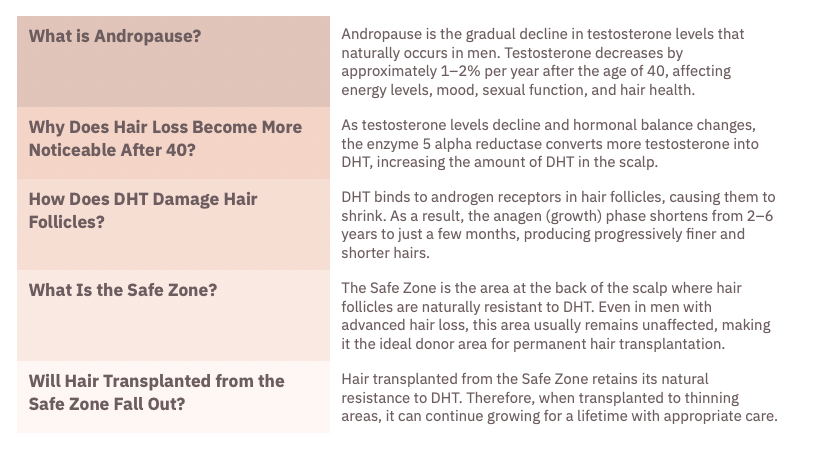
Andropause is the gradual decline of testosterone levels that naturally occurs with age in men. This process becomes more noticeable after the age of 40.
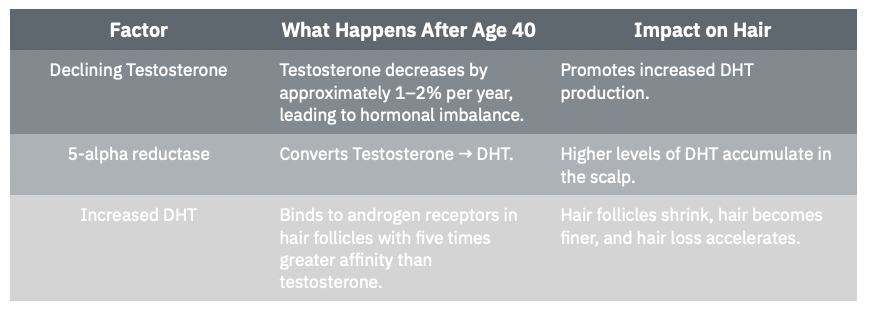
According to The Endocrine Society, testosterone levels decrease by approximately 1 to 2% per year after the age of 40.
The decline in testosterone affects multiple body systems, including:
- Reduced muscle mass and bone density, with a slower metabolism
- Poorer sleep quality and increased mood fluctuations
- Reduced sexual function
- Faster deterioration of hair follicles, leading to hair loss and thinning hair
2. The Hormonal Mechanism Behind Hair Loss After 40
2.1 From Testosterone to DHT
When hormonal balance changes, the enzyme 5 alpha reductase in the scalp converts testosterone into dihydrotestosterone (DHT). DHT is the primary hormone responsible for damaging hair follicles and is associated with approximately 95% of male pattern hair loss.
2.2 How Does DHT Damage Hair Follicles?
DHT binds to androgen receptors in the hair follicles with approximately five times greater affinity than testosterone. As a result:
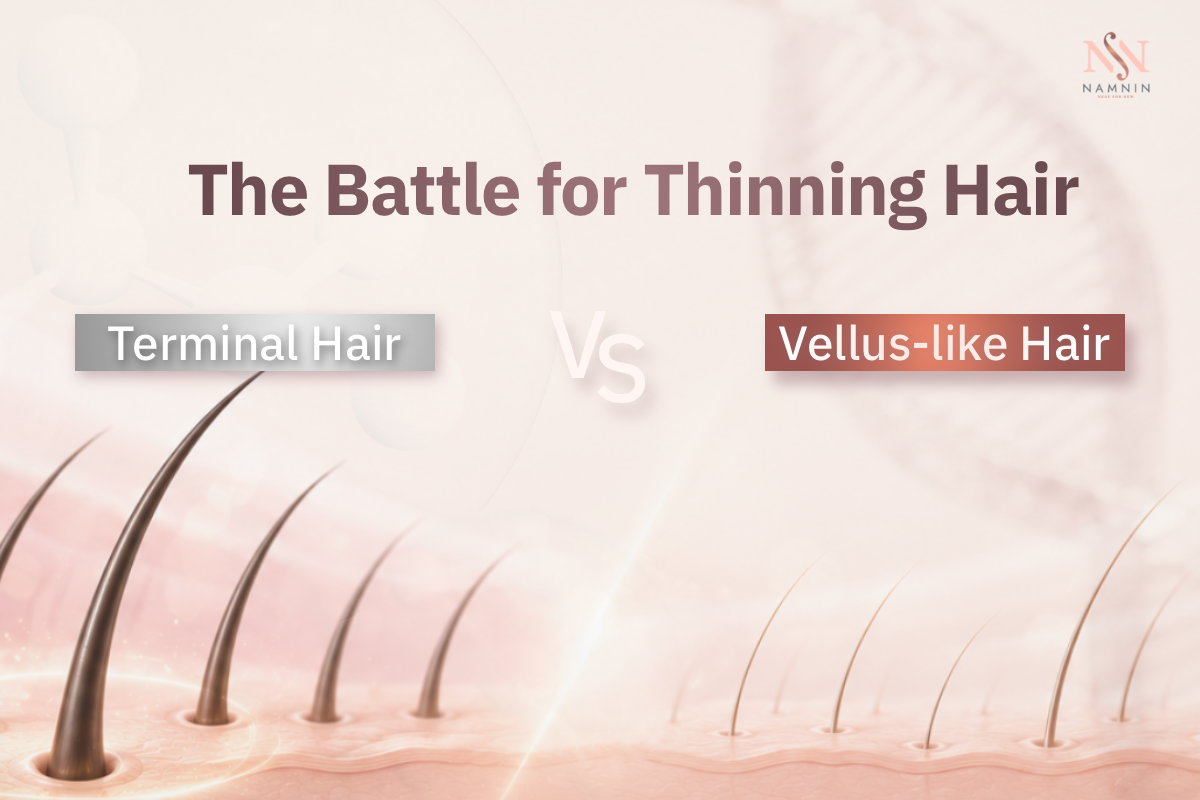
- Hair follicles become progressively smaller with each hair growth cycle.
- The anagen (growth) phase shortens from approximately 2 to 6 years to only a few months.
- Newly growing hairs become finer, shorter, and lighter in color over time.
- Hair sheds more quickly while the follicles require a longer time to produce new hair.
3. Treatment Approach: The Safe Zone and Permanent Hair Transplantation
This section contains information about clinical services.
3.1 Safe Zone: Hair Resistant to DHT
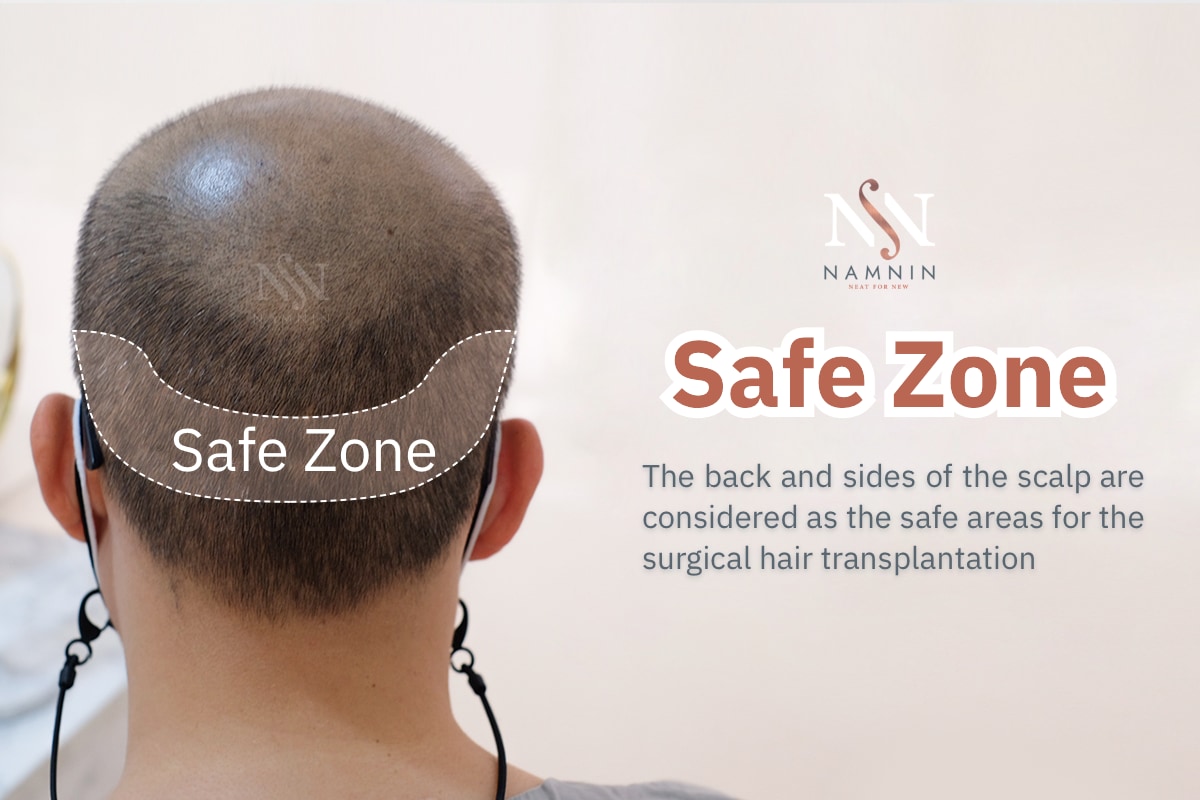
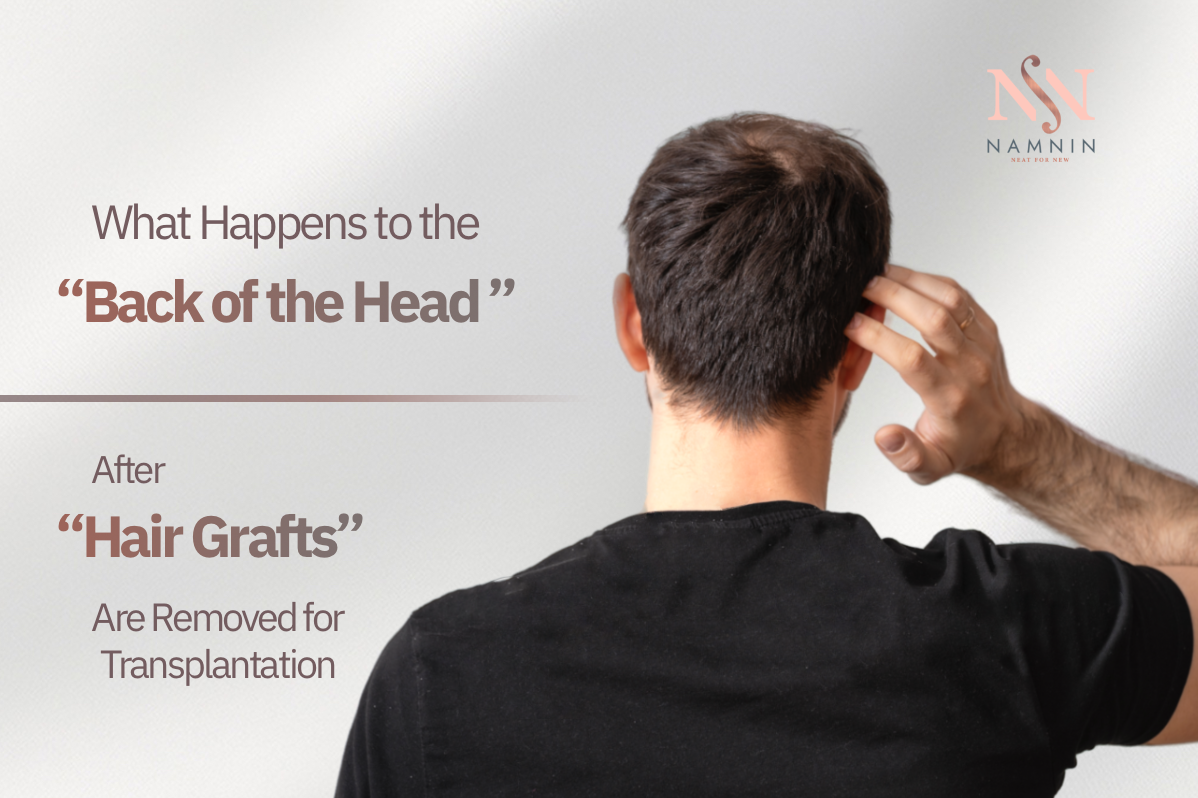
Although DHT affects hair follicles across much of the scalp, the hair at the back of the head (occipital region) is naturally resistant to DHT. This area is known as the Safe Zone, making it the ideal donor area for permanent hair transplantation.
3.2 The Principle of Permanent Hair Transplantation
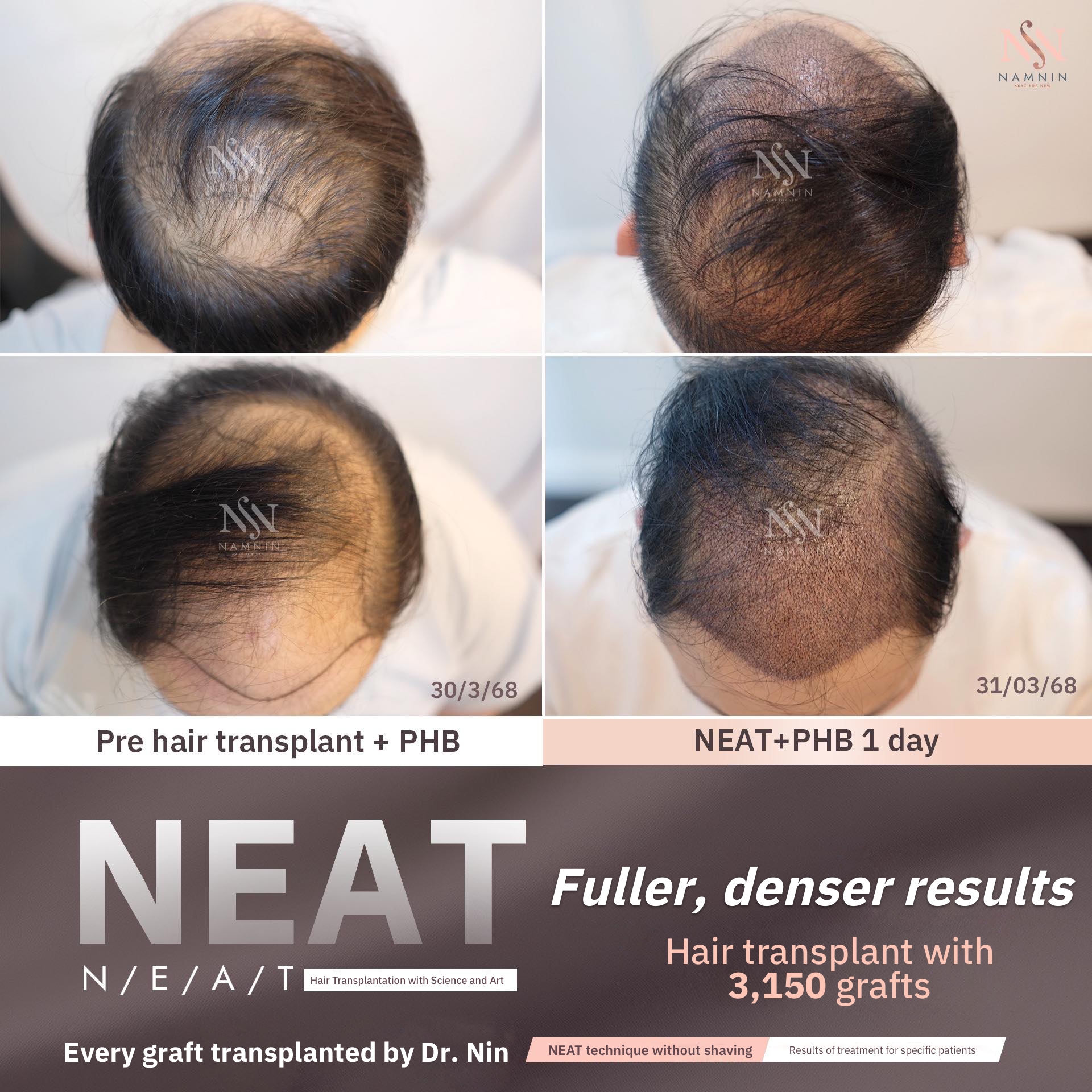
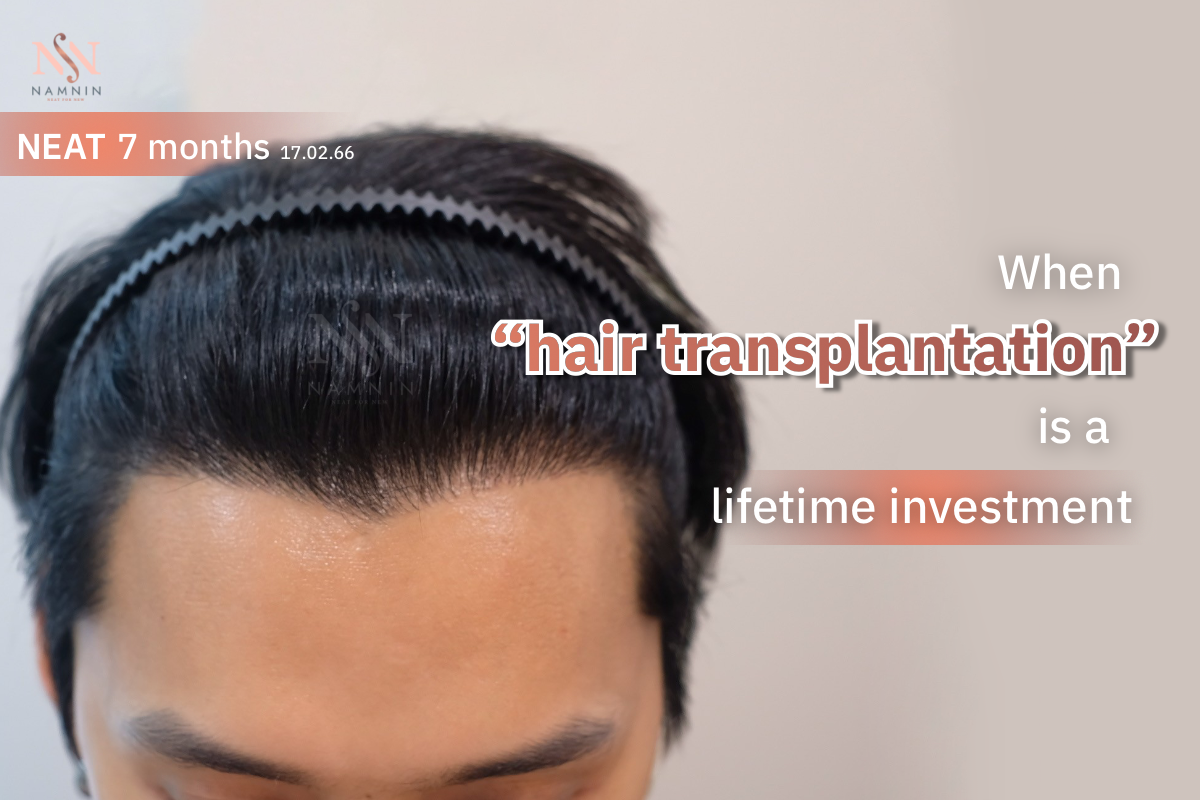
During a hair transplant procedure, hair follicles are relocated from the Safe Zone to areas affected by hair thinning. Because these follicles retain their natural resistance to DHT, the transplanted hair can continue to grow for a lifetime when properly cared for.
3.3 The NEAT Technique at Namnin Clinic
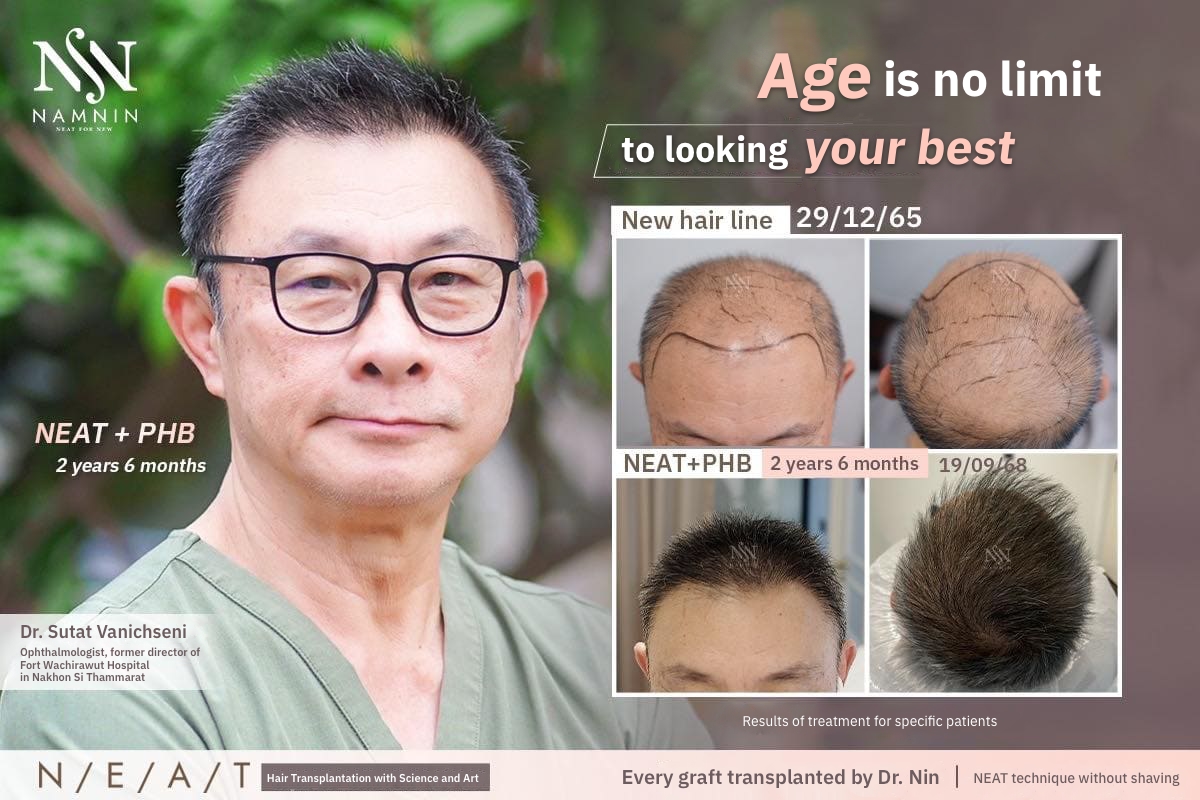
Namnin Clinic has developed the NEAT Technique specifically for permanent hair transplantation in men aged 40 and above. Every treatment plan is individually designed, and the procedure is performed personally by the physician using meticulous graft by graft implantation.
- Personalized treatment planning based on facial proportions and available donor hair.
- Every hair graft is implanted individually by the physician, with careful control of angle and direction to blend naturally with existing hair.
- Treatment is supported by clinical experience in hair restoration and collaborative research with international physicians.
- Continuous postoperative follow up for one full year.
Disclaimer: Results vary depending on each individual's scalp condition and donor hair availability. Please consult a physician before making a treatment decision.
4. Frequently Asked Questions (FAQ)
Common questions men aged 40 and above ask about hormonal changes and hair loss.
5. Conclusion
Hormonal changes after the age of 40 are not simply a sign of aging. They are an indication that it is time to take a more proactive approach to your health. Understanding the pathway of Andropause → DHT → Hair Loss allows for earlier and more effective intervention before hair thinning becomes more advanced.
Key takeaways:
- DHT is not the same as testosterone. Hair loss is primarily caused by the conversion of testosterone into DHT.
- The Safe Zone contains hair follicles that are naturally resistant to DHT, making it the foundation of permanent hair transplantation.
- Early evaluation and treatment planning generally provide better outcomes than waiting until hair thinning becomes obvious.
6. References
The information presented in this article is based on established scientific and medical evidence:
- The Endocrine Society. Testosterone and Aging.
- Kaufman, K. D. (2002). Androgens and alopecia. Molecular and Cellular Endocrinology, 198(1–2), 89–95.
- International Society of Hair Restoration Surgery (ISHRS).
- American Academy of Dermatology (AAD). Hair Loss in Men.
Article by: Namnin Clinic | Hair and Scalp Specialists | Published: May 2026