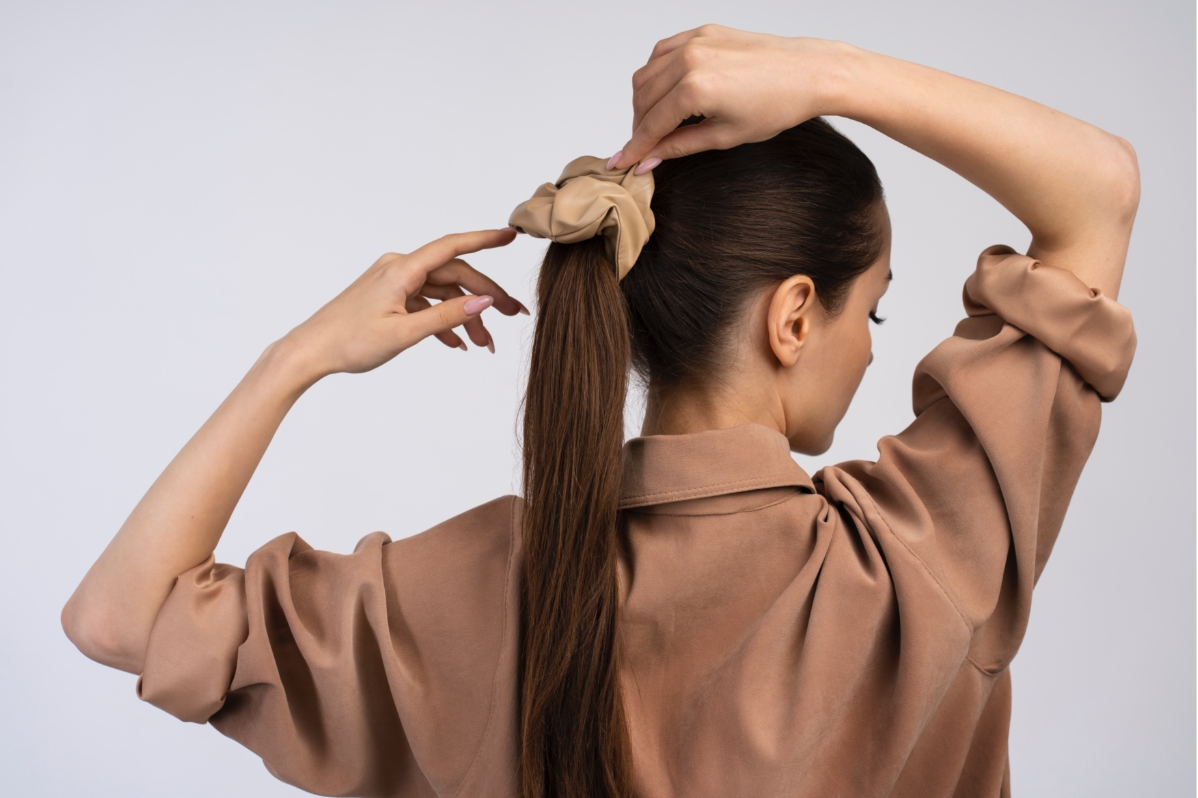
Have you ever noticed that a hairstyle you once felt confident wearing no longer feels the same today? Sometimes small hair related habits can quietly affect our appearance without us realizing it. Tight ponytails firm braids or high buns styles many women have worn since their school days and continued into working life can impact the hair more than we might expect. Although these hairstyles feel familiar and pleasing to the eye repeated tension from overly tight styling can silently affect the hair roots. Over time hair that once appeared dense may begin to space out and the hairline that once stayed in place may gradually recede often without us noticing when it first began.
It is not only the hair that becomes thinner. The front and side hairlines may gradually recede as well. Medically this condition is known as Traction Alopecia caused by repeated pulling and stimulation of the hair roots leading to inflammation. In more advanced cases hair follicles may shrink or develop scarring beneath the skin. If left untreated for too long hair in the affected areas may no longer be able to grow back. Even when hair loss occurs in relatively small areas along the hairline or sides of the head the overall facial appearance can change noticeably especially the facial frame which may gradually lose its definition and balance.
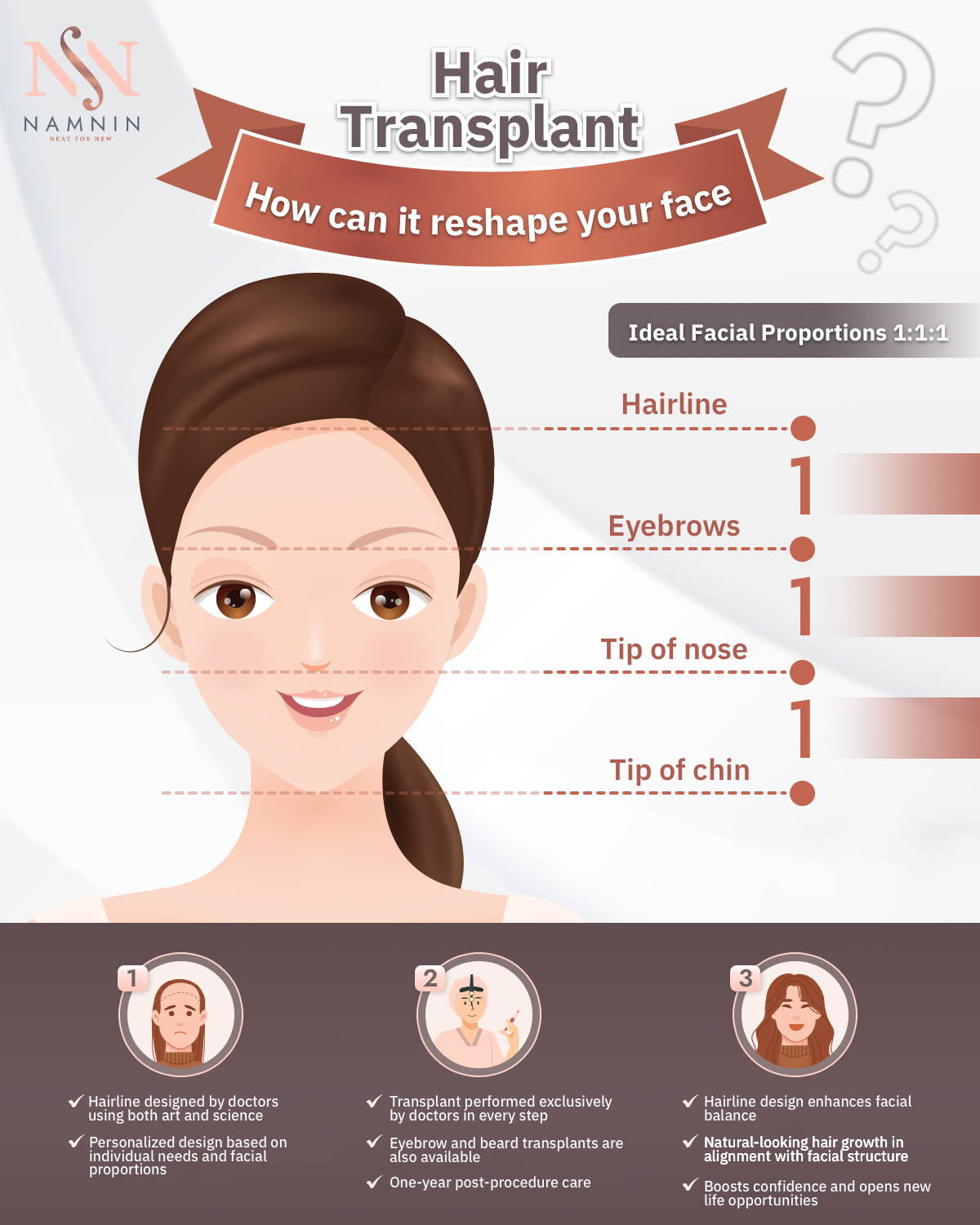
When hair roots are exposed to repeated tension over a long period and can no longer recover or regrow hair transplantation becomes a suitable and targeted option. This approach involves transferring hair grafts from the occipital area at the back of the head where hair remains strong and unaffected by tension to restore the frontal hairline. Hair transplantation is not simply about adding hair but about gently and sustainably restoring self confidence.
At Namnin we focus not only on restoring hair but also on restoring positive feelings through hair transplantation carefully designed for women. Dr. Nin approaches hair transplantation not merely as a medical procedure but as an art shaped by a deep understanding of each individual. By combining aesthetic principles with a profound understanding of feminine identity Dr. Nin developed the NEAT and NEAT Long Hair techniques. In both approaches special attention is given to the facial frame as it plays a key role in enhancing facial dimension. A well defined yet soft hairline helps create a gentle harmonious look that feels uniquely personal.
NEAT is a meticulous hair transplantation technique designed to soften and enhance facial features. Dr. Nin applies the principles of the Golden Ratio to design a new hairline that complements each face using a fine 0.6 mm implanter to place hair grafts individually with precision. The result is hair that blends seamlessly appearing as though it has always been there.
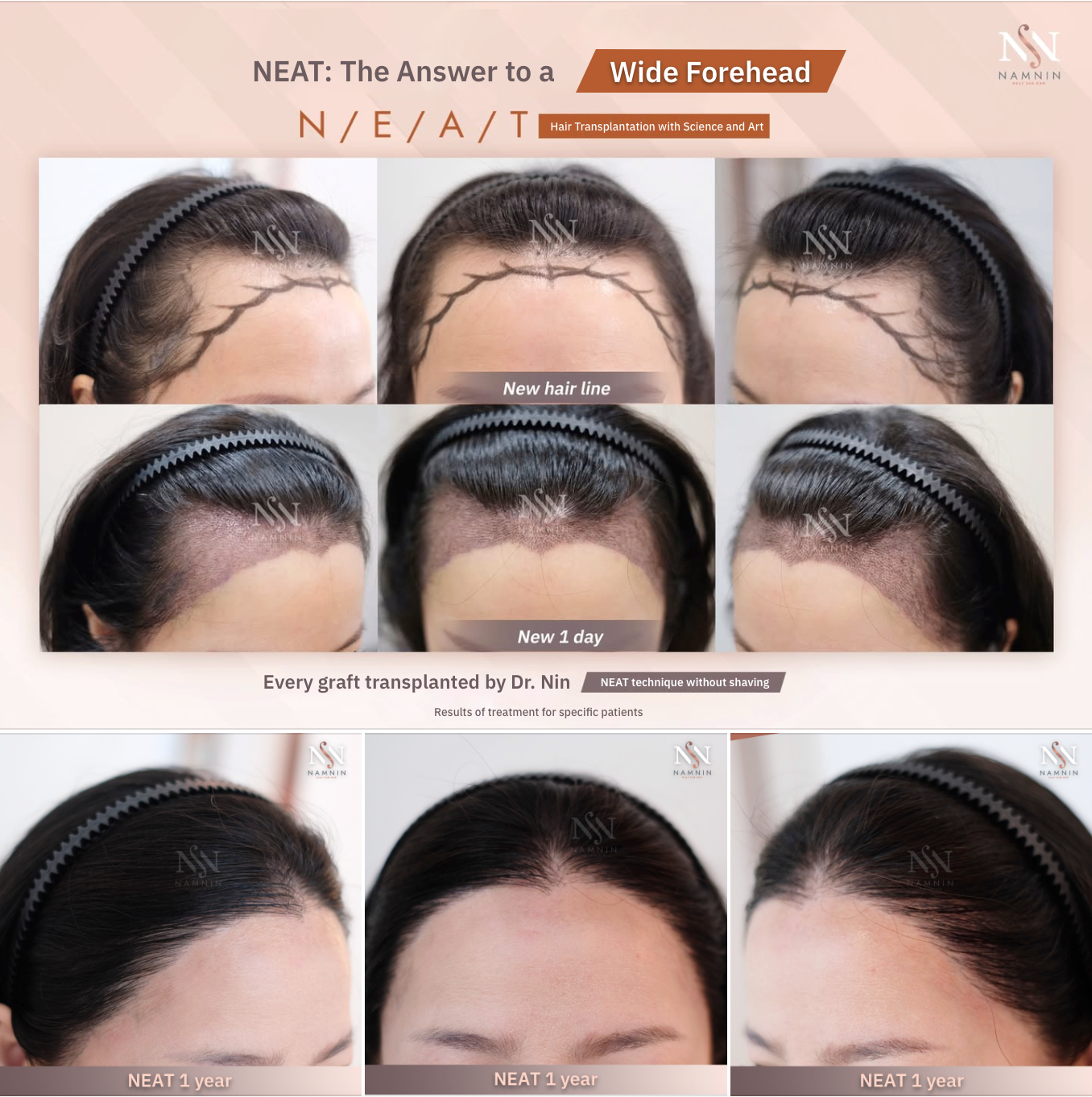
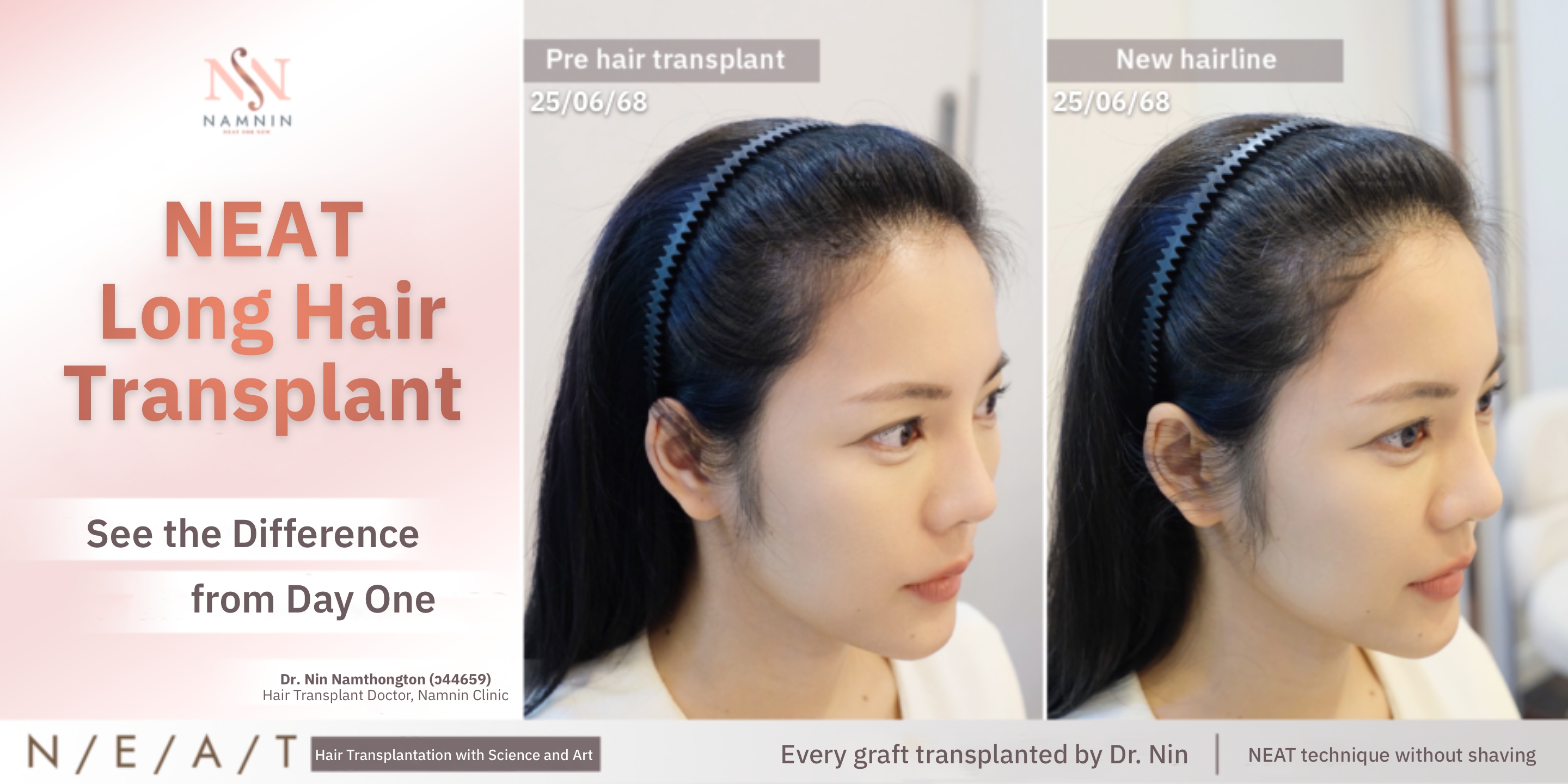
While the NEAT technique delivers gradual and harmonious results NEAT Long Hair is designed for women who want immediate confidence from the first day. This technique uses long hair grafts from the occipital area and transplants them directly to the frontal hairline allowing the refined beauty of the new hairline to be visible immediately after the procedure. The development of this technique did not come solely from laboratory work or theoretical study but from Dr. Nin’s dedication to understanding results in every dimension. She personally underwent hair transplantation herself using the NEAT technique on one half of her facial frame and NEAT Long Hair on the other to compare real outcomes. The findings showed that hair on both sides grew densely remained strong and aligned naturally enhancing the facial frame with softness balance and a gentle radiance that truly reflects one’s individuality.
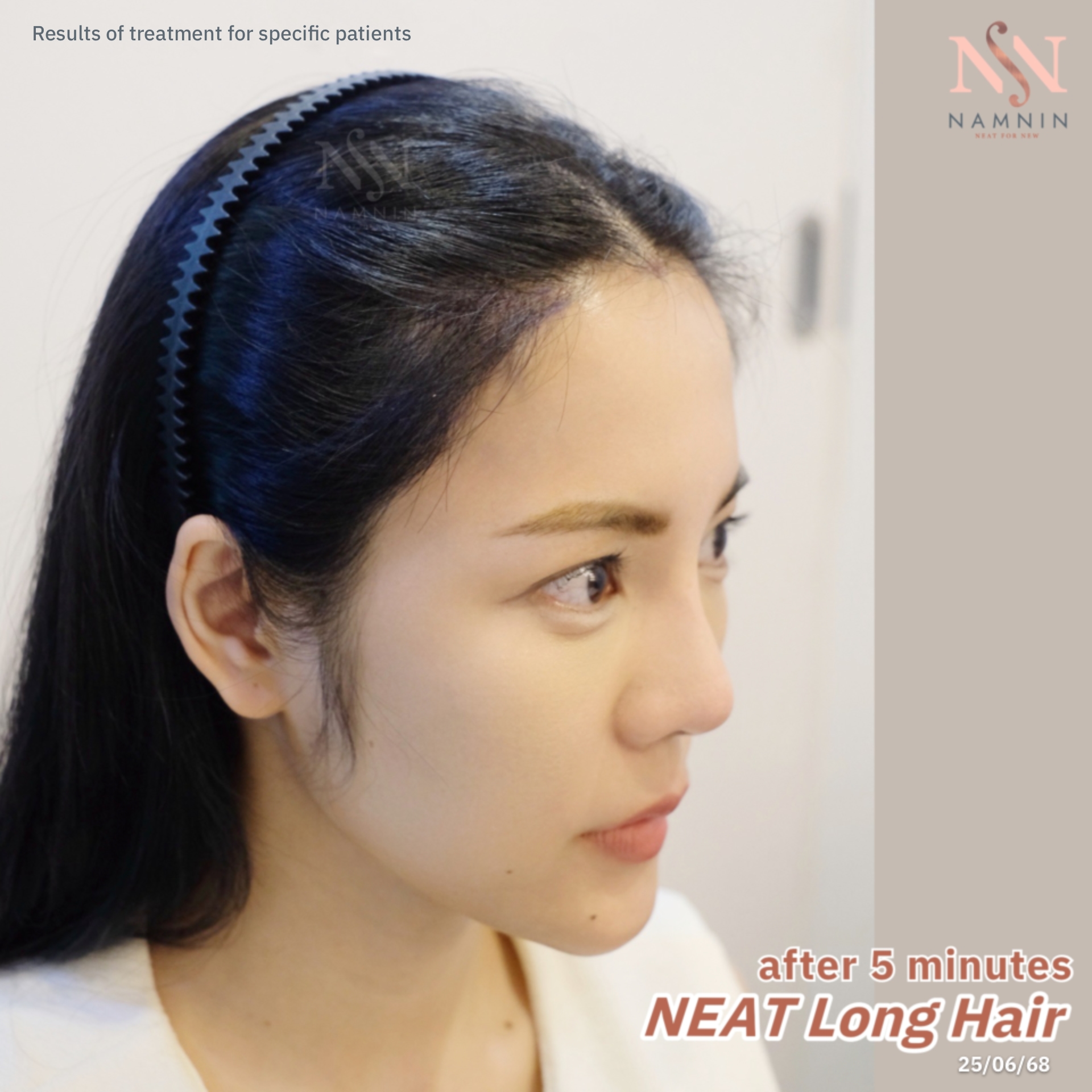
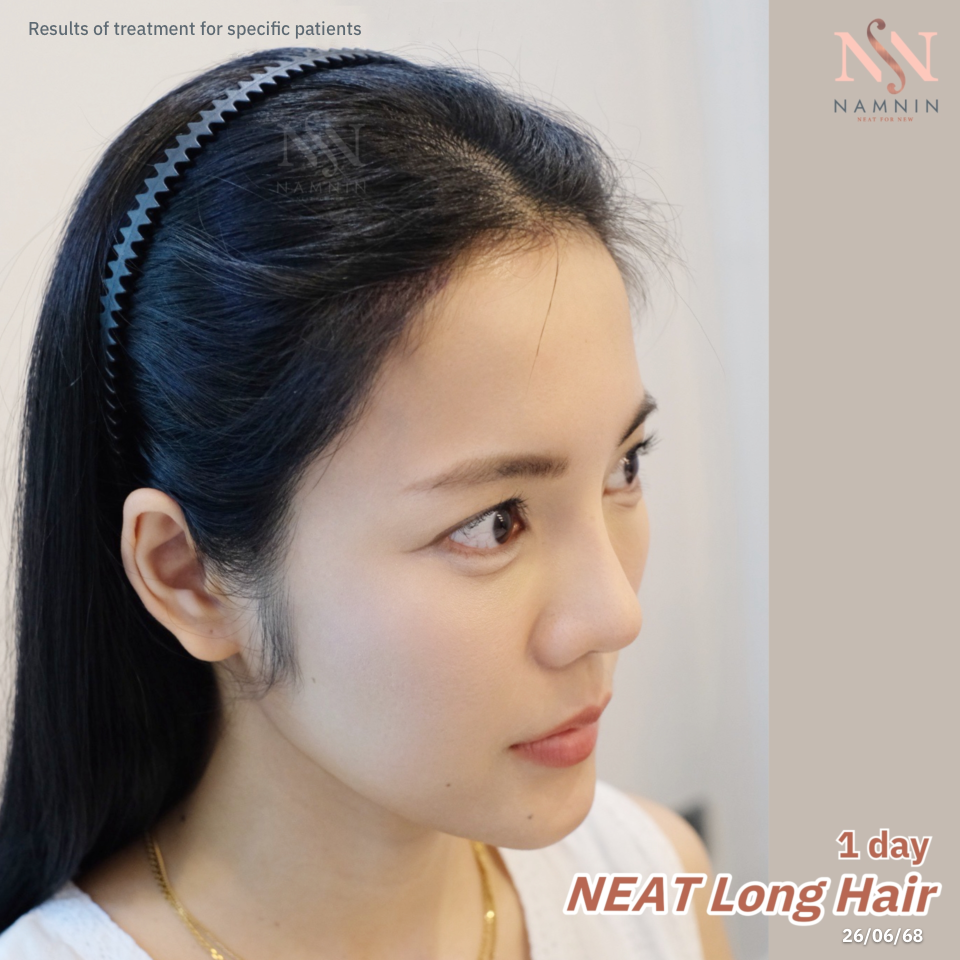
Do not let familiar hair pulling habits become the cause of long term insecurity. Sometimes the loss of a hairline alone can change how we feel for the entire day. If you begin to notice thinning along the hairline reduced facial definition or feel that the person in the mirror no longer looks the same as before hair transplantation may be more than a localized solution. It may be the beginning of rediscovering yourself in a more confident version than ever before.